Margins




548 Market St PMB 65688, San Francisco California 94104-5401 USA
© 2026 Paratext Inc. All rights reserved
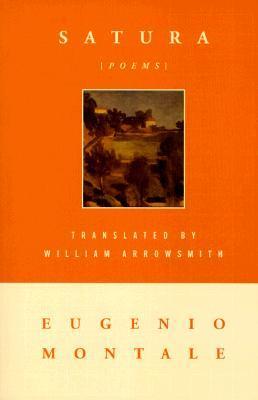
Although Eugenio Montale is one of the indisputably great poets of the 20th century—and among the most deserving of Nobel laureates—he's never quite entered the pantheon for many English-speaking readers. Perhaps William Arrowsmith's supple new translation of Satura will help to remedy the situation. First published in Italian in 1971, the volume dates from the last decade of the poet's life. Yet there's a strong argument to be made that this playful, improvisatory sequence, which Montale meant to be read straight through, is the place to begin reading his work. A quarter-century after its first appearance, Satura remains so canny, and so tuned in to the Zeitgeist, that it could have been written yesterday. The nomenclature of the electronic age may have changed, for example, but that doesn't keep us from responding to Montale's witty and rueful ambivalence about technological progress in "Late at Night": "There's no conversing with shades / on the telephone. / No loudspeaker or mike boom / appears in our mute dialogues." The volume also contains "Xenia," one of the most painful, incisive, and moving poems ever written about married love. Montale addressed his earlier books to the Petrarchan figure of "Clizia"—a composite of an ideal woman and a real one, the American scholar Irma Brandeis. Here, in "Xenia," he addresses his dead wife, Mosca: Your arm in mine, I've descended a million stairs at least, and now that you're not here, a void yawns at every step. Even so our long journey was brief. I'm still en route, with no further need of reservations, connections, ruses, the constant contempt of those who think reality is what one sees. Elsewhere in Satura the aging modernist lets his guard down, addressing the reader in a more offhand and humorous manner. And in poems such as "Gotterdammerung" or "Non-Magical Realism," Montale satirizes the absurd proliferation of ideologies that were supposed to solve the problems of the era, and which accomplished little more than our own, contemporary panaceas: "Twilight began when man thought / himself of greater dignity than moles or crickets." —Mark Rudman