Margins




548 Market St PMB 65688, San Francisco California 94104-5401 USA
© 2026 Paratext Inc. All rights reserved
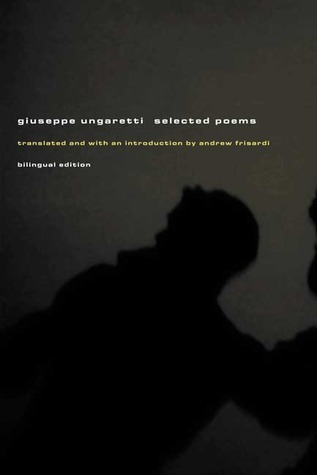
A major new translation of one of Italy's greatest modern poets Giuseppe Ungaretti (1888-1970) was a pioneer of the Modernist movement in Italian poetry and is widely regarded as one of the leading Italian poets of the twentieth century. His verse is renowned and loved for its powerful insight and emotion, and its exquisite music. Yet, unlike many of his peers, Ungaretti has never been adequately presented to English readers. This large bilingual selection, translated with great sensitivity and fidelity by Andrew Frisardi, captures Ungaretti in all of his phases: from his early poems, written in the trenches of northern Italy during World War I, to the finely crafted erotic and religious poetry of his second period, to the visceral, elegiac poetry of the years following the death of his son and the occupation of Rome during World War II, to the love poems of the poet's old age. Frisardi's in-depth introduction details the world in which Ungaretti's work took shape and exerted its influence. In addition to the poet's own annotations, an autobiographical afterword, "Ungaretti on Ungaretti," further illuminates the poet's life and art. Here is a compelling, rewarding, and comprehensive version of the work of one of the greatest modern European poets.