Authors

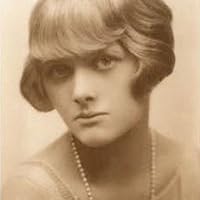
Daphne du Maurier was born on 13 May 1907 at 24 Cumberland Terrace, Regent's Park, London, the middle of three daughters of prominent actor-manager Sir Gerald du Maurier and actress Muriel, née Beaumont. In many ways her life resembles a fairy tale. Born into a family with a rich artistic and historical background, her paternal grandfather was author and Punch cartoonist George du Maurier, who created the character of Svengali in the 1894 novel Trilby, and her mother was a maternal niece of journalist, author, and lecturer Comyns Beaumont. She and her sisters were indulged as a children and grew up enjoying enormous freedom from financial and parental restraint. Her elder sister, Angela du Maurier, also became a writer, and her younger sister Jeanne was a painter. She spent her youth sailing boats, travelling on the Continent with friends, and writing stories. Her family connections helped her establish her literary career, and she published some of her early work in Beaumont's Bystander magazine. A prestigious publishing house accepted her first novel when she was in her early twenties, and its publication brought her not only fame but the attentions of a handsome soldier, Major (later Lieutenant-General Sir) Frederick Browning, whom she married. She continued writing under her maiden name, and her subsequent novels became bestsellers, earning her enormous wealth and fame. Many have been successfully adapted into films, including the novels Rebecca, Frenchman's Creek, My Cousin Rachel, and Jamaica Inn, and the short stories The Birds and Don't Look Now/Not After Midnight. While Alfred Hitchcock's films based upon her novels proceeded to make her one of the best-known authors in the world, she enjoyed the life of a fairy princess in a mansion in Cornwall called Menabilly, which served as the model for Manderley in Rebecca. Daphne du Maurier was obsessed with the past. She intensively researched the lives of Francis and Anthony Bacon, the history of Cornwall, the Regency period, and nineteenth-century France and England. Above all, however, she was obsessed with her own family history, which she chronicled in Gerald: A Portrait, a biography of her father; The du Mauriers, a study of her family which focused on her grandfather, George du Maurier, the novelist and illustrator for Punch; The Glassblowers, a novel based upon the lives of her du Maurier ancestors; and Growing Pains, an autobiography that ignores nearly 50 years of her life in favour of the joyful and more romantic period of her youth. Daphne du Maurier can best be understood in terms of her remarkable and paradoxical family, the ghosts which haunted her life and fiction. While contemporary writers were dealing critically with such subjects as the war, alienation, religion, poverty, Marxism, psychology and art, and experimenting with new techniques such as the stream of consciousness, du Maurier produced 'old-fashioned' novels with straightforward narratives that appealed to a popular audience's love of fantasy, adventure, sexuality and mystery. At an early age, she recognised that her readership was comprised principally of women, and she cultivated their loyal following through several decades by embodying their desires and dreams in her novels and short stories. In some of her novels, however, she went beyond the technique of the formulaic romance to achieve a powerful psychological realism reflecting her intense feelings about her father, and to a lesser degree, her mother. This vision, which underlies Julius, Rebecca and The Parasites, is that of an author overwhelmed by the memory of her father's commanding presence. In Julius and The Parasites, for example, she introduces the image of a domineering but deadly father and the daring subject of incest. In Rebecca, on the other hand, du Maurier fuses psychological realism with a sophisticated version of the Cinderella story. The nameless heroine has

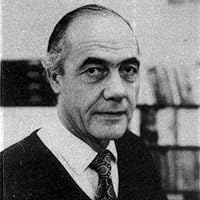
Madeleine Brent is a pseudonym used by Peter O'Donnell. Peter O'Donnell was born on 11 April 1920 in Lewisham, London, England, UK. He was interested in writing as a child, and began writing professionally at the age of 16. During World War II he served in the Royal Signals Corps, and was stationed in Persia, Syria, Egypt, the Western Desert, Italy, and Greece. After the war, he worked as a comic strip writer, and scripted the Daily Express adaptation of the James Bond novel Dr. No. He was most famous for inventing the character Modesty Blaise, an undercover agent who first appeared in comic strips in 1963. In 1965, he published his first novel, Modesty Blaise, which was based on the screenplay he had written for the motion picture of the same name. He also wrote short stories, plays, television and film scripts, and nine romance novels published under the pseudonym Madeleine Brent. In 2001, he retired from writing. He passed away on 03 May 2010.

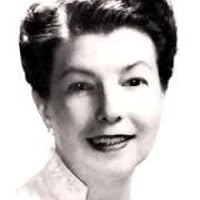
Phyllis Ayame Whitney (1903 – 2008) was an American mystery writer. Rare for her genre, she wrote mysteries for both the juvenile and the adult markets, many of which feature exotic locations. A review in The New York Times once dubbed her "The Queen of the American Gothics". She was born in Japan to American parents and spent her early years in Asia. Whitney wrote more than seventy novels. In 1961, her book The Mystery of the Haunted Pool won an Edgar Award from the Mystery Writers of America for Best Juvenile novel, and she duplicated the honor in 1964, for The Mystery of the Hidden Hand. In 1988, the MWA gave her a Grand Master Award for lifetime achievement. Whitney died of pneumonia on February 8, 2008, aged 104.

Evelyn Anthony was the pen name of Evelyn Bridgett Patricia Stephens Ward-Thomas, Started her career as a writer of historical fiction, later switched to writing contemporary thrillers, often with an espionage theme. She met Michael Ward-Thomas on a double date in The Dorchester and both were attracted to each other.] He worked for the Consolidated African Selection Trust. They switched partners and were married a few months later. They bought Horham Hall in 1968 but found that it was costly and sold it in 1976 and moved to Naas, County Kildare where she had relatives. Increased income from her writing allowed her to buy Horham Hall back in 1982. In 1994 she became High Sheriff of Essex, the firswt woman in over 700 years to hold this office. In 1995 her daughter Kitty died of a heroin overdose, leading Evelyn to not write for another seven years. In 2004 her husband died of a stroke. She was survived by her children Susan, Anthony, Ewan, Christian and Luke as well as 16 grandchildren. NB:Some sources give Ms Anthonys year of birth as 1926. Additional information added from Wikipedia