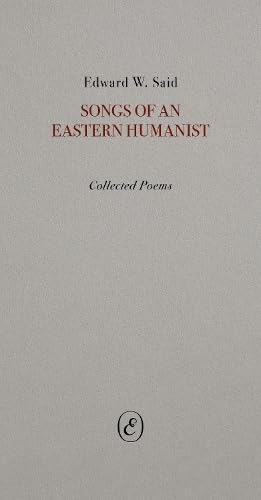
“Considering the emphasis in Said’s critical work on space and place and the political importance of geography, it is less surprising to see the luxuriant evocation of a specific topography of dusty roads, grottos, plump figtrees, desert flowers, muddy clods, and the “beckoning hands of lambent hills”. Most revealing of all, perhaps, is the poems’ tendency to see the world through musical form. Musical imagery is everywhere, testifying to how much of Said’s mind in an introspective mood was immersed in the sounds, forms, and fables of Western classical music.”―Timothy Brennan, from the book’s Introduction Edward Said was renowned for the breadth, erudition, and humanity of his scholarly and political writing. His ground-breaking studies of literature and culture threw a dazzling new light on the ways in which non-Western peoples have been misrepresented over the course of the centuries, and he was among the world’s most prominent voices in denouncing the modern-day injustices of Western foreign policy. This volume collects all of his never-before-published poems, offering insight into the personality of the author of Orientalism, The World, the Text and the Critic, and Culture & Imperialism “to a degree hidden in those works themselves”. The nineteen works collected in Songs of an Eastern Humanist canvass a variety of poetic forms, but they are all shot through with Said’s capacious intellect and passionate sensibility. They are also remarkable achievements of poetic craft. Said’s poetry alternates with unerring judgment between wit and pathos, between sublimely elevated and disarmingly quotidian registers. His individual lines of verse are exquisitely constructed and richly elusive, while his poems as a whole are at once sweeping in their vision and keenly evocative of sensory experience. Their publication amounts to a major literary event, marking twenty years since the great public intellectual’s passing.
Author

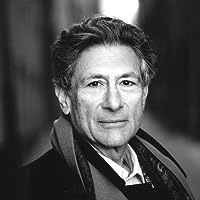
(Arabic Profile إدوارد سعيد) Edward Wadie Said was a professor of literature at Columbia University, a public intellectual, and a founder of the academic field of postcolonial studies. A Palestinian American born in Mandatory Palestine, he was a citizen of the United States by way of his father, a U.S. Army veteran. Educated in the Western canon, at British and American schools, Said applied his education and bi-cultural perspective to illuminating the gaps of cultural and political understanding between the Western world and the Eastern world, especially about the Israeli-Palestinian conflict in the Middle East; his principal influences were Antonio Gramsci, Frantz Fanon, Aimé Césaire, Michel Foucault, and Theodor Adorno. As a cultural critic, Said is known for the book Orientalism (1978), a critique of the cultural representations that are the bases of Orientalism—how the Western world perceives the Orient. Said’s model of textual analysis transformed the academic discourse of researchers in literary theory, literary criticism, and Middle-Eastern studies—how academics examine, describe, and define the cultures being studied. As a foundational text, Orientalism was controversial among the scholars of Oriental Studies, philosophy, and literature. As a public intellectual, Said was a controversial member of the Palestinian National Council, because he publicly criticized Israel and the Arab countries, especially the political and cultural policies of Muslim régimes who acted against the national interests of their peoples. Said advocated the establishment of a Palestinian state to ensure equal political and human rights for the Palestinians in Israel, including the right of return to the homeland. He defined his oppositional relation with the status quo as the remit of the public intellectual who has “to sift, to judge, to criticize, to choose, so that choice and agency return to the individual” man and woman. In 1999, with his friend Daniel Barenboim, Said co-founded the West–Eastern Divan Orchestra, based in Seville, which comprises young Israeli, Palestinian, and Arab musicians. Besides being an academic, Said also was an accomplished pianist, and, with Barenboim, co-authored the book Parallels and Paradoxes: Explorations in Music and Society (2002), a compilation of their conversations about music. Edward Said died of leukemia on 25 September 2003.