Margins
Stanford Studies in Middle Eastern and Islamic Societies and Cultures book cover 1
Stanford Studies in Middle Eastern and Islamic Societies and Cultures book cover 2
Stanford Studies in Middle Eastern and Islamic Societies and Cultures book cover 3
Stanford Studies in Middle Eastern and Islamic Societies and Cultures
Series · 12
books · 2006-2017

Books in series

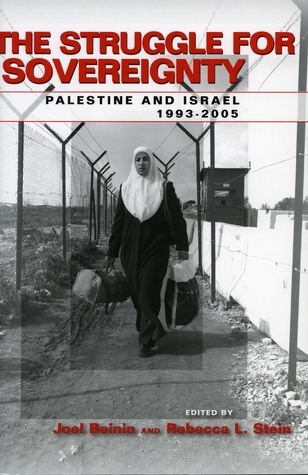
The Struggle for Sovereignty book cover
#1

The Struggle for Sovereignty

Palestine and Israel, 1993-2005

2006

After the 1993 Oslo Accords people across the world anticipated the onset of peace and an end to the Palestinian-Israeli conflict. For Israelis, the Accords generated massive economic growth and a sense of security. For Palestinians in the West Bank and the Gaza Strip, they led to a dramatic rise in poverty and unemployment due to a complex array of closures, militarized checkpoints, and bypass roads, and a vast expansion of the settlement project that fractured Palestinian territories and communities. In 2000 popular Palestinian rage with the new shape of the Israeli occupation erupted in a second uprising or intifada. In this volume, prominent scholars and journalists examine the dramatic political changes in Palestine and Israel from the Oslo Accords through the second intifada and the death of Yasser Arafat. Their essays address the political economy of the Oslo process, social and political changes in Palestine and Israel, United States foreign policy, social movements and political activism, and the interplay between cultural and political-economic processes. The volume also includes documents, maps, poetry, and graphic art. Ammiel Alcalay, Lori A. Allen, Marwan Barghouti, Joel Beinin, Robert Blecher, Elliott Colla, Catherine Cook, Jonathan Cook, Richard Falk, Khaled Furani, Rita Giacaman, Lisa Hajjar, Jeff Halper, Rema Hammami, Sari Hanafi, Adam Hanieh, Islah Jad, Penny Johnson, Rela Mazali, Emma C. Murphy, Issam Nassar, Ilan Pappé, Yoav Peled, Mouin Rabbani, Shira Robinson, Sara Roy, Rosemary Sayigh, Charmaine Seitz, Adam Shatz, Rebecca L. Stein, Gary Sussman, Salim Tamari, David Tartakover, Graham Usher, Sharif Waked, and Oren Yiftachel

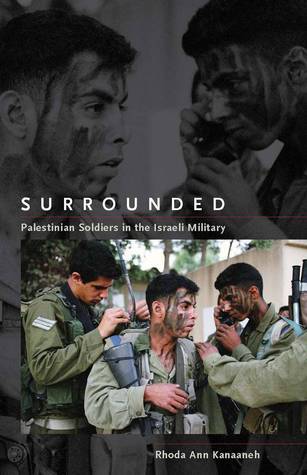
Surrounded book cover
#5

Surrounded

Palestinian Soldiers in the Israeli Military

2008

An estimated 3,000 Palestinian citizens of Israel currently volunteer to serve in the Israeli military, a force fighting other Palestinians just miles away in occupied territories. Surrounded takes a close look at this controversial group of soldiers, examining the complex reasons these people join the army and the wider implications of their decisions in terms of security and citizenship. Most observers perceive a clear and powerful divide in the political tensions and open hostilities between the State of Israel and the Palestinian people, but often fail to notice those who straddle this divide―Palestinian citizens of Israel. These soldiers comprise no more than half a percent of this population, but their stories provide a powerful vantage point from which to consider a question faced by all Palestinians in to what extent are they, in fact, Israeli? Surrounded contains over seventy interviews with soldiers, and provides a unique glimpse of their conflicting experiences of acceptance, integration, and marginalization within the Israeli military. Concluding with comparisons to similar situations around the world, the book upends nationalist understandings of how wars and those who fight in them work. A key to a more complex understanding of ethnic conflict, this gripping and revealing look at a select group of soldiers will immensely alter ideas about the reasons why people choose to fight, particularly on "the wrong side" of a war.
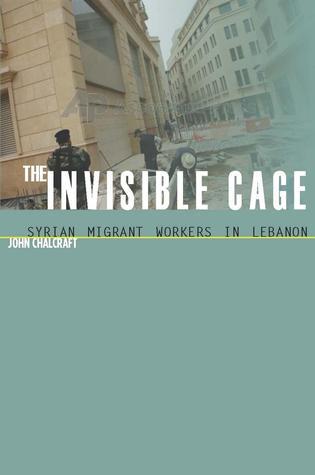
The Invisible Cage book cover
#6

The Invisible Cage

Syrian Migrant Workers in Lebanon

2008

The Invisible Cage uncovers the hidden history of the cycle of labor migration and return of hundreds of thousands of un- and semi-skilled Syrian workers in Lebanon. It traces how Syrians came to comprise a significant proportion of Lebanon's workforce during the 1950s and 1960s, the ways in which these Syrians lived through Lebanon's civil wars, and their prolonged unsettlement and exile through both the reconstruction of the 1990s and instability since 2005. Offering both social history and ethnography, John Chalcraft challenges the commonly held view that a more benign form of economic labor migration, one based on personal choice, emerged with the end of slavery and forced labor in the region. Instead, he shows how both coercion and consent, unintended consequences, and hegemonic forms influence the ongoing rotation of migrant workers. This captivating account of the labor market as 'invisible cage' breaks new ground in Middle East and migration studies alike.
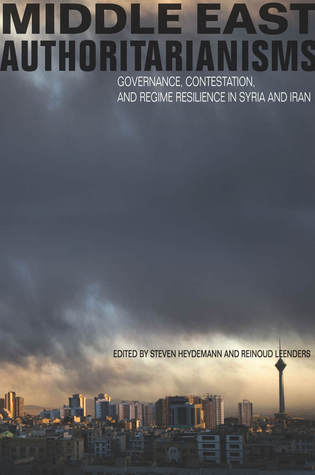
Middle East Authoritarianisms book cover
#16

Middle East Authoritarianisms

Governance, Contestation, and Regime Resilience in Syria and Iran

2012

The developments of early 2011 changes the political landscape of the Middle East. But even as urgent struggles continue, it remains clear that authoritarianism will survive this transformational moment. The study of authoritarian governance, therefore, remains essential for our understanding of the political dynamics and inner workings of regimes across the region. This volume considers the Syrian and Iranian regimes―what they share in common and what distinguishes them. Too frequently, authoritarianism has been assumed to be a generic descriptor of the region and differences among regimes have been overlooked. But as the political trajectories of Middle Eastern states diverge in years ahead, with some perhaps consolidating democratic gains while others remaining under distinct and resilient forms of authoritarian rule, understanding variations in modes of authoritarian governance and the attributes that promote regime resilience becomes an increasingly urgent priority.
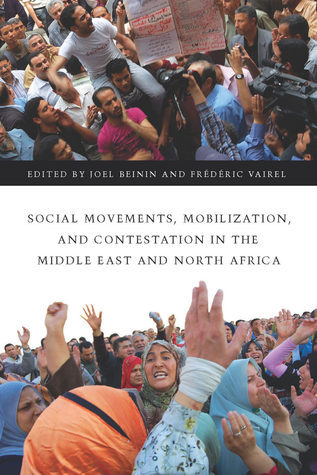
Social Movements, Mobilization, and Contestation in the Middle East and North Africa book cover
#17

Social Movements, Mobilization, and Contestation in the Middle East and North Africa

2011

The Middle East and North Africa have become places that almost everyone "knows" something about. Too frequently written off as culturally defined by Islam, strongly anti-Western, and uniquely susceptible to irrational political radicalism, authoritarianism, and terrorism―these regions are rarely considered as sites of social and political mobilization. However, this new volume reveals a rich array of mobilizations that neither lead inexorably toward democratization nor degenerate into violence. These case studies of Morocco, Egypt, Lebanon, Saudi Arabia, and Turkey are inspired by social movement theory, but also critique and expand the horizons of the theory's classical concepts of political opportunity structures, collective action frames, mobilization structures, and repertoires of contention through intensive fieldwork. This strong empirical base allows for a nuanced understanding of contexts, culturally conditioned rationality, the strengths and weaknesses of local networks, and innovation in contentious action in a region where, with the exception of Turkey, there was little sign of broad-based movements for democratization until the Tunisian and Egyptian uprisings of 2010-11.
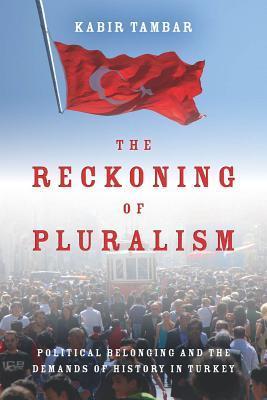
The Reckoning of Pluralism book cover
#20

The Reckoning of Pluralism

Political Belonging and the Demands of History in Turkey

2014

The Turkish Republic was founded simultaneously on the ideal of universal citizenship and on acts of extraordinary exclusionary violence. Today, nearly a century later, the claims of minority communities and the politics of pluralism continue to ignite explosive debate. The Reckoning of Pluralism centers on the case of Turkey's Alevi community, a sizeable Muslim minority in a Sunni majority state. Alevis have seen their loyalty to the state questioned and experienced sectarian hostility, and yet their community is also championed by state ideologues as bearers of the nation's folkloric heritage. Kabir Tambar offers a critical appraisal of the tensions of democratic pluralism. Rather than portraying pluralism as a governing ideal that loosens restrictions on minorities, he focuses on the forms of social inequality that it perpetuates and on the political vulnerabilities to which minority communities are thereby exposed. Alevis today are often summoned by political officials to publicly display their religious traditions, but pluralist tolerance extends only so far as these performances will validate rather than disturb historical ideologies of national governance and identity. Focused on the inherent ambivalence of this form of political incorporation, Tambar ultimately explores the intimate coupling of modern political belonging and violence, of political inclusion and domination, contained within the practices of pluralism.
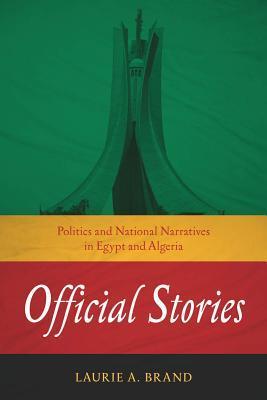
Official Stories book cover
#21

Official Stories

Politics and National Narratives in Egypt and Algeria

2014

Until the recent uprisings in the Middle East and North Africa, the resilience of authoritarian regimes seemed a fundamental feature of regional politics. While economic, political, and internal security policies are most often considered in discussions of regime maintenance, Laurie Brand introduces a new factor, that of national narratives. Portrayals of a country's founding, identity, and bases of unity can be a powerful strategy in sustaining a ruling elite. Brand argues that such official stories, which are used to reinforce the right to rule, justify policies, or combat opponents, deserve careful exploration if we are to understand the full range of tools available to respond to crises that threaten a leadership's hold on power. Brand examines more than six decades of political, economic, and military challenges in two of North Africa's largest Egypt and Algeria. Through a careful analysis of various texts―history and religion textbooks, constitutions, national charters, and presidential speeches― Official Stories demonstrates how leaderships have attempted to reconfigure narratives to confront challenges to their power. Brand's account also demonstrates how leaderships may miscalculate, thereby setting in motion opposition forces beyond their control.
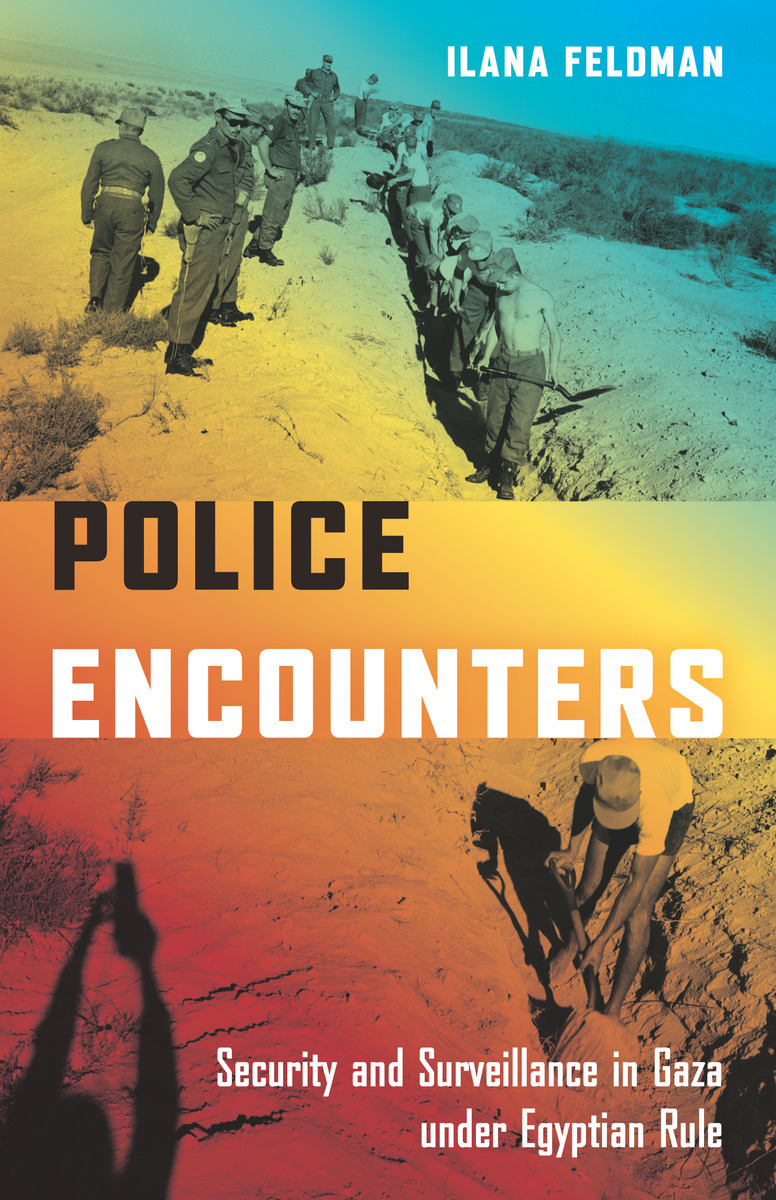
Police Encounters book cover
#24

Police Encounters

Security and Surveillance in Gaza under Egyptian Rule

2015

Egypt came to govern Gaza as a result of a war, a failed effort to maintain Arab Palestine. Throughout the twenty years of its administration (1948–1967), Egyptian policing of Gaza concerned itself not only with crime and politics, but also with control of social and moral order. Through surveillance, interrogation, and a network of local informants, the police extended their reach across the public domain and into private life, seeing Palestinians as both security threats and vulnerable subjects who needed protection. Security practices produced suspicion and safety simultaneously. Police Encounters explores the paradox of Egyptian rule. Drawing on a rich and detailed archive of daily police records, the book describes an extensive security apparatus guided by intersecting concerns about national interest, social propriety, and everyday illegality. In pursuit of security, Egyptian policing established a relatively safe society, but also one that blocked independent political activity. The repressive aspects of the security society that developed in Gaza under Egyptian rule are beyond dispute. But repression does not tell the entire story about its impact on Gaza. Policing also provided opportunities for people to make claims of government, influence their neighbors, and protect their families.
Imaginative Geographies of Algerian Violence book cover
#25

Imaginative Geographies of Algerian Violence

Conflict Science, Conflict Management, Antipolitics

2015

The massacres that spread across Algeria in 1997 and 1998 shocked the world, both in their horror and in the international community's failure to respond. In the years following, the violence of 1990s Algeria has become a central case study in new theories of civil conflict and terrorism after the Cold War. Such "lessons of Algeria" now contribute to a diverse array of international efforts to manage conflict―from development and counterterrorism to the Responsibility to Protect doctrine and transitional justice. With this book, Jacob Mundy raises a critical lens to these lessons and practices and sheds light on an increasingly antipolitical scientific vision of armed conflict. Traditional questions of power and history that once guided conflict management have been displaced by neoliberal assumptions and methodological formalism. In questioning the presumed lessons of 1990s Algeria, Mundy shows that the problem is not simply that these understandings―these imaginative geographies―of Algerian violence can be disputed. He shows that today's leading strategies of conflict management are underwritten by, and so attempt to reproduce, their own flawed logic. Ultimately, what these policies and practices lead to is not a world made safe from war, but rather a world made safe for war.
Copts and the Security State book cover
#28

Copts and the Security State

Violence, Coercion, and Sectarianism in Contemporary Egypt

2016

Copts and the Security State combines political, anthropological, and social history to analyze the practices of the Egyptian state and the political acts of the Egyptian Coptic minority. Laure Guirguis considers how the state, through its subjugation of Coptic citizens, reproduces a political order based on religious identity and difference. The leadership of the Coptic Church, in turn, has taken more political stances, thus foreclosing opportunities for secularization or common ground. In each instance, the underlying logics of authoritarianism and sectarianism articulate a fear of the Other, and, as Guirguis argues, are ultimately put to use to justify the expanding Egyptian security state. In outlining the development of the security state, Guirguis focuses on state discourses and practices, with particular emphasis on the period of Hosni Mubarak's rule, and shows the transformation of the Orthodox Coptic Church under the leadership of Pope Chenouda III. She also considers what could be done to counter the growing tensions and violence in Egypt. The 2011 Egyptian uprising constitutes the most radical recent attempt to subvert the predominant order. Still, the revolutionary discourses and practices have not yet brought forward a new system to counter the sectarian rhetoric, and the ongoing counter-revolution continues to repress political dissent.
Impossible Exodus book cover
#31

Impossible Exodus

Iraqi Jews in Israel

2017

“An exceptional exposé of the sufferings of the Iraqi and Mizrahi Jews in Israel during the 1950s.” —Övg Ülgen, ShofarBetween 1949 and 1951, 123,000 Iraqi Jews immigrated to the newly established Israeli state. Lacking the resources to absorb them all, the Israeli government resettled them in maabarot, or transit camps, relegating them to poverty. In the tents and shacks of the camps, their living conditions were squalid and unsanitary. Basic necessities like water were in short supply, when they were available at all. Rather than returning to a homeland as native sons, Iraqi Jews were newcomers in a foreign place.Impossible Exodus tells the story of these Iraqi Jews’ first decades in Israel. Faced with ill treatment and discrimination from state officials, Iraqi Jews they joined Israeli political parties, demonstrated in the streets, and fought for the education of their children, leading a civil rights struggle whose legacy continues to influence contemporary debates in Israel. Orit Bashkin sheds light on their everyday lives and their determination in a new country, uncovering their long, painful transformation from Iraqi to Israeli. In doing so, she shares the resilience and humanity of a community whose story has yet to be told.Praise for Impossible Exodus“Orit Bashkin sheds light on a case of historical injustice. Impossible Exodus will greatly enhance our understanding of the pain, discrimination, and struggle to survive in a different culture that those immigrants had to endure.” —Abbas Shiblak, University of Oxford“A marvelously clear-eyed and compassionate recovery of the experience of Iraqi Jews forced to seek a new life in Israeli transit camps. Orit Bashkin gives these people voice, agency, and sympathetic understanding in their complex struggles against discrimination and cultural loss.” —Roger Owen, Harvard University“What is distinctive about Bashkin’s book on Iraqi Jews is the many stories she recovers that describe not only the difficulties encountered by immigrants but also the humiliations imposed by thoughtless and prejudiced officials put in charge of people whose culture they neither understood nor respected.” —Donna Robinson Divine, Middle East Journal
Brothers Apart book cover
#32

Brothers Apart

Palestinian Citizens of Israel and the Arab World

2017

When the state of Israel was established in 1948, not all Palestinians became some stayed behind and were soon granted citizenship. Those who remained, however, were relegated to second-class status in this new country, controlled by a military regime that restricted their movement and political expression. For two decades, Palestinian citizens of Israel were cut off from friends and relatives on the other side of the Green Line, as well as from the broader Arab world. Yet they were not passive in the face of this profound isolation. Palestinian intellectuals, party organizers, and cultural producers in Israel turned to the written word. Through writers like Mahmoud Darwish and Samih al-Qasim, poetry, journalism, fiction, and nonfiction became sites of resistance and connection alike. With this book, Maha Nassar examines their well-known poetry and uncovers prose works that have, until now, been largely overlooked. The writings of Palestinians in Israel played a key role in fostering a shared national consciousness and would become a central means of alerting Arabs in the region to the conditions―and to the defiancé―of these isolated Palestinians. Brothers Apart is the first book to reveal how Palestinian intellectuals forged transnational connections through written texts and engaged with contemporaneous decolonization movements throughout the Arab world, challenging both Israeli policies and their own cultural isolation. Maha Nassar reexamines these intellectuals as the subjects, not objects, of their own history and brings to life their perspectives on a fraught political environment. Her readings not only deprovincialize the Palestinians of Israel, but write them back into Palestinian, Arab, and global history.

Authors

548 Market St PMB 65688, San Francisco California 94104-5401 USA
© 2026 Paratext Inc. All rights reserved