Margins
Margins
548 Market St PMB 65688, San Francisco California 94104-5401 USA
hello@margins.app
·
+1 (650) 223-5283
Privacy Policy
·
Terms of Use
© 2026 Paratext Inc. All rights reserved
Studies in Asian Security
Studies in Asian Security
Series · 2 books · 2009-2019
By
Edward Aspinall
,
Andrew Yeo
Books in series
#12
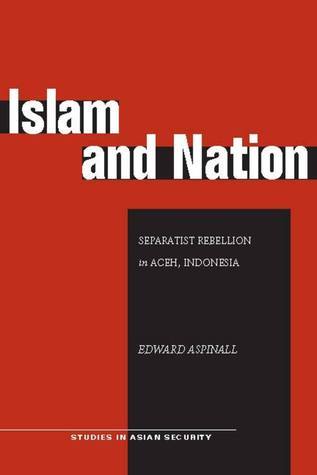
Islam and Nation
2009
Rooted in the latest theoretical debates about nationalism and ethnicity, yet written in an accessible and engaging style, Islam and Nation presents a fascinating study of the genesis, growth and decline of a nationalist movement. Drawing on hundreds of interviews with nationalist leaders, activists and guerillas, Aspinall reveals how the Free Aceh Movement went from being a quixotic fantasy to a guerilla army in the space of a generation, leading to a bitter conflict in which thousands perished. And by exploring the complex relationship between Islam and nationalism, Aspinall also explains how a society famed for its Islamic piety gave rise to a guerilla movement that ended up rejecting the Islamic goals of its forebears. Islam and Nation is a tour de force in the study of nationalist politics. It will be of great interest to readers concerned about Southeast Asia, Islamic politics, ethnic conflict and nationalism everywhere.
#24
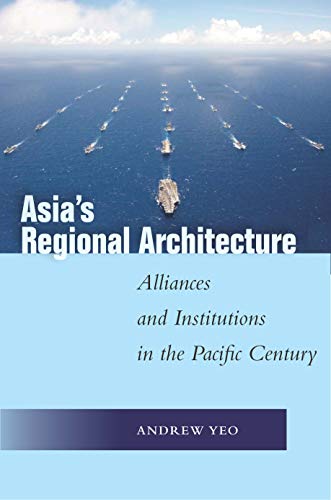
Asia's Regional Architecture
2019
During the Cold War, the U.S. built a series of alliances with Asian nations to erect a bulwark against the spread of communism and provide security to the region. Despite pressure to end bilateral alliances in the post-Cold War world, they persist to this day, even as new multilateral institutions have sprung up around them. The resulting architecture may aggravate rivalries as the U.S., China, and others compete for influence. However, Andrew Yeo demonstrates how Asia's complex array of bilateral and multilateral agreements may ultimately bring greater stability and order to a region fraught with underlying tensions.
Asia's Regional Architecture
transcends traditional international relations models. It investigates change and continuity in Asia through the lens of historical institutionalism. Refuting claims regarding the demise of the liberal international order, Yeo reveals how overlapping institutions can promote regional governance and reduce uncertainty in a global context. In addition to considering established institutions such as the Association of Southeast Asian Nations and the Asia-Pacific Economic Cooperation, he discusses newer regional arrangements including the East Asia Summit, Trans-Pacific Partnership, and the Belt and Road Initiative. This book has important implications for how policymakers think about institutional design and regionalism in Asia and beyond.
Authors
Edward Aspinall
Author · 3 books
Andrew Yeo
Author · 2 books