Margins




548 Market St PMB 65688, San Francisco California 94104-5401 USA
© 2026 Paratext Inc. All rights reserved
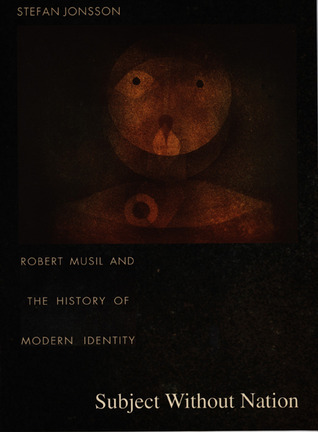
This innovative study of the works of Robert Musil opens a new window on the history of modern identity in western culture. Stefan Jonsson argues that Musil’s Austria was the first postimperial state in modern Europe. Prior to its destruction in 1918, the Austro-Hungarian Empire had ruled over a vast array of nationalities and, in the course of its demise as well as after, Austria was beset by nationalism, racism, and other forms of identity politics that ultimately led to the triumph of Nazism. It was to this society that Musil responded in his great work The Man Without Qualities. Exploring the nooks and crannies of this modernist classic, Jonsson shows that Musil’s narrative evolves along two axes that must be considered in Whereas the central plot portrays a Viennese elite that in 1913 attempts to restore social cohesion by gathering popular support for the cultural essence of the empire, the protagonist discovers that he lacks essence altogether and finds himself attracted by monsters, criminals, and revolutionary figures that reject the social order. In this way, Musil’s novel traces the disappearance of what Jonsson calls the expressivist paradigm—the conviction that identities such as gender, nationality, class, and social character are expressions of permanent intrinsic dispositions. This, Jonsson argues, is Musil’s great legacy. For not only did the Austrian author seek to liquidate prevailing conceptions of personal and cultural identity; he also projected “a new human being,” one who would resist assimilation into imperialist, nationalist, or fascist communities. Subject Without Nation presents a new interpretation of Viennese modernity and uncovers the historical foundations of poststructural and postcolonial reconceptualizations of human subjectivity. Illuminating links between Musil’s oeuvre as a whole and post-war developments in critical thought, this book locates an important crossroads between literary criticism, intellectual history, and cultural theory.