



Margins
1912
First Published
4.31
Average Rating
80
Number of Pages

Discover a timeless take on success that values inner strength as much as outward achievement. This book presents a practical, humane view of success that goes beyond trophies or praise. It invites you to measure progress by character, clear purpose, and the quiet confidence that comes from doing your best. Emerson’s ideas center on the idea that true success includes skill, imagination, and self-respect. It uses historical examples and everyday moments to show how personal integrity, thoughtful work, and sensitive perception can shape a life that matters. Learn why self-trust and a steady work ethic matter as much as visible results. See how talent and a larger sense of purpose work together to create meaningful progress. Discover how sensibility, health of mind, and love of truth shape durable achievement. Explore how nature, art, and daily practice illuminate real progress in any field. Ideal for readers of practical philosophy and anyone seeking a steadier, more grounded path to success.
Avg Rating
4.31
Number of Ratings
13
5 STARS
46%
4 STARS
38%
3 STARS
15%
2 STARS
0%
1 STARS
0%
goodreads

Author

Ralph Waldo Emerson
Ralph Waldo Emerson
Author · 95 books

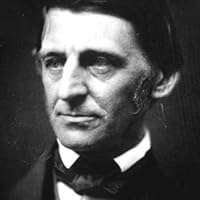
Ralph Waldo Emerson was born in Boston in 1803. Educated at Harvard and the Cambridge Divinity School, he became a Unitarian minister in 1826 at the Second Church Unitarian. The congregation, with Christian overtones, issued communion, something Emerson refused to do. "Really, it is beyond my comprehension," Emerson once said, when asked by a seminary professor whether he believed in God. (Quoted in 2,000 Years of Freethought edited by Jim Haught.) By 1832, after the untimely death of his first wife, Emerson cut loose from Unitarianism. During a year-long trip to Europe, Emerson became acquainted with such intelligentsia as British writer Thomas Carlyle, and poets Wordsworth and Coleridge. He returned to the United States in 1833, to a life as poet, writer and lecturer. Emerson inspired Transcendentalism, although never adopting the label himself. He rejected traditional ideas of deity in favor of an "Over-Soul" or "Form of Good," ideas which were considered highly heretical. His books include Nature (1836), The American Scholar (1837), Divinity School Address (1838), Essays, 2 vol. (1841, 1844), Nature, Addresses and Lectures (1849), and three volumes of poetry. Margaret Fuller became one of his "disciples," as did Henry David Thoreau. The best of Emerson's rather wordy writing survives as epigrams, such as the famous: "A foolish consistency is the hobgoblin of little minds, adored by little statesmen and philosophers and divines." Other one- (and two-) liners include: "As men's prayers are a disease of the will, so are their creeds a disease of the intellect" (Self-Reliance, 1841). "The most tedious of all discourses are on the subject of the Supreme Being" (Journal, 1836). "The word miracle, as pronounced by Christian churches, gives a false impression; it is a monster. It is not one with the blowing clover and the falling rain" (Address to Harvard Divinity College, July 15, 1838). He demolished the right wing hypocrites of his era in his essay "Worship": ". . . the louder he talked of his honor, the faster we counted our spoons" (Conduct of Life, 1860). "I hate this shallow Americanism which hopes to get rich by credit, to get knowledge by raps on midnight tables, to learn the economy of the mind by phrenology, or skill without study, or mastery without apprenticeship" (Self-Reliance). "The first and last lesson of religion is, 'The things that are seen are temporal; the things that are not seen are eternal.' It puts an affront upon nature" (English Traits, 1856). "The god of the cannibals will be a cannibal, of the crusaders a crusader, and of the merchants a merchant." (Civilization, 1862). He influenced generations of Americans, from his friend Henry David Thoreau to John Dewey, and in Europe, Friedrich Nietzsche, who takes up such Emersonian themes as power, fate, the uses of poetry and history, and the critique of Christianity. D. 1882. Ralph Waldo Emerson was his son and Waldo Emerson Forbes, his grandson.

548 Market St PMB 65688, San Francisco California 94104-5401 USA
© 2026 Paratext Inc. All rights reserved