Margins
Margins
Sign in
Margins
Subscribe to our newsletter
548 Market St PMB 65688, San Francisco California 94104-5401 USA
hello@margins.app
·
+1 (650) 223-5283
Privacy Policy
·
Terms of Use
© 2026 Paratext Inc. All rights reserved
📚 TBR - classics
📚
TBR - classics
The Old English Baron
1777
Clara Reeve
When Sir Philip Harclay returns to England after a long absence, he finds that his childhood friend, Arthur, Lord Lovel, is no longer alive, and that the castle and estates of the Lovel family have twice changed hands. But a mysteriously abandoned set of rooms in the castle of Lovel promises to disclose the secrets of the past. After a series of frantic episodes and surprising revelations, culminating in a trial by combat, the crimes of the usurper and the legitimacy of the true heir are finally discovered.
The Necromancer, or The Tale of the Black Forest
1794
Karl Friedrich Kahlert
"The hurricane was howling, the hailstones beating against windows, the hoarse croaking of the raven bidding adieu to autumn, and the weather-cock's dismal creaking joined with the mournful dirge of the solitary owl..." "The Necromancer" consists of a series of interconnected stories, all centering on the enigmatic figure of Volkert the Necromancer. Filled with murder, ghosts, and dark magic, and featuring a delirious and dizzying plot that almost defies comprehension, "The Necromancer" is one of the strangest horror novels ever written. One of the earliest Gothic bestsellers, "The Necromancer" was first published in 1794, and after more than two centuries still retains the power to thrill and fascinate readers. This edition includes a new preface which reveals for the first time ever the true identity of "The Necromancer"'s author, as well as an original critical essay by Jeffrey Cass, analysing the novel from a modern queer theory standpoint. The complete text of three contemporary reviews and helpful annotations are also included to further enhance this edition.
St. Irvyne
1811
Percy Bysshe Shelley
Wolfstein involuntarily shuddered.— Cavigni quaffed the liquor to the dregs—the cup fell from his trembling hand. The chill dew of death sat upon his forehead: in terrific convulsion he fell headlong; and, inarticulately uttering "I am poisoned," sank seemingly lifeless on the earth. Sixty robbers at once rushed forward to raise him; and, reclining in their arms, with an horrible and harrowing shriek, the spark of life fled from his body for ever. A robber, skilled in surgery, opened a vein; but no blood followed the touch of the lancet. —Wolfstein advanced to the body, unappalled by the crime which he had committed.
Melmoth the Wanderer
1820
Charles Maturin
Created by an Irish clergyman, Melmoth is one of the most fiendish characters in literature. In a satanic bargain, Melmoth exchanges his soul for immortality. The story of his tortured wanderings through the centuries is pieced together through those who have been implored by Melmoth to take over his pact with the devil. Influenced by the Gothic romances of the late 18th century, Maturin's diabolic tale raised the genre to a new and macabre pitch. Its many admirers include Poe, Balzac, Oscar Wilde and Baudelaire.
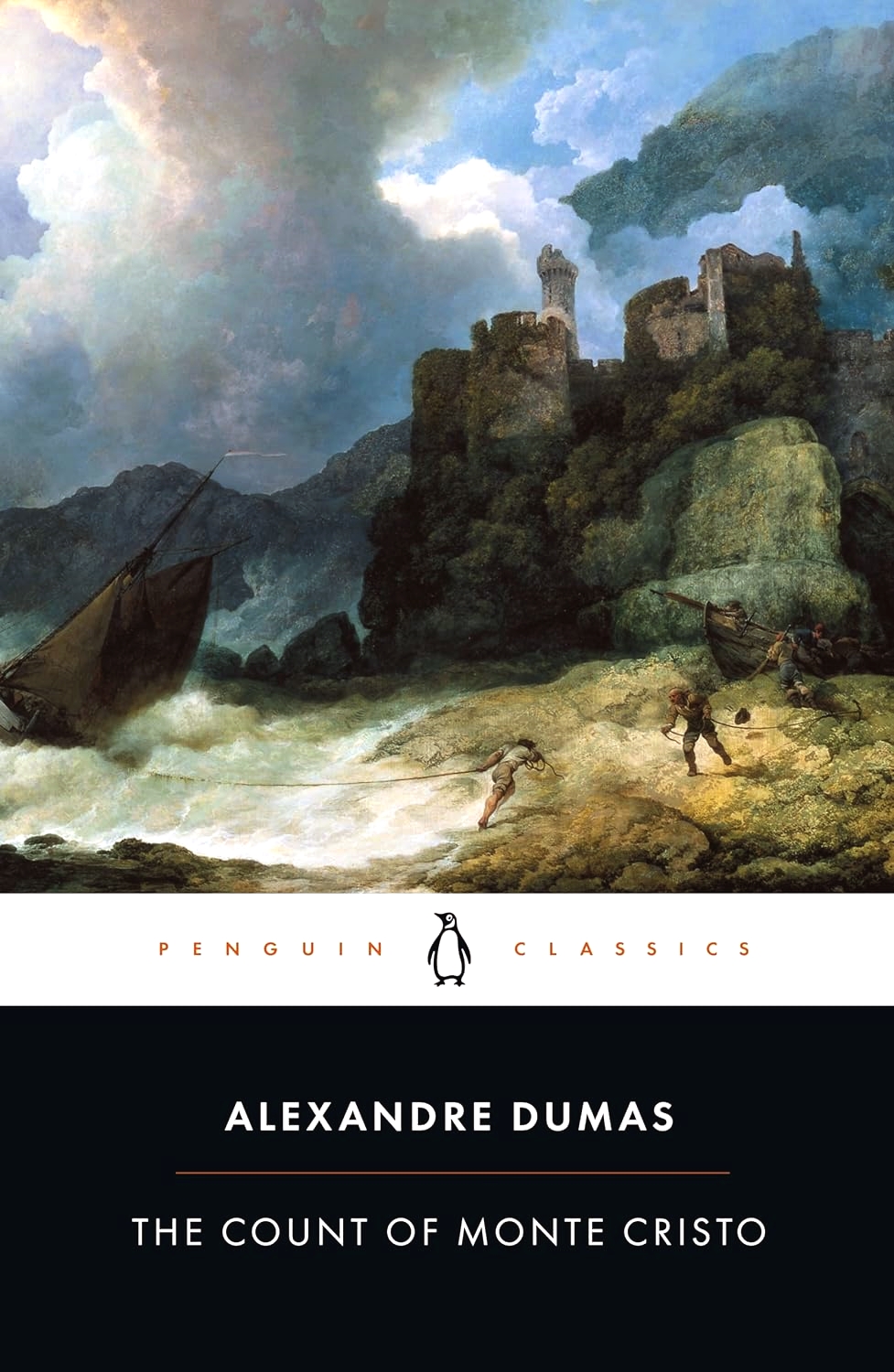
The Count of Monte Cristo
1844
Alexandre Dumas
Thrown in prison for a crime he has not committed, Edmond Dantès is confined to the grim fortress of If. There he learns of a great hoard of treasure hidden on the Isle of Monte Cristo and he becomes determined not only to escape, but also to unearth the treasure and use it to plot the destruction of the three men responsible for his incarceration. Dumas’ epic tale of suffering and retribution, inspired by a real-life case of wrongful imprisonment, was a huge popular success when it was first serialized in the 1840s. Robin Buss’s lively English translation is complete and unabridged, and remains faithful to the style of Dumas’s original. This edition includes an introduction, explanatory notes and suggestions for further reading.
Crime and Punishment
1866
Fyodor Dostoevsky
Raskolnikov, a destitute and desperate former student, wanders through the slums of St Petersburg and commits a random murder without remorse or regret. He imagines himself to be a great man, a Napoleon: acting for a higher purpose beyond conventional moral law. But as he embarks on a dangerous game of cat and mouse with a suspicious police investigator, Raskolnikov is pursued by the growing voice of his conscience and finds the noose of his own guilt tightening around his neck. Only Sonya, a downtrodden sex worker, can offer the chance of redemption.
The Brothers Karamazov
1880
Fyodor Dostoevsky
The Brothers Karamazov is a murder mystery, a courtroom drama, and an exploration of erotic rivalry in a series of triangular love affairs involving the “wicked and sentimental” Fyodor Pavlovich Karamazov and his three sons―the impulsive and sensual Dmitri; the coldly rational Ivan; and the healthy, red-cheeked young novice Alyosha. Through the gripping events of their story, Dostoevsky portrays the whole of Russian life, is social and spiritual striving, in what was both the golden age and a tragic turning point in Russian culture. This award-winning translation by Richard Pevear and Larissa Volokhonsky remains true to the verbal inventiveness of Dostoevsky’s prose, preserving the multiple voices, the humor, and the surprising modernity of the original. It is an achievement worthy of Dostoevsky’s last and greatest novel.
Anna Karenina
1878
Leo Tolstoy
Acclaimed by many as the world's greatest novel, Anna Karenina provides a vast panorama of contemporary life in Russia and of humanity in general. In it Tolstoy uses his intense imaginative insight to create some of the most memorable characters in all of literature. Anna is a sophisticated woman who abandons her empty existence as the wife of Karenin and turns to Count Vronsky to fulfil her passionate nature - with tragic consequences. Levin is a reflection of Tolstoy himself, often expressing the author's own views and convictions. Throughout, Tolstoy points no moral, merely inviting us not to judge but to watch. As Rosemary Edmonds comments, 'He leaves the shifting patterns of the kaleidoscope to bring home the meaning of the brooding words following the title, 'Vengeance is mine, and I will repay.
White Nights
1848
Fyodor Dostoevsky
White Nights is a short story by Fyodor Dostoevsky that was published in 1848. Set in St. Petersburg, it is the story of a young man fighting his inner restlessness. A light and tender narrative, it delves into the torment and guilt of unrequited love. Both protagonists suffer from a deep sense of alienation that initially brings them together. A blend of romanticism and realism, the story appeals gently to the senses and feelings.
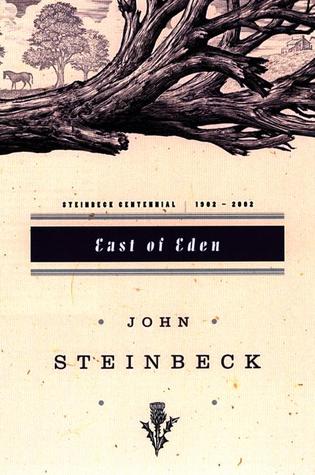
East of Eden
1952
John Steinbeck
In his journal, Nobel Prize winner John Steinbeck called East of Eden “the first book,” and indeed it has the primordial power and simplicity of myth. Set in the rich farmland of California’s Salinas Valley, this sprawling and often brutal novel follows the intertwined destinies of two families—the Trasks and the Hamiltons—whose generations helplessly reenact the fall of Adam and Eve and the poisonous rivalry of Cain and Abel. Adam Trask came to California from the East to farm and raise his family on the new rich land. But the birth of his twins, Cal and Aaron, brings his wife to the brink of madness, and Adam is left alone to raise his boys to manhood. One boy thrives nurtured by the love of all those around him; the other grows up in loneliness enveloped by a mysterious darkness. First published in 1952, East of Eden is the work in which Steinbeck created his most mesmerizing characters and explored his most enduring themes: the mystery of identity, the inexplicability of love, and the murderous consequences of love's absence. A masterpiece of Steinbeck's later years, East of Eden is a powerful and vastly ambitious novel that is at once a family saga and a modern retelling of the Book of Genesis.
The Monk
1796
Matthew Gregory Lewis
'He now saw himself stained with the most loathed and monstrous sins, the object of universal execration ... doomed to perish in tortures the most severe' Shocking, erotic and violent, The Monk is the story of Ambrosio, torn between his spiritual vows and the temptations of physical pleasure. His internal battle leads to sexual obsession, rape and murder, yet this book also contains knowing parody of its own excesses as well as social comedy. Written by Matthew Lewis when he was only nineteen, it was a ground-breaking novel in the Gothic Horror genre and spawned hundreds of imitators, drawn in by its mixture of bloodshed, sex and scandal.
Carmilla
1872
J. Sheridan Le Fanu
In an isolated castle deep in the Austrian forest, Laura leads a solitary life with only her ailing father for company. Until one moonlit night, a horse-drawn carriage crashes into view, carrying an unexpected guest – the beautiful Carmilla. So begins a feverish friendship between Laura and her mysterious, entrancing companion. But as Carmilla becomes increasingly strange and volatile, prone to eerie nocturnal wanderings, Laura finds herself tormented by nightmares and growing weaker by the day… Pre-dating Dracula by twenty-six years, Carmilla is the original vampire story, steeped in sexual tension and gothic romance.
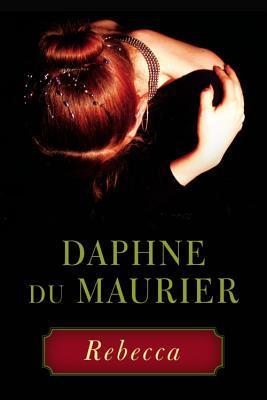
Rebecca
1938
Daphne du Maurier
"Last night I dreamt I went to Manderley again..." Ancient, beautiful Manderley, between the rose garden and the sea, is the county's showpiece. Rebecca made it so - even a year after her death, Rebecca's influence still rules there. How can Maxim de Winter's shy new bride ever fill her place or escape her vital shadow? A shadow that grows longer and darker as the brief summer fades, until, in a moment of climatic revelations, it threatens to eclipse Manderley and its inhabitants completely...
Jane Eyre
1847
Charlotte Bronte
Alternate editions can be found here and here. A gothic masterpiece of tempestuous passions and dark secrets, Charlotte Brontë's Jane Eyre is edited with an introduction and notes by Stevie Davis in Penguin Classics. Charlotte Brontë tells the story of orphaned Jane Eyre, who grows up in the home of her heartless aunt, enduring loneliness and cruelty. This troubled childhood strengthens Jane's natural independence and spirit - which prove necessary when she finds employment as a governess to the young ward of Byronic, brooding Mr Rochester. As her feelings for Rochester develop, Jane gradually uncovers Thornfield Hall's terrible secret, forcing her to make a choice. Should she stay with Rochester and live with the consequences, or follow her convictions - even if it means leaving the man she loves? A novel of intense power and intrigue, Jane Eyre dazzled readers with its passionate depiction of a woman's search for equality and freedom.
Classic Tales of Horror
1849
Edgar Allan Poe
This collection of chilling horror stories from the maestro of suspense contains nearly 20 of Edgar Allan Poe's best known stories, including: "The Fall of the House of Usher" The Masque of the Red Death" "The Pit and the Pendulum" For readers who have never come across the work of Poe before, this is a great introduction to some of his finest work.