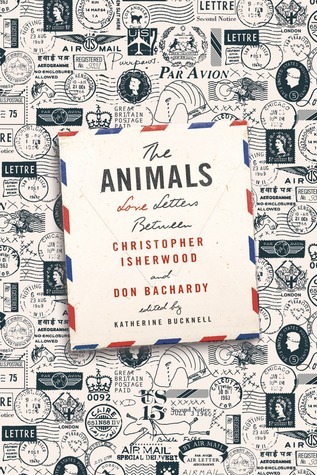



The love story between Christopher Isherwood and Don Bachardy―in their own words The English novelist and screenwriter Christopher Isherwood was already famous as the author of Goodbye to Berlin when he met Don Bachardy, a California teenager, on the beach in Santa Monica in 1952. Within a year, they began to live together as an openly gay couple, defying convention in the closeted world of Hollywood. Isherwood was forty-eight; Bachardy was eighteen. The Animals is the testimony in letters to their extraordinary partnership, which lasted until Isherwood's death in 1986―despite the thirty year age gap, affairs and jealousy (on both sides), the pressures of increasing celebrity, and the disdain of twentieth-century America for love between two men. The letters reveal the private world of the Isherwood was "Dobbin," a stubborn old workhorse; Bachardy was the rash, playful "Kitty." Isherwood had a gift for creating a safe and separate domestic milieu, necessary for a gay man in mid-twentieth-century America. He drew Bachardy into his semi-secret realm, nourished Bachardy's talent as a painter, and launched him into the artistic career that was first to threaten and eventually to secure their life together. The letters also tell of public achievements―the critical acclaim for A Single Man, the commercial success of Cabaret ―and the bohemian whirl of friendships in Los Angeles, London, and New York with such stars as Truman Capote, Julie Harris, David Hockney, Vanessa Redgrave, Gore Vidal, and Tennessee Williams. Bold, transgressive, and playful, The Animals articulates the devotion, in tenderness and in storms, between two uniquely original spirits.
Author

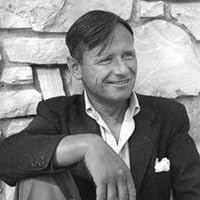
British-born American writer Christopher William Bradshaw Isherwood portrayed Berlin in the early 1930s in his best known works, such as Goodbye to Berlin (1939), the basis for the musical Cabaret (1966). Isherwood was a novelist, playwright, screenwriter, autobiographer, and diarist. With W.H. Auden he wrote three plays—The Dog Beneath the Skin (1932), The Ascent of F6 (1936), and On the Frontier (1938). Isherwood tells the story in his first autobiography, Lions and Shadows . After Isherwood wrote joke answers on his second-year exams, Cambridge University in 1925 asked him to leave. He briefly attended medical school and progressed with his first two novels, All the Conspirators (1928) and The Memorial (1932). In 1930, he moved to Berlin, where he taught English, dabbled in Communism, and enthusiastically explored his homosexuality. His experiences provided the material for Mister Norris Changes Trains (1935) and Goodbye to Berlin (1938), still his most famous book. In Berlin in 1932, he also began an important relationship with Heinz Neddermeyer, a young German with whom he fled the Nazis in 1933. England refused entry to Neddermeyer on his second visit in 1934, and the pair moved restlessly about Europe until the Gestapo arrested Neddermeyer in May 1937 and then finally separated them. In 1938, Isherwood sailed with Auden to China to write Journey to a War (1939), about the Sino-Japanese conflict. They returned to England and Isherwood went on to Hollywood to look for movie-writing work. He also became a disciple of the Ramakrishna monk, Swami Prabhavananda, head of the Vedanta Society of Southern California. He decided not to take monastic vows, but he remained a Hindu for the rest of his life, serving, praying, and lecturing in the temple every week and writing a biography, Ramakrishna and His Disciples (1965). In 1945, Isherwood published Prater Violet, fictionalizing his first movie writing job in London in 1933-1934. In Hollywood, he spent the start of the 1950s fighting his way free of a destructive five-year affair with an attractive and undisciplined American photographer, William Caskey. Caskey took the photographs for Isherwood’s travel book about South America, The Condor and The Cows (1947). Isherwood’s sixth novel, The World in the Evening (1954), written mostly during this period, was less successful than earlier ones. In 1953, he fell in love with Don Bachardy, an eighteen-year-old college student born and raised in Los Angeles. They were to remain together until Isherwood’s death. In 1961, Isherwood and completed the final revisions to his new novel Down There on a Visit (1962). Their relationship nearly ended in 1963, and Isherwood moved out of their Santa Monica house. This dark period underpins Isherwood’s masterpiece A Single Man (1964). Isherwood wrote another novel, A Meeting by the River (1967), about two brothers, but he gave up writing fiction and turned entirely to autobiography. In Kathleen and Frank (1971), he drew on the letters and diaries of his parents. In Christopher and His Kind (1976), he returned to the 1930s to tell, as a publicly avowed homosexual, the real story of his life in Berlin and his wanderings with Heinz Neddermeyer. The book made him a hero of gay liberation and a national celebrity all over again but now in his true, political and personal identity.