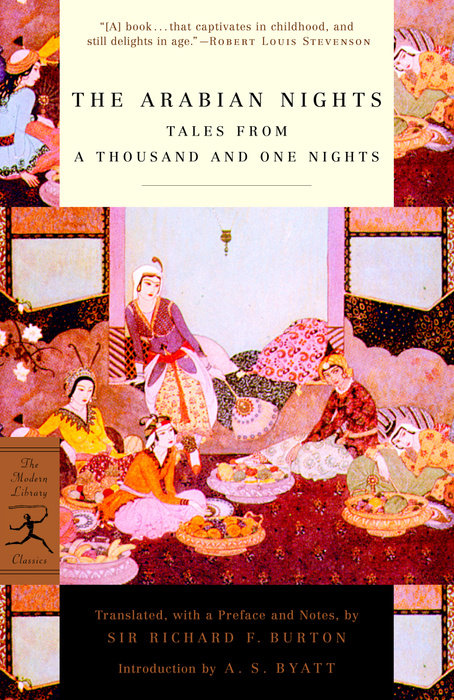
This volume reproduces the 1932 Modern Library edition, for which Bennett A. Cerf chose the most famous and representative stories from Sir Richard F. Burton's multivolume translation, and includes Burton's extensive and acclaimed explanatory notes. The tales of told by Shahrazad over a thousand and one nights to delay her execution by the vengeful King Shahriyar have become among the most popular in both Eastern and Western literature, as recounted by Sir Francis Burton. From the epic adventures of "Aladdin and the Enchanted Lamp" to the farcical "Young Woman and her Five Lovers" and the social criticism of "The Tale of the Hunchback", the stories depict a fabulous world of all-powerful sorcerers, jinns imprisoned in bottles and enchanting princesses. But despite their imaginative extravagance, the Tales are anchored to everyday life by their realism, providing a full and intimate record of medieval Islam.'
Author

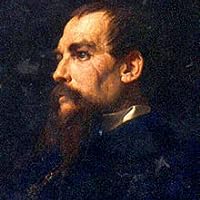
Captain Sir Richard Francis Burton KCMG FRGS was a British geographer, explorer, translator, writer, soldier, orientalist, cartographer, ethnologist, spy, linguist, poet, fencer and diplomat. He was known for his travels and explorations within Asia, Africa and the Americas as well as his extraordinary knowledge of languages and cultures. According to one count, he spoke 29 European, Asian, and African languages. Burton's best-known achievements include travelling in disguise to Mecca, an unexpurgated translation of One Thousand and One Nights (also commonly called The Arabian Nights in English after Andrew Lang's adaptation), bringing the Kama Sutra to publication in English, and journeying with John Hanning Speke as the first Europeans led by Africa's greatest explorer guide, Sidi Mubarak Bombay, utilizing route information by Indian and Omani merchants who traded in the region, to visit the Great Lakes of Africa in search of the source of the Nile. Burton extensively criticized colonial policies (to the detriment of his career) in his works and letters. He was a prolific and erudite author and wrote numerous books and scholarly articles about subjects including human behaviour, travel, falconry, fencing, sexual practices, and ethnography. A unique feature of his books is the copious footnotes and appendices containing remarkable observations and unexpurgated information. He was a captain in the army of the East India Company serving in India (and later, briefly, in the Crimean War). Following this he was engaged by the Royal Geographical Society to explore the east coast of Africa and led an expedition guided by the locals and was the first European to see Lake Tanganyika. In later life he served as British consul in Fernando Po, Santos, Damascus and, finally, Trieste. He was a Fellow of the Royal Geographical Society and was awarded a knighthood (KCMG) in 1886.