Margins
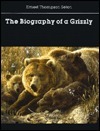
The Biography of a Grizzly book cover
The Biography of a Grizzly
1899
First Published
4.09
Average Rating
170
Number of Pages
Wahb fulfills the destiny of a silvertip grizzly bear in this Bison Book reprint of Ernest Thompson Seton's classic, originally published in 1900. In vivid language and in seventy-five drawings, the author of Animal Heroes captures for a new generation of readers the freedom and danger, joy and pathos, of Wahb's life. After his mother and siblings are shot by a cattle czar, Wahb grows up alone in the mountains of northwestern Wyoming. As a cub, he collects wounds and stores up hatred for omnipresent enemies—men and beasts. But in maturity he owns the territory. His arms can "toss pine logs like broomsticks"; his paws "with one tap" can "crush the biggest bull in the range"; and his claws can "tear huge slabs of rock from the mountainside." During summers at Yellowstone National Park he is on good behavior, except for his one intimidating visit to the hotel. Now his only enemies are time and the roachback grizzly who challenges his power.

Avg Rating
4.09
Number of Ratings
421
5 STARS
39%
4 STARS
37%
3 STARS
19%
2 STARS
5%
1 STARS
1%
goodreads

Author

Ernest Thompson Seton
Author · 23 books

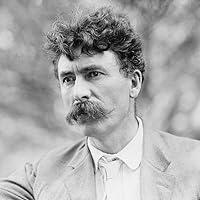
Ernest Thompson Seton was a Scots-Canadian (and naturalized U.S. citizen) who became a noted author, wildlife artist, founder of the Woodcraft Indians, and one of the founding pioneers of the Boy Scouts of America (BSA). Seton also heavily influenced Lord Baden-Powell, the founder of Scouting. His notable books related to Scouting include The Birch Bark Roll and The Boy Scout Handbook. He is responsible for the strong influence of American Indian culture in the BSA. He was born Ernest Evan Thompson in South Shields, County Durham (now part of South Tyneside, Tyne and Wear), England of Scottish parents and his family emigrated to Canada in 1866. As a youth, he retreated to the woods to draw and study animals as a way of avoiding his abusive father. He won a scholarship in art to the Royal Academy in London, England. He later rejected his father and changed his name to Ernest Thompson Seton. He believed that Seton had been an important name in his paternal line. He developed a fascination with wolves while working as a naturalist for Manitoba. He became successful as a writer, artist and naturalist, and moved to New York City to further his career. Seton later lived at Wyndygoul, an estate that he built in Cos Cob, a section of Greenwich, Connecticut. After experiencing vandalism by the local youth, Seton invited them to his estate for a weekend where he told stories of the American Indians and of nature. He formed the Woodcraft Indians in 1902 and invited the local youth to join. The stories became a series of articles written for the Ladies Home Journal and were eventually collected in the The Birch Bark Roll of the Woodcraft Indians in 1906. He was married twice. The first marriage was to Grace Gallatin in 1896. Their only daughter, Ann, was born in 1904 and died in 1990. Ann, who later changed her first name, became a best-selling author of historical and biographical novels as Anya Seton. According to her introduction to the novel Green Darkness, both of her parents were practicing Theosophists. Ernest and Grace divorced in 1935, and Ernest soon married Julia M. Buttree. Julia would write works by herself and with Ernest. They did not have any children, but did adopt an infant daughter, Beulah (Dee) Seton (later Dee Seton Barber), in 1938. Dee Seton Barber died in 2006.

548 Market St PMB 65688, San Francisco California 94104-5401 USA
© 2026 Paratext Inc. All rights reserved