Margins
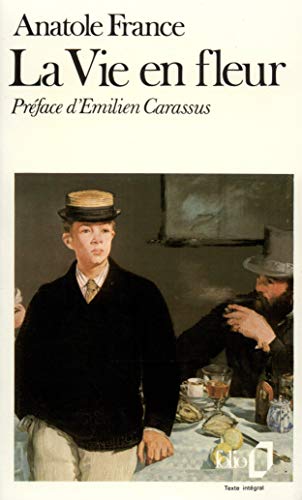
The Bloom of Life book cover
The Bloom of Life
1922
First Published
3.50
Average Rating
366
Number of Pages

Excerpt from The Bloom of Life This book is a sequel to Little Pierre, which appeared two years ago, and it brings my friend to the eve of his entry into the big world. These two volumes, whereto may be added My Friend's Book and Pierre Noziere, recount - although some names are altered and some circumstances feigned - the memories of my early years. How and why I came to employ disguise in presenting these faithful reminiscences to the world I shall unfold at the end of my narrative, when the child that I once had been had grown so complete a stranger to me that I could find, in his company, distraction from my own. My recollections follow one another haphazard, without order or connection. My memory is capricious. Madame de Caylus, when old and weighed down with care, lamented that her mind was not sufficiently free to allow her to dictate her autobiography.
Avg Rating
3.50
Number of Ratings
12
5 STARS
17%
4 STARS
33%
3 STARS
33%
2 STARS
17%
1 STARS
0%
goodreads

Author

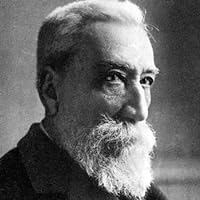
Anatole France
Anatole France
Author · 44 books

Awarded the Nobel Prize in Literature in 1921 "in recognition of his brilliant literary achievements, characterized as they are by a nobility of style, a profound human sympathy, grace, and a true Gallic temperament." Anatole France began his career as a poet and a journalist. In 1869, Le Parnasse Contemporain published one of his poems, La Part de Madeleine. In 1875, he sat on the committee which was in charge of the third Parnasse Contemporain compilation. He moved Paul Verlaine and Mallarmé aside of this Parnasse. As a journalist, from 1867, he wrote a lot of articles and notices. He became famous with the novel Le Crime de Sylvestre Bonnard (1881). Its protagonist, skeptical old scholar Sylvester Bonnard, embodied France's own personality. The novel was praised for its elegant prose and won him a prize from the French Academy. In La Rotisserie de la Reine Pedauque (1893) Anatole France ridiculed belief in the occult; and in Les Opinions de Jerome Coignard (1893), France captured the atmosphere of the fin de siècle. He was elected to the Académie française in 1896. France took an important part in the Dreyfus Affair. He signed Emile Zola's manifesto supporting Dreyfus, a Jewish army officer who had been falsely convicted of espionage. France wrote about the affair in his 1901 novel Monsieur Bergeret. France's later works include L'Île des Pingouins (1908) which satirizes human nature by depicting the transformation of penguins into humans - after the animals have been baptized in error by the nearsighted Abbot Mael. La Revolte des Anges (1914) is often considered France's most profound novel. It tells the story of Arcade, the guardian angel of Maurice d'Esparvieu. Arcade falls in love, joins the revolutionary movement of angels, and towards the end realizes that the overthrow of God is meaningless unless "in ourselves and in ourselves alone we attack and destroy Ialdabaoth." He was awarded the Nobel Prize in 1921. He died in 1924 and is buried in the Neuilly-sur-Seine community cemetery near Paris. In 1922, France's entire works were put on the Index Librorum Prohibitorum (Prohibited Books Index) of the Roman Catholic Church.[2:] This Index was abolished in 1966.

548 Market St PMB 65688, San Francisco California 94104-5401 USA
© 2026 Paratext Inc. All rights reserved