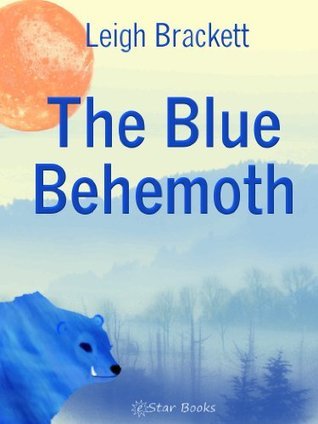



The story likely revolves around a futuristic or otherworldly setting, where characters encounter a colossal and mysterious entity referred to as the Blue Behemoth. Brackett's writing often combines elements of space opera, adventure, and exploration of alien worlds, making her a prominent figure in mid-20th-century science fiction. Leigh Brackett was an American author known for her contributions to science fiction, particularly her work in pulp magazines and novels. Her stories often feature strong protagonists, exotic settings, and themes of heroism, conflict, and the unknown.
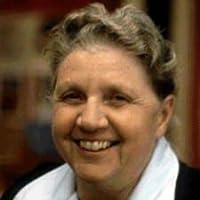
Author

Leigh Brackett was born on December 7, 1915 in Los Angeles, and raised near Santa Monica. Having spent her youth as an athletic tom-boy - playing volleyball and reading stories by Edgar Rice Burroughs and H Rider Haggard - she began writing fantastic adventures of her own. Several of these early efforts were read by Henry Kuttner, who critiqued her stories and introduced her to the SF personalities then living in California, including Robert Heinlein, Julius Schwartz, Jack Williamson, Edmond Hamilton - and another aspiring writer, Ray Bradbury. In 1944, based on the hard-boiled dialogue in her first novel, No Good From a Corpse, producer/director Howard Hawks hired Brackett to collaborate with William Faulkner on the screenplay of Raymond Chandler's The Big Sleep. Brackett maintained an on-again/off-again relationship with Hollywood for the remainder of her life. Between writing screenplays for such films as Rio Bravo, El Dorado, Hatari!, and The Long Goodbye, she produced novels such as the classic The Long Tomorrow (1955) and the Spur Award-winning Western, Follow the Free Wind (1963). Brackett married Edmond Hamilton on New Year's Eve in 1946, and the couple maintained homes in the high-desert of California and the rural farmland of Kinsman, Ohio. Just weeks before her death on March 17, 1978, she turned in the first draft screenplay for The Empire Strikes Back and the film was posthumously dedicated to her.