A fascinating insight into the debates and controversies about the position of women in medieval culture, written by France's first professional woman of letters The pioneering Book of the City of Ladies begins when, feeling frustrated and miserable after reading a male writer's tirade against women, Christine de Pizan has a dreamlike vision where three virtues—Reason, Rectitude and Justice—appear to correct this view. They instruct her to build an allegorical city in which womankind can be defended against slander, its walls and towers constructed from examples of female achievement both from her own day and the past: ranging from warriors, inventors and scholars to prophetesses, artists and saints. Christine de Pizan's spirited defence of her sex was unique for its direct confrontation of the misogyny of her day, and offers a telling insight into the position of women in medieval culture. The Book of the City of Ladies provides positive images of women, ranging from warriors and inventors, scholars to prophetesses, and artists to saints. For more than seventy years, Penguin has been the leading publisher of classic literature in the English-speaking world. With more than 1,700 titles, Penguin Classics represents a global bookshelf of the best works throughout history and across genres and disciplines. Readers trust the series to provide authoritative texts enhanced by introductions and notes by distinguished scholars and contemporary authors, as well as up-to-date translations by award-winning translators.
Author
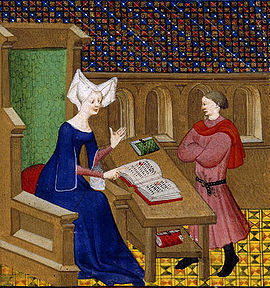
Christine de Pizan (also seen as de Pisan) (1363–c.1434) was a writer and analyst of the medieval era who strongly challenged misogyny and stereotypes that were prevalent in the male-dominated realm of the arts. De Pizan completed forty-one pieces during her thirty-year career (1399–1429). She earned her accolade as Europe’s first professional woman writer (Redfern 74). Her success stems from a wide range of innovative writing and rhetorical techniques that critically challenged renowned male writers such as Jean de Meun who, to Pizan’s dismay, incorporated misogynist beliefs within their literary works. In recent decades, de Pizan's work has been returned to prominence by the efforts of scholars such as Charity Cannon Willard and Earl Jeffrey Richards. Certain scholars have argued that she should be seen as an early feminist who efficiently used language to convey that women could play an important role within society, although this characterisation has been challenged by other critics who claim either that it is an anachronistic use of the word, or that her beliefs were not progressive enough to merit such a designation