


Margins
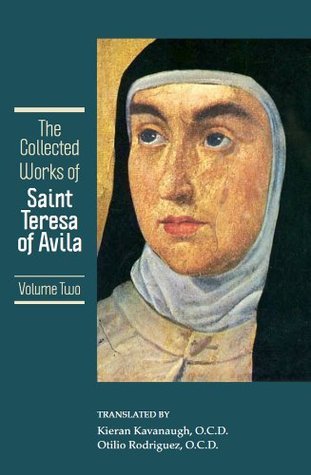
The Collected Works of St. Teresa of Avila. Volume 2 book cover
The Collected Works of St. Teresa of Avila. Volume 2
1980
First Published
4.52
Average Rating
530
Number of Pages

This volume contains two of Teresa's most popular works: The Way of Perfection and The Interior Castle. Shortly after writing The Book of Her Life for her confessor, St. Teresa wrote The Way of Perfection at the request of her nuns who were eager to learn about prayer and contemplation. Throughout this work she teaches her nuns about prayer and also teaches us. Toward the end of her life, after she had experienced both the spiritual betrothal and spiritual marriage, Teresa wrote The Interior Castle, her own panoramic view of her relationship with God, from the lowest stages to the highest. Teresa here demonstrates her great gift for writing about that relationship and attracting us to explore the possibility of pursuing it. Along with these two classics, Volume Two also includes one of Teresa's minor works, her Meditations on the Song of Songs. Includes general and biblical index.
Avg Rating
4.52
Number of Ratings
157
5 STARS
69%
4 STARS
18%
3 STARS
11%
2 STARS
1%
1 STARS
1%
goodreads

Author

Teresa of Ávila
Teresa of Ávila
Author · 22 books

Saint Teresa of Jesús, also called Saint Teresa of Ávila, was a prominent Spanish mystic, Carmelite nun, and writer of the Counter Reformation. She was a reformer of the Carmelite Order and is considered to be, along with John of the Cross, a founder of the Discalced Carmelites. In 1970 she was named a Doctor of the Church by Pope Paul VI. Teresa Sánchez de Cepeda Dávila y Ahumada Borned in Ávila, Spain, on March 28, 1515, St. Teresa was the daughter of a Toledo merchant and his second wife, who died when Teresa was 15, one of ten children. Shortly after this event, Teresa was entrusted to the care of the Augustinian nuns. After reading the letters of St. Jerome, Teresa resolved to enter a religious life. In 1535, she joined the Carmelite Order. She spent a number of relatively average years in the convent, punctuated by a severe illness that left her legs paralyzed for three years, but then experienced a vision of "the sorely wounded Christ" that changed her life forever. From this point forward, Teresa moved into a period of increasingly ecstatic experiences in which she came to focus more and more sharply on Christ's passion. With these visions as her impetus, she set herself to the reformation of her order, beginning with her attempt to master herself and her adherence to the rule. Gathering a group of supporters, Teresa endeavored to create a more primitive type of Carmelite. From 1560 until her death, Teresa struggled to establish and broaden the movement of Discalced or shoeless Carmelites. During the mid-1560s, she wrote the Way of Perfection and the Meditations on the Canticle. In 1567, she met St. John of the Cross, who she enlisted to extend her reform into the male side of the Carmelite Order. Teresa died in 1582. St. Teresa left to posterity many new convents, which she continued founding up to the year of her death. She also left a significant legacy of writings, which represent important benchmarks in the history of Christian mysticism. These works include the Way of Perfection and the Interior Castle. She also left an autobiography, the Life of St. Teresa of Ávila.

548 Market St PMB 65688, San Francisco California 94104-5401 USA
© 2026 Paratext Inc. All rights reserved