Margins
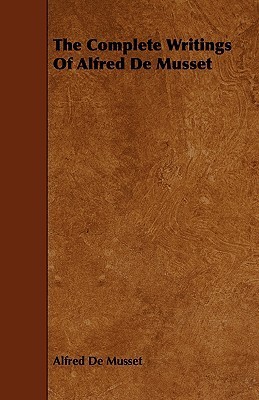
The Complete Writings of Alfred De Musset book cover
The Complete Writings of Alfred De Musset
2008
First Published
4.11
Average Rating
390
Number of Pages
The Complete Writings Of Alfred De Musset By Alfred De Musset. Many of the earliest books, particularly those dating back to the 1900s and before, are now extremely scarce and increasingly expensive. We are republishing these classic works in affordable, high quality, modern editions, using the original text and artwork.

Avg Rating
4.11
Number of Ratings
19
5 STARS
47%
4 STARS
26%
3 STARS
16%
2 STARS
11%
1 STARS
0%
goodreads

Authors

Alfred de Musset
Alfred de Musset
Author · 30 books

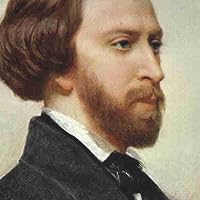
Alfred Louis Charles de Musset-Pathay (11 December 1810 – 2 May 1857) was a French dramatist, poet, and novelist. Along with his poetry, he is known for writing La Confession d'un enfant du siècle (The Confession of a Child of the Century, autobiographical) from 1836. Musset was born on 11 December 1810 in Paris. His family was upper-class but poor and his father worked in various key government positions, but never gave his son any money. His mother was similarly accomplished, and her role as a society hostess, - for example her drawing-room parties, luncheons, and dinners, held in the Musset residence - left a lasting impression on young Alfred. Early indications of Musset's boyhood talents were seen by his fondness for acting impromptu mini-plays based upon episodes from old romance stories he had read. Years later, elder brother Paul de Musset would preserve these, and many other details, for posterity, in a biography on his famous younger brother. Alfred de Musset entered the collège Henri IV at the age of nine, where in 1827 he won the Latin essay prize in the Concours général. With the help of Paul Foucher, Victor Hugo's brother-in-law, he began to attend, at the age of 17, the Cénacle, the literary salon of Charles Nodier at the Bibliothèque de l'Arsenal. After attempts at careers in medicine (which he gave up owing to a distaste for dissections), law, drawing, English and piano, he became one of the first Romantic writers, with his first collection of poems, Contes d'Espagne et d'Italie (1829, Tales of Spain and Italy). By the time he reached the age of 20, his rising literary fame was already accompanied by a sulphurous reputation fed by his dandy side. He was the librarian of the French Ministry of the Interior under the July Monarchy. During this time he also involved himself in polemics during the Rhine crisis of 1840, caused by the French prime minister Adolphe Thiers, who as Minister of the Interior had been Musset's superior. Thiers had demanded that France should own the left bank of the Rhine (described as France's "natural boundary"), as it had under Napoleon, despite the territory's German population. These demands were rejected by German songs and poems, including Nikolaus Becker's Rheinlied, which contained the verse: "Sie sollen ihn nicht haben, den freien, deutschen Rhein ..." (They shall not have it, the free, German Rhine). Musset answered to this with a poem of his own: "Nous l'avons eu, votre Rhin allemand" (We've had it, your German Rhine). The tale of his celebrated love affair with George Sand, which lasted from 1833 to 1835, is told from his point of view in his autobiographical novel, La Confession d'un Enfant du Siècle (The Confession of a Child of the Century, made into a film, Children of the Century), and from her point of view in her Elle et lui. Musset's Nuits (1835–1837, Nights) trace his emotional upheaval of his love for George Sand, from early despair to final resignation. He is also believed to be the author of Gamiani, or Two Nights of Excess (1833), a lesbian erotic novel, also believed to be modeled on George Sand. Tomb of Alfred de Musset in Père Lachaise Cemetery Musset was dismissed from his post as librarian by the new minister Ledru-Rollin after the revolution of 1848. He was however appointed librarian of the Ministry of Public Instruction in 1853. Musset received the Légion d'honneur on 24 April 1845, at the same time as Balzac, and was elected to the Académie française in 1852 (after two failures to do so in 1848 and 1850). Alfred de Musset died in his sleep on 2 May 1857. The cause was heart failure, the combination of alcoholism and a longstanding aortic insufficiency. One symptom that had been noticed by his brother was a bobbing of the head as a result of the amplification of the pulse; this was later called de Musset's sign. He was buried in Père Lachaise Cemetery in Paris.

Paul de Musset
Paul de Musset
Author · 1 book

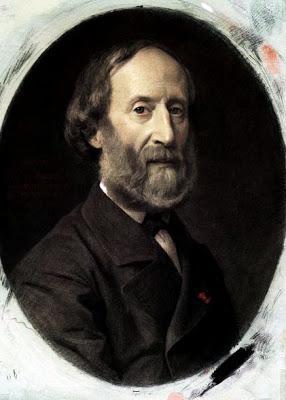
Paul Edme de Musset, born in Paris 7 November 1804, died in the same city 17 May 1880, was a French writer. Brother of Alfred de Musset he was well known for his family, who were very famous at the time, as well as for his own writings, including biographies. In 1859, two years after the death of his brother, Paul de Musset published Lui et Elle, a parody of the autobiography of George Sand, Elle et Lui, published six months previously and dealing with his relationship with Alfred de Musset. In 1861, he married Aimée d'Alton, who had also been involved with Alfred de Musset and whom she had also been engaged to in her youth.

548 Market St PMB 65688, San Francisco California 94104-5401 USA
© 2026 Paratext Inc. All rights reserved