In 1401, Christine de Pizan (1365–1430?), one of the most renowned and prolific woman writers of the Middle Ages, wrote a letter to the provost of Lille criticizing the highly popular and widely read Romance of the Rose for its blatant and unwarranted misogynistic depictions of women. The debate that ensued, over not only the merits of the treatise but also of the place of women in society, started Europe on the long path to gender parity. Pizan’s criticism sparked a continent-wide discussion of issues that is still alive today in disputes about art and morality, especially the civic responsibility of a writer or artist for the works he or she produces. In Debate of the “Romance of the Rose,” David Hult collects, along with the debate documents themselves, letters, sermons, and excerpts from other works of Pizan, including one from City of Ladies—her major defense of women and their rights—that give context to this debate. Here, Pizan’s supporters and detractors are heard alongside her own formidable, protofeminist voice. The resulting volume affords a rare look at the way people read and thought about literature in the period immediately preceding the era of print.
Author
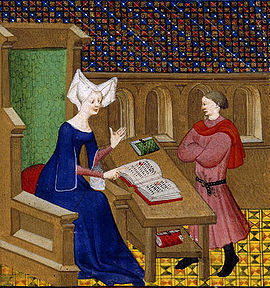
Christine de Pizan (also seen as de Pisan) (1363–c.1434) was a writer and analyst of the medieval era who strongly challenged misogyny and stereotypes that were prevalent in the male-dominated realm of the arts. De Pizan completed forty-one pieces during her thirty-year career (1399–1429). She earned her accolade as Europe’s first professional woman writer (Redfern 74). Her success stems from a wide range of innovative writing and rhetorical techniques that critically challenged renowned male writers such as Jean de Meun who, to Pizan’s dismay, incorporated misogynist beliefs within their literary works. In recent decades, de Pizan's work has been returned to prominence by the efforts of scholars such as Charity Cannon Willard and Earl Jeffrey Richards. Certain scholars have argued that she should be seen as an early feminist who efficiently used language to convey that women could play an important role within society, although this characterisation has been challenged by other critics who claim either that it is an anachronistic use of the word, or that her beliefs were not progressive enough to merit such a designation