Books in series

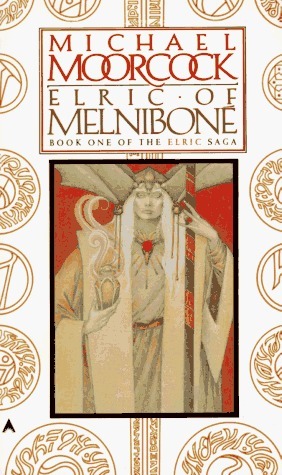
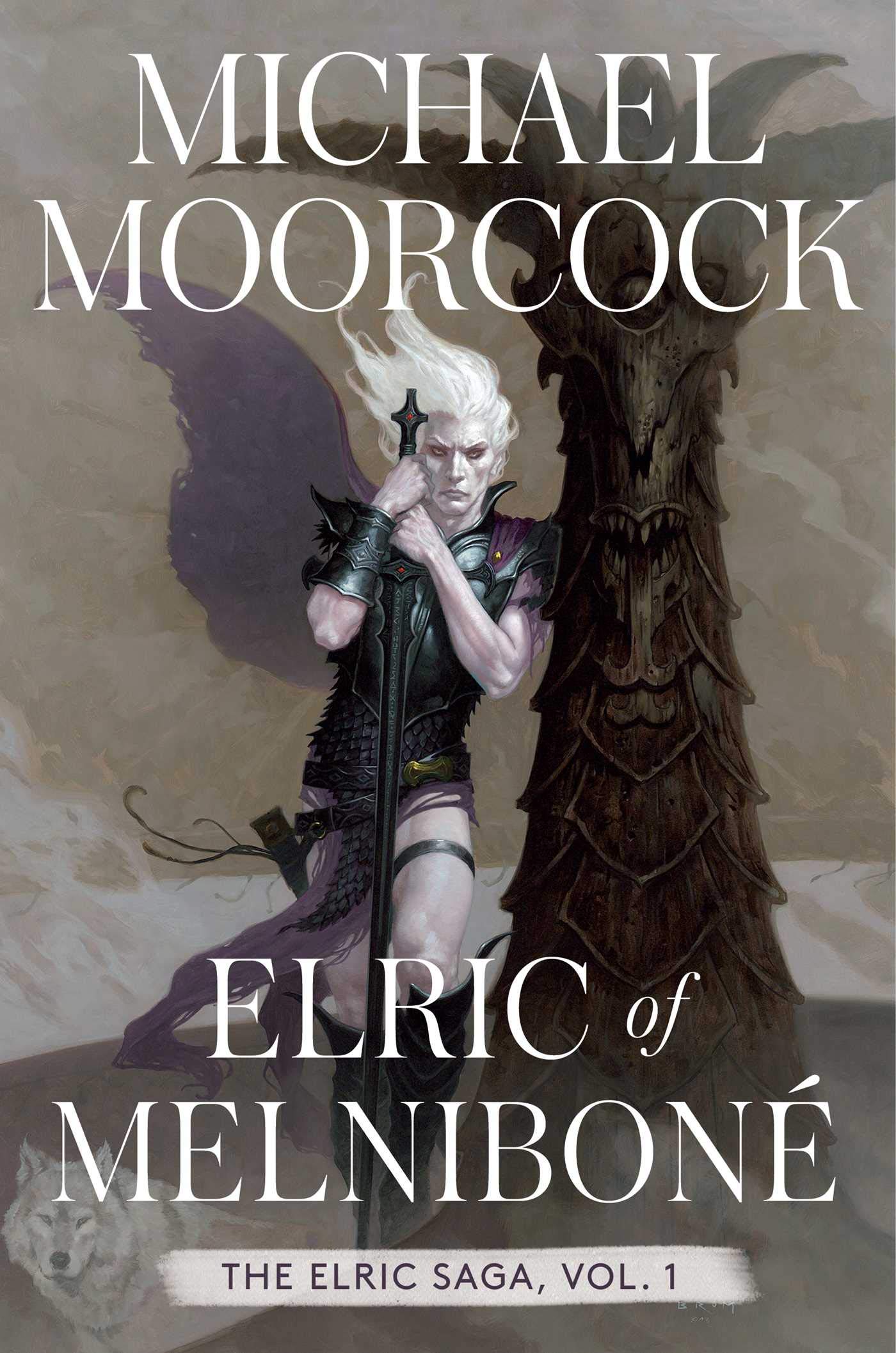
Elric of Melniboné
1972

Elric of Melniboné and Other Stories
2013

Elric
Die illustrierte Gesamtausgabe
2023

Crónicas de Elric de Melniboné
1996

Elric of Melniboné
2021

The Sailor on the Seas of Fate
1976

Elric od Melnibonéa - Kronike Crnog mača 2
2009

The Weird of the White Wolf
1977

The Vanishing Tower
1970

Crónicas de Elric de Melniboné
1996

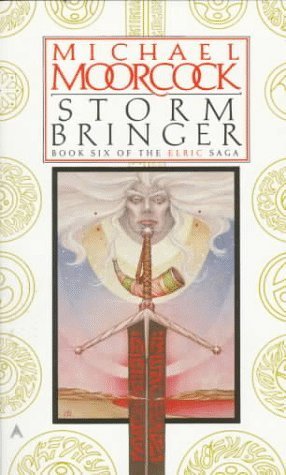
Stormbringer
2021

The Bane of the Black Sword
1977

Stormbringer
1965

Elric at the End of Time
1984

The Fortress of the Pearl
1989

The Revenge of the Rose
1991

The Dreamthief's Daughter
A Tale of the Albino
2001

The White Wolf
2022

The Skrayling Tree
The Albino in America
2004

The White Wolf's Son
The Albino Underground
2005

The Citadel of Forgotten Myths
2022

Swords & Dark Magic
The New Sword and Sorcery
2010

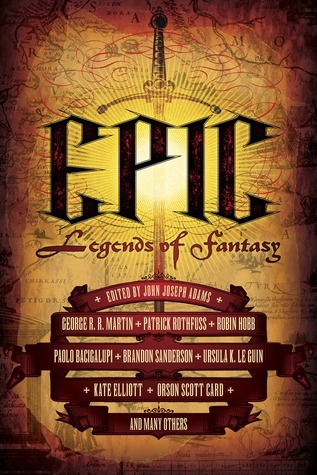
Epic
Legends of Fantasy
2010

Michael Moorcock's Elric
The Making of a Sorcerer
2005

Elric
The Stealer of Souls
2008
Authors

Orson Scott Card is the author of the novels Ender's Game, Ender's Shadow, and Speaker for the Dead, which are widely read by adults and younger readers, and are increasingly used in schools. Besides these and other science fiction novels, Card writes contemporary fantasy (Magic Street, Enchantment, Lost Boys), biblical novels (Stone Tables, Rachel and Leah), the American frontier fantasy series The Tales of Alvin Maker (beginning with Seventh Son), poetry (An Open Book), and many plays and scripts. Card was born in Washington and grew up in California, Arizona, and Utah. He served a mission for the LDS Church in Brazil in the early 1970s. Besides his writing, he teaches occasional classes and workshops and directs plays. He recently began a long-term position as a professor of writing and literature at Southern Virginia University. Card currently lives in Greensboro, North Carolina, with his wife, Kristine Allen Card, and their youngest child, Zina Margaret. For further details, see the author's Wikipedia page. For an ordered list of the author's works, see Wikipedia's List of works by Orson Scott Card. http://us.macmillan.com/author/orsons...


** I am shocked to find that some people think a 2 star 'I liked it' rating is a bad rating. What? I liked it. I LIKED it! That means I read the whole thing, to the last page, in spite of my life raining comets on me. It's a good book that survives the reading process with me. If a book is so-so, it ends up under the bed somewhere, or maybe under a stinky judo bag in the back of the van. So a 2 star from me means,yes, I liked the book, and I'd loan it to a friend and it went everywhere in my jacket pocket or purse until I finished it. A 3 star means that I've ignored friends to finish it and my sink is full of dirty dishes. A 4 star means I'm probably in trouble with my editor for missing a deadline because I was reading this book. But I want you to know . . . I don't finish books I don't like. There's too many good ones out there waiting to be found. Robin Hobb is the author of three well-received fantasy trilogies: The Farseer Trilogy (Assassin’s Apprentice, Royal Assassin, and Assassin’s Quest), The Liveship Traders Trilogy (Ship of Magic, Mad Ship and Ship of Destiny) and the Tawny Man Trilogy (Fool’s Errand, Golden Fool, and Fool’s Fate) Her current work in progress is entitled Shaman’s Crossing. Robin Hobb lives and works in Tacoma, Washington, and has been a professional writer for over 30 years. In addition to writing, her interests include gardening, mushrooming, and beachcombing. She and her husband Fred have three grown children and one teenager, and three grand-children. She also writes as Megan Lindholm, and works under that name have been finalists for the Hugo award, the Nebula Award, and the Endeavor award. She has twice won an Isaac Asimov’s Science Fiction Readers’ Award.

Melanie Rawn received a BA in history from Scripps College and worked as a teacher and editor before becoming a writer. She has been nominated for a Locus award on three separate occasions: in 1989 for Dragon Prince (in the first novel category), in 1994 for Skybowl (in the fantasy novel category), and again in 1995 for Ruins of Ambrai (in the fantasy novel category).

Ursula K. Le Guin published twenty-two novels, eleven volumes of short stories, four collections of essays, twelve books for children, six volumes of poetry and four of translation, and has received many awards: Hugo, Nebula, National Book Award, PEN-Malamud, etc. Her recent publications include the novel Lavinia, an essay collection, Cheek by Jowl, and The Wild Girls. She lived in Portland, Oregon. She was known for her treatment of gender (The Left Hand of Darkness, The Matter of Seggri), political systems (The Telling, The Dispossessed) and difference/otherness in any other form. Her interest in non-Western philosophies was reflected in works such as "Solitude" and The Telling but even more interesting are her imagined societies, often mixing traits extracted from her profound knowledge of anthropology acquired from growing up with her father, the famous anthropologist, Alfred Kroeber. The Hainish Cycle reflects the anthropologist's experience of immersing themselves in new strange cultures since most of their main characters and narrators (Le Guin favoured the first-person narration) are envoys from a humanitarian organization, the Ekumen, sent to investigate or ally themselves with the people of a different world and learn their ways.

Michael John Moorcock is an English writer primarily of science fiction and fantasy who has also published a number of literary novels. Moorcock has mentioned The Gods of Mars by Edgar Rice Burroughs, The Apple Cart by George Bernard Shaw and The Constable of St. Nicholas by Edward Lester Arnold as the first three books which captured his imagination. He became editor of Tarzan Adventures in 1956, at the age of sixteen, and later moved on to edit Sexton Blake Library. As editor of the controversial British science fiction magazine New Worlds, from May 1964 until March 1971 and then again from 1976 to 1996, Moorcock fostered the development of the science fiction "New Wave" in the UK and indirectly in the United States. His serialization of Norman Spinrad's Bug Jack Barron was notorious for causing British MPs to condemn in Parliament the Arts Council's funding of the magazine. During this time, he occasionally wrote under the pseudonym of "James Colvin," a "house pseudonym" used by other critics on New Worlds. A spoof obituary of Colvin appeared in New Worlds #197 (January 1970), written by "William Barclay" (another Moorcock pseudonym). Moorcock, indeed, makes much use of the initials "JC", and not entirely coincidentally these are also the initials of Jesus Christ, the subject of his 1967 Nebula award-winning novella Behold the Man, which tells the story of Karl Glogauer, a time-traveller who takes on the role of Christ. They are also the initials of various "Eternal Champion" Moorcock characters such as Jerry Cornelius, Jerry Cornell and Jherek Carnelian. In more recent years, Moorcock has taken to using "Warwick Colvin, Jr." as yet another pseudonym, particularly in his Second Ether fiction.

Trudi Canavan was born in Kew, Melbourne, and grew up in Ferntree Gully, a suburb at the foothills of the Dandenongs. In 1999 she won the Aurealis Award for Best Fantasy Short Story with “Whispers of the Mist Children”. In the same year she was granted a writers residency at Varuna Writers’ Centre in Katoomba, New South Wales. In November 2001, The Magicians’ Guild was first published in Australia. The second book of the trilogy, The Novice, was published in June 2002 and was nominated for the Aurealis Award for Best Fantasy Novel. The third book The High Lord was released in January 2003 and was nominated for the Best Novel Ditmar category. All three books entered Australian top ten SF bestseller lists. The Black Magician Trilogy reached the international market in 2004, published by HarperCollins’ EOS imprint in North America and Orbit Books in the UK. The trilogy is now rated by Nielsen BookScan as the most successful debut fantasy series of the last 10 years. Trudi’s second trilogy, Age of the Five, has also enjoyed bestselling success. Priestess of the White reached No.3 in the Sunday Times hardback fiction bestseller list, staying in the top ten for six weeks. In early 2006 Trudi signed a seven-figure contract with Orbit to write the prequel and sequel to the Black Magician Trilogy. The prequel, The Magician’s Apprentice was released in 2009 and won the Best Fantasy Novel category of the Aurealis Awards.


It all began when Pat Rothfuss was born to a marvelous set of parents. Throughout his formative years they encouraged him to do his best, gave him good advice, and were no doubt appropriately dismayed when he failed to live up to his full potential. In high-school Pat was something of a class clown. His hobbies included reading a novel or two a day and giving relationship advice to all his friends despite the fact that he had never so much as kissed a girl. He also role-played and wrote terrible stories about elves. He was pretty much a geek. Most of Pat's adult life has been spent in the University Wisconsin Stevens Point. In 1991 he started college in order to pursue a career in chemical engineering, then he considered clinical psychology. In 1993 he quit pretending he knew what he wanted to do with his life, changed his major to "undecided," and proceeded to study whatever amused him. He also began writing a book.... For the next seven years Pat studied anthropology, philosophy, eastern religions, history, alchemy, parapsychology, literature, and writing. He studied six different martial arts, practiced improv comedy, learned how to pick locks, and became a skilled lover of women. He also began writing a satirical advice column which he continues to this day: The College Survivial Guide. Through all of this he continued to work on his novel. In 2000 Pat went to grad school for English literature. Grad school sucked and Pat hated it. However, Pat learned that he loved to teach. He left in 2002 with his masters degree, shaking the dust from his feet and vowing never to return. During this period of time his novel was rejected by roughly every agent in the known universe. Now Pat teaches half-time at his old school as an assistant-sub-lecturer. He is underpaid but generally left alone to do as he sees fit with his classes. He is advisor for the college feminists, the fencing club, and, oddly enough, a sorority. He still roll-plays occasionally, but now he does it in an extremely sophisticated, debonair way. Through a series of lucky breaks, he has wound up with the best agent and editor imaginable, and the first book of his trilogy has been published under the title "The Name of the Wind." Though it has only been out since April 2007, it has already been sold in 26 foreign countries and won several awards. Pat has been described as "a rough, earthy iconoclast with a pipeline to the divine in everyone's subconscious." But honestly, that person was pretty drunk at the time, so you might want to take it with a grain of salt.
Carrie Vaughn is the author more than twenty novels and over a hundred short stories. She's best known for her New York Times bestselling series of novels about a werewolf named Kitty who hosts a talk radio advice show for the supernaturally disadvantaged. In 2018, she won the Philip K. Dick Award for Bannerless, a post-apocalyptic murder mystery. She's published over 20 novels and 100 short stories, two of which have been finalists for the Hugo Award. She's a contributor to the Wild Cards series of shared world superhero books edited by George R. R. Martin and a graduate of the Odyssey Fantasy Writing Workshop. An Air Force brat, she survived her nomadic childhood and managed to put down roots in Boulder, Colorado, where she collects hobbies. Visit her at www.carrievaughn.com For writing advice and essays, check out her Patreon: https://www.patreon.com/carrievaughn

George Raymond Richard "R.R." Martin, born on September 20, 1948, in Bayonne, New Jersey, is a distinguished fantasy and science fiction writer. Son to Raymond Collins Martin, a longshoreman, and Margaret Brady Martin, he grew up with two sisters, Darleen Martin Lapinski and Janet Martin Patten. Martin's passion for writing emerged early, selling monster stories to neighborhood kids, which later evolved into a keen interest in comic books during his high school years, where he also started writing fiction for comic fanzines. His first professional story, The Hero, was sold in 1970 at age 21 and published in Galaxy's February 1971 issue. After earning a B.S. and then a M.S. in Journalism from Northwestern University, Martin served as a conscientious objector with VISTA, tied to the Cook County Legal Assistance Foundation from 1972-1974, alongside directing chess tournaments and teaching journalism. His marriage to Gale Burnick in 1975 ended in divorce by 1979 without children. Martin transitioned to full-time writing in 1979, after a stint as writer-in-residence at Clarke College. In Hollywood, Martin contributed to Twilight Zone and Beauty and the Beast on CBS, later producing his own pilot, Doorways. Residing in Santa Fe, New Mexico, he's been actively involved with the Science Fiction & Fantasy Writers of America and the Writers' Guild of America, West.