Margins
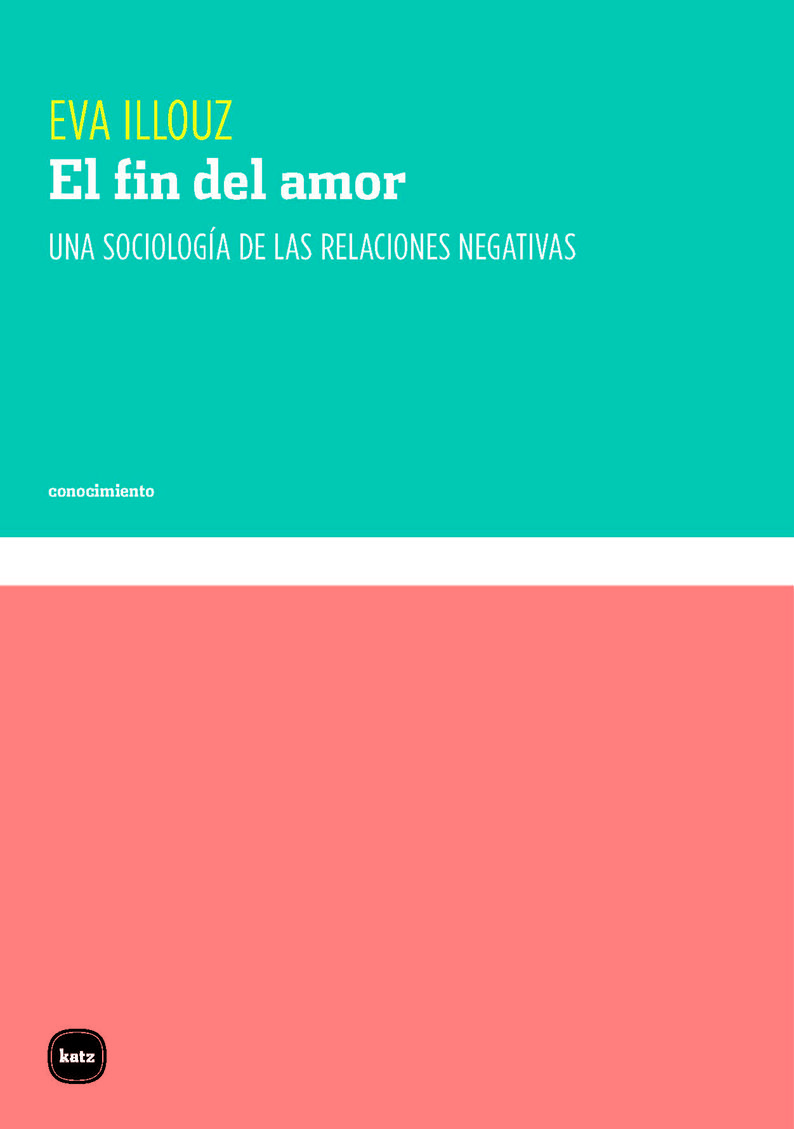
The End of Love book cover
The End of Love
A Sociology of Negative Relations
2020
First Published
4.21
Average Rating
412
Number of Pages

Western culture has endlessly represented the ways in which love miraculously erupts in people's lives, the mythical moment in which one knows someone is destined for us; the feverish waiting for a phone call or an email, the thrill that runs our spine at the mere thought of him or her. Yet, a culture that has so much to say about love is virtually silent on the no less mysterious moments when we avoid falling in love, where we fall out of love, when the one who kept us awake at night now leaves us indifferent, or when we hurry away from those who excited us a few months or even a few hours before. In The End of Love, Eva Illouz documents the multifarious ways in which relationships end. She argues that if modern love was once marked by the freedom to enter sexual and emotional bonds according to one's will and choice, contemporary love has now become characterized by practices of non-choice, the freedom to withdraw from relationships. Illouz dubs this process by which relationships fade, evaporate, dissolve, and break down "unloving." While sociology has classically focused on the formation of social bonds, The End of Love makes a powerful case for studying why and how social bonds collapse and dissolve. Particularly striking is the role that capitalism plays in practices of non-choice and "unloving." The unmaking of social bonds, she argues, is connected to contemporary capitalism that is characterized by practices of non-commitment and non-choice, practices that enable the quick withdrawal from a transaction and the quick realignment of prices and the breaking of loyalties. Unloving and non-choice have in turn a profound impact on society and economics as they explain why people may be having fewer children, increasingly living alone, and having less sex. The End of Love presents a profound and original analysis of the effects of capitalism and consumer culture on personal relationships and of what the dissolution of personal relationships means for capitalism.

Avg Rating
4.21
Number of Ratings
1,143
5 STARS
44%
4 STARS
39%
3 STARS
13%
2 STARS
4%
1 STARS
1%
goodreads

Author

Eva Illouz
Eva Illouz
Author · 16 books

Eva Illouz (Hebrew: אווה אילוז‎‎) (born April 30, 1961 in Fes, Morocco) is a professor of sociology at the Hebrew University in Jerusalem. Since October 2012 she has been President of Bezalel Academy of Art and Design. She is Bezalel's first woman president. Since 2015, Illouz has been a professor at Paris' School for Advanced Studies in the Social Sciences (École des hautes études en sciences sociales). The research developed by Illouz from her dissertation onward focuses on a number of themes at the junction of the study of emotions, culture and communication: The ways in which capitalism has transformed emotional patterns One dominant theme concerns the ways in which capitalism has transformed emotional patterns, in the realms of both consumption and production. Consuming the Romantic Utopia Illouz's first book addresses a dual process: the commodification of romance and the romanticization of commodities. Looking at a wide sample of movies and advertising images in women’s magazines of the 1930s, Illouz finds that advertising and cinematic culture presented commodities as the vector for emotional experiences and particularly the experience of romance. Commodities of many kinds – soaps, refrigerators, vacation packages, watches, diamonds, cereals, cosmetics, and many others – were presented as enabling the experience of love and romance. The second process was that of the commodification of romance, the process by which the 19th-century practice of calling on a woman, that is going to her home, was replaced by dating: going out and consuming the increasingly powerful industries of leisure. Romantic encounters moved from the home to the sphere of consumer leisure with the result that the search for romantic love was made into a vector for the consumption of leisure goods produced by expanding industries of leisure. Cold Intimacies and Saving the Modern Soul In Cold Intimacies and Saving the Modern Soul Illouz examines how emotions figure in the realm of economic production: in the American corporation, from the 1920s onward emotions became a conscious object of knowledge and construction and became closely connected to the language and techniques of economic efficiency. Psychologists were hired by American corporations to help increase productivity and better manage the workforce and bridged the emotional and the economic realms, intertwining emotions with the realm of economic action in the form of a radically new way of conceiving of the production process. So whether in the realm of production or that of consumption, emotions have been actively mobilized, solicited and shaped by economic forces, thus making modern people simultaneously emotional and economic actors. The role of popular clinical psychology in shaping modern identity Illouz argues that psychology is absolutely central to the constitution of modern identity and to modern emotional life: from the 1920s to the 1960s clinical psychologists became an extraordinarily dominant social group as they entered the army, the corporation, the school, the state, social services, the media, child rearing, sexuality, marriage, church pastoral care. In all of these realms, psychology established itself as the ultimate authority in matters of human distress by offering techniques to transform and overcome that distress. Psychologists of all persuasions have provided the main narrative of self-development for the 20th century. The psychological persuasion has transformed what was classified as a moral problem into a disease and may thus be understood as part and parcel of the broader phenomenon of the medicalization of social life. What is common to theme 1 and theme 2 is that both love and psychological health constitute utopias of happiness for the modern self, that both are mediated through consumption and that both constitute horizons to which the modern self aspires. In that sense, one overarching theme of her work can be called

548 Market St PMB 65688, San Francisco California 94104-5401 USA
© 2026 Paratext Inc. All rights reserved