
Philadelphia, 1918: Three friends—brave, confident Viola Trenmore, clever but shy Robert Drayton, and Viola's strong and hot-tempered brother, Terry—discover a mysterious powder that transports them two hundred years into the future. The Philadelphia of 2118 is no longer a bustling metropolis but instead a completely isolated city recovering from an unknown disaster. Citizens are issued identification tags instead of having names, and society is split between a wealthy, powerful minority and a downtrodden lower class. The position of supreme authority is held by a woman, and once a year she oversees competitions to the death to determine who rules alongside her. When Viola, Terry, and Robert are forced to take part in these strange and deadly games, it will take their combined wits for them to escape this strange world and return home. Equal parts adventure and dystopia, The Heads of Cerberus is an unjustly forgotten work of early science fiction written by a trailblazing master of the genre.
Author

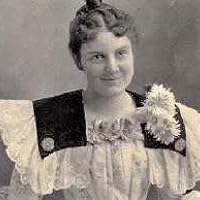
Gertrude Barrows Bennett (1883–1948) was the first major female writer of fantasy and science fiction in the United States, publishing her stories under the pseudonym Francis Stevens. Bennett wrote a number of highly acclaimed fantasies between 1917 and 1923 and has been called "the woman who invented dark fantasy." Among her most famous books are Claimed (which H. P. Lovecraft called "One of the strangest and most compelling science fantasy novels you will ever read")[4] and the lost world novel The Citadel of Fear. Bennett also wrote an early dystopian novel, The Heads of Cerberus (1919). Gertrude Mabel Barrows was born in Minneapolis in 1883. She completed school through the eighth grade, then attended night school in hopes of becoming an illustrator (a goal she never achieved). Instead, she began working as a stenographer, a job she held on and off for the rest of her life. In 1909 Barrows married Stewart Bennett, a British journalist and explorer, and moved to Philadelphia. A year later her husband died while on an expedition. With a new-born daughter to raise, Bennett continued working as a stenographer. When her father died toward the end of World War I, Bennett assumed care for her invalid mother. During this time period Bennett began to write a number of short stories and novels, only stopping when her mother died in 1920. In the mid 1920s, she moved to California. Because Bennett was estranged from her daughter, for a number of years researchers believed Bennett died in 1939 (the date of her final letter to her daughter). However, new research, including her death certificate, shows that she died in 1948.