Margins




548 Market St PMB 65688, San Francisco California 94104-5401 USA
© 2026 Paratext Inc. All rights reserved
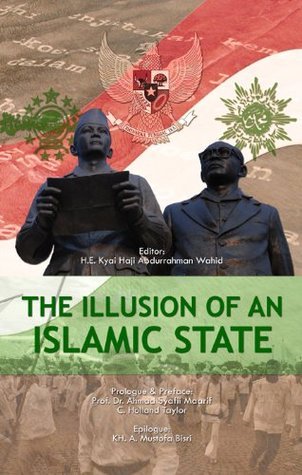
“People who are convinced that they know more than anyone else about Islam, and yet are full of hatred towards any of God’s creatures who do not travel the same path as they; and those who claim to be in possession of the absolute truth, and for that reason entitled to act as God’s vice-regents on earth (caliphs) and to dictate how everyone else must live—clearly, their words and behavior will not lead us into the presence of God. Their dream of an Islamic state is merely an illusion, for the true islamic state is not to be found in the structure of any government, but rather, in hearts which are open to God and all His creatures.” ~ Former Indonesian President Kyai Haji Abdurrahman Wahid, from his introduction to The Illusion of an Islamic State The Illusion of an Islamic State is the book that helped stem the tide of the Muslim Brotherhood’s political ambitions in Indonesia—the country with the world’s largest Muslim population. The book demonstrates how an alliance of moderate Muslim leaders can effectively isolate and discredit the Islamist ideology of religious hatred, supremacy and violence that underlies and animates terrorism. The Illusion of an Islamic State offers a model for dealing responsibly with the threat from both violent and non-violent extremists, including the Muslim Brotherhood, through democratic methods rather than a police state. Published during the run-up to Indonesia’s national elections in 2009, the book was an immediate sensation that helped to prevent the Muslim Brotherhood-affiliated Justice and Prosperity Party (PKS) from merging its political platform with that of incumbent president (and 2009 winner) Susilo Bambang Yudhoyono, and derailed PKS ambitions to nominate one of its cadre as Yudhoyono’s vice presidential running mate. From the preface to the English The Illusion of an Islamic State represents a landmark achievement in the field of counter-radicalization, which demonstrates how an alliance of moderate Muslim leaders can effectively isolate, and discredit, the ideology of religious hatred, supremacy and violence that underlies and animates terrorism. As such, it warrants serious study—as well as the wide dissemination, and application, of its findings—by public policy makers, journalists and people of good will of every faith and nation, who care about the threat to humanity posed by Islamist ideology, terrorism and a rising tide of Islamophobia in the West. If the Muslim world, including the contemporary Middle East, is to navigate a path between the Scylla and Charybdis of temporal and religious authoritarianism—and, at long last, provide its inhabitants with the kinds of civil liberty, and rule of law, that people in the West have come to take for granted—it can only do so by applying the principles articulated in this visionary work. For the renowned Muslim theologians who authored The Illusion of an Islamic State have issued a stirring theological defense of freedom, grounded in a profoundly spiritual understanding of Islam that is capable of deepening and broadening, rather than destroying, Muslims’ faith. As such, it represents a unique contribution from Indonesia to the world, offered in the spirit of love, compassion and respect.