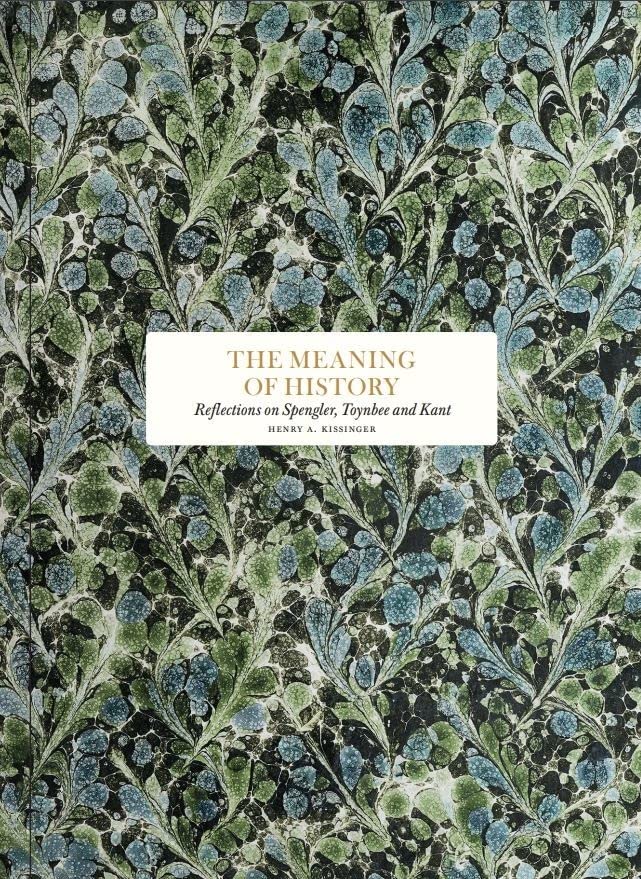
Exploring the dialectic between historical determinism and the exercise of free will, from the Enlightenment to WWII, by the former Secretary of State This volume presents Henry Kissinger's (born 1923) senior thesis from Harvard University, written in 1950 when he was 27 years old and published here in full for the first time over 70 years later. The text explores the thought of three distinct but important thinkers in the canon of Western philosophical and historical thought: Oswald Spengler, a German historian and philosopher; Arnold Toynbee, a British historian and philosopher; and Immanuel Kant, a Prussian of the European Enlightenment era and one of the most important philosophers to emerge from his time. At nearly 400 pages, it wrestles with some of the first-order dilemmas of Western political and moral thought, ranging in scope from the Enlightenment through to the midpoint of the 20th century―an era scourged by two world wars and the advent of the nuclear age.
Author
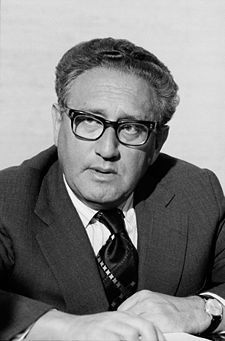
Henry Alfred Kissinger (born Heinz Alfred Kissinger) is a German-born American bureaucrat, diplomat, and 1973 Nobel Peace Prize laureate. He served as National Security Advisor and later concurrently as Secretary of State in the Richard Nixon administration. Kissinger emerged unscathed from the Watergate scandal, and maintained his powerful position when Gerald Ford became President. A proponent of Realpolitik, Kissinger played a dominant role in United States foreign policy between 1969 and 1977. During this period, he pioneered the policy of détente. During his time in the Nixon and Ford administrations he cut a flamboyant figure, appearing at social occasions with many celebrities. His foreign policy record made him a nemesis to the anti-war left and the anti-communist right alike.