Part of Series
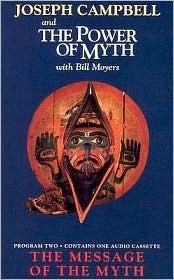
Campbell compares the creation story in Genesis with creation stories from around the world. Because the world changes, religion has to be transformed and new mythologies created. People today are stuck with old metaphors and myths that don't fit their needs. Moyers: " "The driving idea of his life was to understand the power of the stories and legends of the human race, especially those common themes and deep principles which energize our imaginations through the ages."" Campbell: " "Myths are clues to the spiritual potentialities of the human life.... Whenever one moves out of the transcendence, one comes into the field of opposites.... that is to say, I know the center and I know that good and evil are simply temporal apparitions.... With that fall in the Garden, nature was regarded as corrupt. There's a myth for you that corrupts the whole world for us and every spontaneous act is sinful."" Moyers: " "Your work in mythology has liberated my faith from the cultural prisons to which it has been sentenced."" Campbell: " "It has liberated my own. I know it's going to do it with everyone that gets the message.""
Author

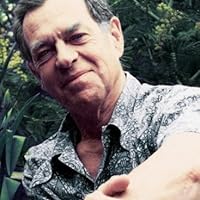
Joseph Campbell was an American author and teacher best known for his work in the field of comparative mythology. He was born in New York City in 1904, and from early childhood he became interested in mythology. He loved to read books about American Indian cultures, and frequently visited the American Museum of Natural History in New York, where he was fascinated by the museum's collection of totem poles. Campbell was educated at Columbia University, where he specialized in medieval literature, and continued his studies at universities in Paris and Munich. While abroad he was influenced by the art of Pablo Picasso and Henri Matisse, the novels of James Joyce and Thomas Mann, and the psychological studies of Sigmund Freud and Carl Jung. These encounters led to Campbell's theory that all myths and epics are linked in the human psyche, and that they are cultural manifestations of the universal need to explain social, cosmological, and spiritual realities. After a period in California, where he encountered John Steinbeck and the biologist Ed Ricketts, he taught at the Canterbury School, and then, in 1934, joined the literature department at Sarah Lawrence College, a post he retained for many years. During the 40s and '50s, he helped Swami Nikhilananda to translate the Upanishads and The Gospel of Sri Ramakrishna. He also edited works by the German scholar Heinrich Zimmer on Indian art, myths, and philosophy. In 1944, with Henry Morton Robinson, Campbell published A Skeleton Key to Finnegans Wake. His first original work, The Hero with a Thousand Faces, came out in 1949 and was immediately well received; in time, it became acclaimed as a classic. In this study of the "myth of the hero," Campbell asserted that there is a single pattern of heroic journey and that all cultures share this essential pattern in their various heroic myths. In his book he also outlined the basic conditions, stages, and results of the archetypal hero's journey. Throughout his life, he traveled extensively and wrote prolifically, authoring many books, including the four-volume series The Masks of God, Myths to Live By, The Inner Reaches of Outer Space and The Historical Atlas of World Mythology. Joseph Campbell died in 1987. In 1988, a series of television interviews with Bill Moyers, The Power of Myth, introduced Campbell's views to millions of people.