Margins




548 Market St PMB 65688, San Francisco California 94104-5401 USA
© 2026 Paratext Inc. All rights reserved

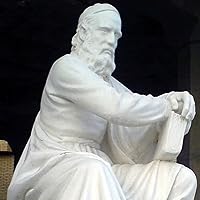
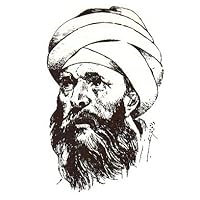
The Mishkat al-Anwar (The Niche for Lights) [1924] by Al-Ghazzali, translated by W.H.T. Gairdner THE MISHKÂT AL-ANWAR is a work of extreme interest from the viewpoint of al-Ghazzâlî's[2] inner life and esoteric thought. The glimpses it gives of that life and thought are remarkably, perhaps uniquely, intimate. It begins where his autobiographical Al-Munqidh min al-Dalâl leaves off. Its esotericism excited the curiosity and even the suspicion of Muslim thinkers from the first, and we have deeply interesting allusions to it in Ibn Tufaill and Ibn Rushd, the celebrated philosophers of Western Islam, who flourished within the century after al-Ghazzâlî's death in 1111 (A.H. 505)—a fact which, again, increases its importance and interest for us. The Rubayyat of Omar Khayyam by Omar Khayyam, tr. by Edward Fitzgerald [1859] The Rubáiyát of Omar Khayyám is the title that Edward FitzGerald gave to his translation of a selection of poems, originally written in Persian and of which there are about a thousand, attributed to Omar Khayyám (1048–1131), a Persian poet, mathematician and astronomer. A ruba'i is a two-line stanza with two parts (or hemistichs) per line, hence the word rubáiyát (derived from the Arabic language root for "four"), meaning "quatrains".