Margins
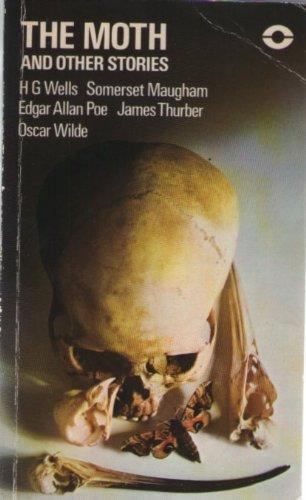
The Moth and Other Stories book cover
The Moth and Other Stories
1962
First Published
3.30
Average Rating
128
Number of Pages
Book by Taylor, Barry
Avg Rating
3.30
Number of Ratings
20
5 STARS
5%
4 STARS
30%
3 STARS
55%
2 STARS
10%
1 STARS
0%
goodreads

Authors

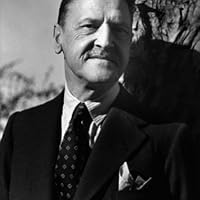
W. Somerset Maugham
W. Somerset Maugham
Author · 144 books

William Somerset Maugham was born in Paris in 1874. He spoke French even before he spoke a word of English, a fact to which some critics attribute the purity of his style. His parents died early and, after an unhappy boyhood, which he recorded poignantly in Of Human Bondage, Maugham became a qualified physician. But writing was his true vocation. For ten years before his first success, he almost literally starved while pouring out novels and plays. Maugham wrote at a time when experimental modernist literature such as that of William Faulkner, Thomas Mann, James Joyce and Virginia Woolf was gaining increasing popularity and winning critical acclaim. In this context, his plain prose style was criticized as 'such a tissue of clichés' that one's wonder is finally aroused at the writer's ability to assemble so many and at his unfailing inability to put anything in an individual way. During World War I, Maugham worked for the British Secret Service . He travelled all over the world, and made many visits to America. After World War II, Maugham made his home in south of France and continued to move between England and Nice till his death in 1965.

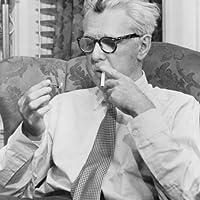
James Thurber
James Thurber
Author · 53 books

Thurber was born in Columbus, Ohio to Charles L. Thurber and Mary Agnes (Mame) Fisher Thurber. Both of his parents greatly influenced his work. His father, a sporadically employed clerk and minor politician who dreamed of being a lawyer or an actor, is said to have been the inspiration for the small, timid protagonist typical of many of his stories. Thurber described his mother as a "born comedienne" and "one of the finest comic talents I think I have ever known." She was a practical joker, on one occasion pretending to be crippled and attending a faith healer revival, only to jump up and proclaim herself healed. Thurber had two brothers, William and Robert. Once, while playing a game of William Tell, his brother William shot James in the eye with an arrow. Because of the lack of medical technology, Thurber lost his eye. This injury would later cause him to be almost entirely blind. During his childhood he was unable to participate in sports and activities because of his injury, and instead developed a creative imagination, which he shared in his writings. From 1913 to 1918, Thurber attended The Ohio State University, where he was a member of the Phi Kappa Psi Fraternity. He never graduated from the University because his poor eyesight prevented him from taking a mandatory ROTC course. In 1995 he was posthumously awarded a degree. From 1918 to 1920, at the close of World War I, Thurber worked as a code clerk for the Department of State, first in Washington, D.C. and then at the American Embassy in Paris, France. After this Thurber returned to Columbus, where he began his writing career as a reporter for the Columbus Dispatch from 1921 to 1924. During part of this time, he reviewed current books, films, and plays in a weekly column called "Credos and Curios," a title that later would be given to a posthumous collection of his work. Thurber also returned to Paris in this period, where he wrote for the Chicago Tribune and other newspapers. In 1925, he moved to Greenwich Village in New York City, getting a job as a reporter for the New York Evening Post. He joined the staff of The New Yorker in 1927 as an editor with the help of his friend and fellow New Yorker contributor, E.B. White. His career as a cartoonist began in 1930 when White found some of Thurber's drawings in a trash can and submitted them for publication. Thurber would contribute both his writings and his drawings to The New Yorker until the 1950s. Thurber was married twice. In 1922, Thurber married Althea Adams. The marriage was troubled and ended in divorce in May 1935. Adams gave Thurber his only child, his daughter Rosemary. Thurber remarried in June, 1935 to Helen Wismer. His second marriage lasted until he died in 1961, at the age of 66, due to complications from pneumonia, which followed upon a stroke suffered at his home. His last words, aside from the repeated word "God," were "God bless... God damn," according to Helen Thurber.

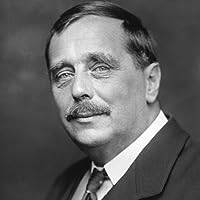
H.G. Wells
H.G. Wells
Author · 303 books

Herbert George Wells was born to a working class family in Kent, England. Young Wells received a spotty education, interrupted by several illnesses and family difficulties, and became a draper's apprentice as a teenager. The headmaster of Midhurst Grammar School, where he had spent a year, arranged for him to return as an "usher," or student teacher. Wells earned a government scholarship in 1884, to study biology under Thomas Henry Huxley at the Normal School of Science. Wells earned his bachelor of science and doctor of science degrees at the University of London. After marrying his cousin, Isabel, Wells began to supplement his teaching salary with short stories and freelance articles, then books, including The Time Machine (1895), The Island of Dr. Moreau (1896), The Invisible Man (1897), and The War of the Worlds (1898). Wells created a mild scandal when he divorced his cousin to marry one of his best students, Amy Catherine Robbins. Although his second marriage was lasting and produced two sons, Wells was an unabashed advocate of free (as opposed to "indiscriminate") love. He continued to openly have extra-marital liaisons, most famously with Margaret Sanger, and a ten-year relationship with the author Rebecca West, who had one of his two out-of-wedlock children. A one-time member of the Fabian Society, Wells sought active change. His 100 books included many novels, as well as nonfiction, such as A Modern Utopia (1905), The Outline of History (1920), A Short History of the World (1922), The Shape of Things to Come (1933), and The Work, Wealth and Happiness of Mankind (1932). One of his booklets was Crux Ansata, An Indictment of the Roman Catholic Church. Although Wells toyed briefly with the idea of a "divine will" in his book, God the Invisible King (1917), it was a temporary aberration. Wells used his international fame to promote his favorite causes, including the prevention of war, and was received by government officials around the world. He is best-remembered as an early writer of science fiction and futurism. He was also an outspoken socialist. Wells and Jules Verne are each sometimes referred to as "The Fathers of Science Fiction". D. 1946. More: http://philosopedia.org/index.php/H.\_... http://www.online-literature.com/well... http://www.hgwellsusa.50megs.com/ http://www.britannica.com/EBchecked/t... http://en.wikipedia.org/wiki/H.\_G.\_Wells

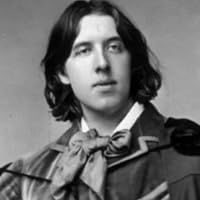
Oscar Wilde
Oscar Wilde
Author · 358 books

Oscar Fingal O'Flahertie Wills Wilde was an Irish playwright, poet, and author of numerous short stories, and one novel. Known for his biting wit, and a plentitude of aphorisms, he became one of the most successful playwrights of the late Victorian era in London, and one of the greatest celebrities of his day. Several of his plays continue to be widely performed, especially The Importance of Being Earnest. As the result of a widely covered series of trials, Wilde suffered a dramatic downfall and was imprisoned for two years hard labour after being convicted of "gross indecency" with other men. After Wilde was released from prison he set sail for Dieppe by the night ferry. He never returned to Ireland or Britain, and died in poverty.

548 Market St PMB 65688, San Francisco California 94104-5401 USA
© 2026 Paratext Inc. All rights reserved