Margins
The Palm at the End of the Mind book cover
The Palm at the End of the Mind
Relatedness, Religiosity, and the Real
2009
First Published
4.50
Average Rating
256
Number of Pages
In many societies and for many people, religiosity is only incidentally connected with texts or theologies, church or mosque, temple or monastery. Drawing on a lifetime of ethnographic work among people for whom religion is not principally a matter of faith, doctrine, or definition, Michael Jackson turns his attention to those situations in life where we come up against the limits of language, our strength, and our knowledge, yet are sometimes thrown open to new ways of understanding our being-in-the-world, to new ways of connecting with others. Through sixty-one beautifully crafted essays based on sojourns in Europe, West Africa, the United States, Australia, and New Zealand, and taking his cue from Wallace Stevens’s late poem, “Of Mere Being,” Jackson explores a range of experiences where “the palm at the end of the mind” stands “beyond thought,” on “the edge of space,” “a foreign song.” Moments of crisis as well as everyday experiences in cafés, airports, and offices disclose the subtle ways in which a single life shades into others, the boundaries between cultures become blurred, fate unfolds through genealogical time, elective affinities make their appearance, and different values contend.

Avg Rating
4.50
Number of Ratings
20
5 STARS
70%
4 STARS
10%
3 STARS
20%
2 STARS
0%
1 STARS
0%
goodreads

Author

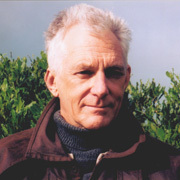
Michael D. Jackson
Michael D. Jackson
Author · 13 books

Michael D. Jackson (born 1940) is a post-modern New Zealand anthropologist who has taught in the anthropology departments at the University of Copenhagen and Indiana University and is currently a professor of world religions at Harvard Divinity School. He holds a BA from Victoria University of Wellington, an MA from the University of Auckland and a PhD from Cambridge University. Jackson is the founder of existential/phenomenological anthropology, a sub-field of anthropology using ethnographical fieldwork as well as existential theories of being in order to explore modes of being and interpersonal relationships as they exist in various cultural settings throughout the world. In this way he creates an interdisciplinary approach that attempts to understand the human condition by examining the various ways in which this condition manifests itself cross-culturally. In so doing, he concentrates on concrete, individual, lived situations and attempts to recreate and explain these situations as they are perceived and experienced by the other. For example, rather than looking at what mythology or ritual may mean for a group of people, he looks at what mythology or ritual means for an individual existing in the group. In this way he is able to examine "being-in-the-world", a concept fundamental to the field of existentialism. This approach also allows him to address the problem of intersubjectivity, which has as a goal the understanding of the other in terms of the other's individual lifeworld. In this way the other's relationship with the world around them is explained in a manner not previously seen, and is fundamental to the project of understanding intersubjective existence (or the relation between two individual subjects). A large part of Jackson's methodology is also his account of personal experiences he acquired during his fieldwork. This method of reflexivity is indicative of the current postmodern trend in the field of anthropology, which seeks to contextualize the ethnographer as a subjective participant in the field. This methodology allows him to explain very accurately his relation with the world around him, referencing frequently existential theories in the process. His influences include: Jean-Paul Sartre, Maurice Merleau-Ponty, Martin Heidegger, Claude Levi-Strauss, Hannah Arendt, Theodor Adorno, Pierre Bourdieu, William James, John Dewey, Edmund Husserl, Bronislaw Malinowski, Richard Rorty, Paul Ricoeur, Marcel Mauss. He is in no way related to the famous singer, also named Michael Jackson.

548 Market St PMB 65688, San Francisco California 94104-5401 USA
© 2026 Paratext Inc. All rights reserved