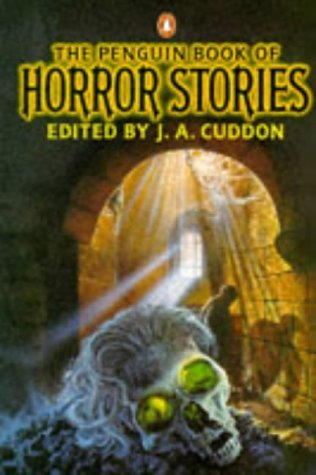



Here are the depths of fear and darkness, the furthest limits of agony in mind and body... Born in the eighteenth century, the horror story produced a literature of terror filled with werewolves and vampires, and which borrowed many elements from its sister genre, the ghost story. Many famous writers were tempted by it, including Maupassant, Poe, Gautier, Conan Doyle, L.P. Hartley and Ray Bradbury. In this excellent anthology Charles Cuddon has selected the best stories of all, spanning the whole period. The Monk of horror, or The Conclave of corpses, by Anonymous—The Astrologer's prediction, or The Maniac's fate, by Anonymous—The expedition to Hell, by James Hogg—Mateo Falcone, by Prosper Merimee—The Case of M. Valdemar, by Edgar Allan Poe—Le Grande Breteche, by Honore de Balzac—The romance of certain old clothes, by Henry James—Who knows?, by Guy de Maupassant—The body snatcher, by Robert Louis Stevenson—The death of Olivier Becaille, by Emile Zola—The boarded window, by Ambrose Bierce—Lost hearts, by M. R. James—The sea-raiders, by H. G. Wells—The derelict, by William Hope Hodgson—Thurnley Abbey, by Perceval Landon—The fourth man, by John Russell—In the penal colony, by Franz Kafka—The waxwork, by A. M. Burrage—Mrs. Amworth, by E. F. Benson—The reptile, by Augustus Muir—Mr. Meldrum's Mania, by John Metcalfe—The beast with five fingers, by William Fryer Harvey—Dry September, by William Faulkner—Couching at the door, by D. K. Broster—The two bottles of relish, by Lord Dunsany—The man who liked Dickens, by Evelyn Waugh—Taboo, by Geoffrey Household—The thought, by L. P. Hartley—Comrade death, by Gerald Kersh—Leningen versus the ants, by Carl Stephenson—The brink of darkness, by Yvor Winters—Activity time, by Monica Dickens—Earth to Earth, by Robert Graves—The dwarf, by Ray Bradbury—The Portabello Road, by Muriel Spark—No flies on Frank, by John Lennon—Sister Coxall's revenge, by Dawn Muscillo—Thou shalt not suffer a witch..., by Dorothy K. Haynes—The terrapin, by Patricia Highsmith—Man from the south, by Roald Dahl—Uneasy home-coming, by Will F. Jenkins—The Aquarist, by J. N. Allan—An interview with M. Chakko, by Vilas Sarang Cover illustration: Steve Crisp.
Authors
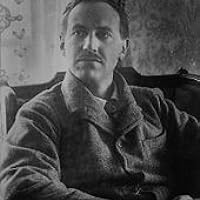
Librarian note: There is more than one author in the GoodReads database with this name (William) John Metcalfe was born in Heacham, Norfolk in 1891, the son of William Charles Metcalfe, an author of sea stories for boys. Metcalfe graduated with a degree in philosophy from the University of London in 1913 and for the next two years, until the outbreak of the First World War, he taught in Paris. In 1914, he joined the Royal Naval Division and fought in the war but was invalided out in 1915; two years later, he enlisted again with the Royal Naval Air Service and in 1918 obtained a commission and served as an armament officer in the Royal Air Force. After the war, Metcalfe obtained a post as an assistant master at a London school and began to write. His first book, The Smoking Leg and Other Stories, was published in 1925 and is highly regarded among connoisseurs of weird and supernatural tales. Another collection, also containing several horror stories, Judas and Other Stories, followed in 1931. Metcalfe also wrote a handful of novels in other genres. In 1928, Metcalfe emigrated to New York and in 1930 married the American novelist Evelyn Scott, a prominent figure in the 1920s and ’30s American literary scene. In 1939, Metcalfe returned to military service with the British Royal Air Force and later again returned to the United States, where he taught at schools in Connecticut and New York. After the death of his wife in 1963, Metcalfe suffered a breakdown and was hospitalized; he died in 1965 after a fall.


Edward Frederic "E. F." Benson was an English novelist, biographer, memoirist, archaeologist and short story writer. E. F. Benson was the younger brother of A.C. Benson, who wrote the words to "Land of Hope and Glory", Robert Hugh Benson, author of several novels and Roman Catholic apologetic works, and Margaret Benson, an author and amateur Egyptologist. Benson died during 1940 of throat cancer at the University College Hospital, London. He is buried in the cemetery at Rye, East Sussex. Last paragraph from Wikipedia

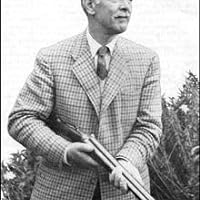
British author of mostly thrillers, though among 37 books he also published children's fiction. Household's flight-and-chase novels, which show the influence of John Buchan, were often narrated in the first person by a gentleman-adventurer. Among his best-know works is' Rogue Male' (1939), a suggestive story of a hunter who becomes the hunted, in 1941 filmed by Fritz Lang as 'Man Hunt'. Household's fast-paced story foreshadowed such international bestsellers as Richard Condon's thriller 'The Manchurian Candidate' (1959), Frederick Forsyth's 'The Day of the Jackal' (1971), and Ken Follett's 'Eye of the Needle' (1978) . In 1922 Household received his B.A. in English from Magdalen College, Oxford, and between 1922 and 1935 worked in commerce abroad, moving to the US in 1929. During World War II, Household served in the Intelligence Corps in Romania and the Middle East. After the War he lived the life of a country gentleman and wrote. In his later years, he lived in Charlton, near Banbury, Oxfordshire, and died in Wardington. Household also published an autobiography, 'Against the Wind' (1958), and several collections of short stories, which he himself considered his best work.

From the publisher: MONICA DICKENS, born in 1915, was brought up in London and was the great-granddaughter of Charles Dickens. Her mother's German origins and her Catholicism gave her the detached eye of an outsider; at St Paul's Girls' School she was under occupied and rebellious. After drama school she was a debutante before working as a cook. One Pair of Hands (1939), her first book, described life in the kitchens of Kensington. It was the first of a group of semi autobiographies of which Mariana (1940), technically a novel, was one. 'My aim is to entertain rather than instruct,' she wrote. 'I want readers to recognise life in my books.' In 1951 Monica Dickens married a US naval officer, Roy Stratton, moved to America and adopted two daughters. An extremely popular writer, she involved herself in, and wrote about, good causes such as the Samaritans. After her husband died she lived in a cottage in rural Berkshire, dying there in 1992. http://www.persephonebooks.co.uk/page...


Émile François Zola was an influential French novelist, the most important example of the literary school of naturalism, and a major figure in the political liberalization of France. More than half of Zola's novels were part of a set of 20 books collectively known as Les Rougon-Macquart. Unlike Balzac who in the midst of his literary career resynthesized his work into La Comédie Humaine, Zola from the start at the age of 28 had thought of the complete layout of the series. Set in France's Second Empire, the series traces the "environmental" influences of violence, alcohol and prostitution which became more prevalent during the second wave of the Industrial Revolution. The series examines two branches of a family: the respectable (that is, legitimate) Rougons and the disreputable (illegitimate) Macquarts for five generations. As he described his plans for the series, "I want to portray, at the outset of a century of liberty and truth, a family that cannot restrain itself in its rush to possess all the good things that progress is making available and is derailed by its own momentum, the fatal convulsions that accompany the birth of a new world." Although Zola and Cézanne were friends from childhood, they broke in later life over Zola's fictionalized depiction of Cézanne and the Bohemian life of painters in his novel L'Œuvre (The Masterpiece, 1886). From 1877 with the publication of L'Assommoir, Émile Zola became wealthy, he was better paid than Victor Hugo, for example. He became a figurehead among the literary bourgeoisie and organized cultural dinners with Guy de Maupassant, Joris-Karl Huysmans and other writers at his luxurious villa in Medan near Paris after 1880. Germinal in 1885, then the three 'cities', Lourdes in 1894, Rome in 1896 and Paris in 1897, established Zola as a successful author. The self-proclaimed leader of French naturalism, Zola's works inspired operas such as those of Gustave Charpentier, notably Louise in the 1890s. His works, inspired by the concepts of heredity (Claude Bernard), social manichaeism and idealistic socialism, resonate with those of Nadar, Manet and subsequently Flaubert.
Alfred McLelland Burrage (1889-1956) was a British writer. He was noted in his time as an author of fiction for boys which he published under the pseudonym Frank Lelland, including a popular series called "Tufty". Burrage is now remembered mainly for his horror fiction. Source: Wikipedia

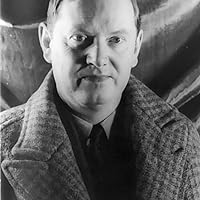
Evelyn Waugh's father Arthur was a noted editor and publisher. His only sibling Alec also became a writer of note. In fact, his book “The Loom of Youth” (1917) a novel about his old boarding school Sherborne caused Evelyn to be expelled from there and placed at Lancing College. He said of his time there, “…the whole of English education when I was brought up was to produce prose writers; it was all we were taught, really.” He went on to Hertford College, Oxford, where he read History. When asked if he took up any sports there he quipped, “I drank for Hertford.” In 1924 Waugh left Oxford without taking his degree. After inglorious stints as a school teacher (he was dismissed for trying to seduce a school matron and/or inebriation), an apprentice cabinet maker and journalist, he wrote and had published his first novel, “Decline and Fall” in 1928. In 1928 he married Evelyn Gardiner. She proved unfaithful, and the marriage ended in divorce in 1930. Waugh would derive parts of “A Handful of Dust” from this unhappy time. His second marriage to Audrey Herbert lasted the rest of his life and begat seven children. It was during this time that he converted to Catholicism. During the thirties Waugh produced one gem after another. From this decade come: “Vile Bodies” (1930), “Black Mischief” (1932), the incomparable “A Handful of Dust” (1934) and “Scoop” (1938). After the Second World War he published what is for many his masterpiece, “Brideshead Revisited,” in which his Catholicism took centre stage. “The Loved One” a scathing satire of the American death industry followed in 1947. After publishing his “Sword of Honour Trilogy” about his experiences in World War II - “Men at Arms” (1952), “Officers and Gentlemen” (1955), “Unconditional Surrender" (1961) - his career was seen to be on the wane. In fact, “Basil Seal Rides Again” (1963) - his last published novel - received little critical or commercial attention. Evelyn Waugh, considered by many to be the greatest satirical novelist of his day, died on 10 April 1966 at the age of 62. See http://en.wikipedia.org/wiki/Evelyn\_W...

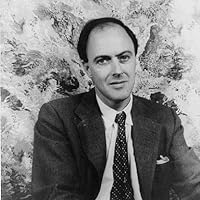
Roald Dahl was a British novelist, short story writer and screenwriter of Norwegian descent, who rose to prominence in the 1940's with works for both children and adults, and became one of the world's bestselling authors. Dahl's first published work, inspired by a meeting with C. S. Forester, was Shot Down Over Libya. Today the story is published as A Piece of Cake. The story, about his wartime adventures, was bought by the Saturday Evening Post for $900, and propelled him into a career as a writer. Its title was inspired by a highly inaccurate and sensationalized article about the crash that blinded him, which claimed he had been shot down instead of simply having to land because of low fuel. His first children's book was The Gremlins, about mischievous little creatures that were part of RAF folklore. The book was commissioned by Walt Disney for a film that was never made, and published in 1943. Dahl went on to create some of the best-loved children's stories of the 20th century, such as Charlie and the Chocolate Factory, Matilda and James and the Giant Peach. He also had a successful parallel career as the writer of macabre adult short stories, usually with a dark sense of humour and a surprise ending. Many were originally written for American magazines such as Ladies Home Journal, Harper's, Playboy and The New Yorker, then subsequently collected by Dahl into anthologies, gaining world-wide acclaim. Dahl wrote more than 60 short stories and they have appeared in numerous collections, some only being published in book form after his death. His stories also brought him three Edgar Awards: in 1954, for the collection Someone Like You; in 1959, for the story "The Landlady"; and in 1980, for the episode of Tales of the Unexpected based on "Skin".

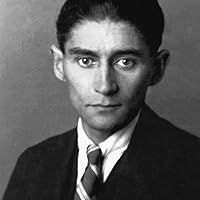
Prague-born writer Franz Kafka wrote in German, and his stories, such as " The Metamorphosis " (1916), and posthumously published novels, including The Trial (1925), concern troubled individuals in a nightmarishly impersonal world. Jewish middle-class family of this major fiction writer of the 20th century spoke German. People consider his unique body of much incomplete writing, mainly published posthumously, among the most influential in European literature. His stories include "The Metamorphosis" (1912) and " In the Penal Colony " (1914), whereas his posthumous novels include The Trial (1925), The Castle (1926) and Amerika (1927). Despite first language, Kafka also spoke fluent Czech. Later, Kafka acquired some knowledge of the French language and culture from Flaubert, one of his favorite authors. Kafka first studied chemistry at the Charles-Ferdinand University of Prague but after two weeks switched to law. This study offered a range of career possibilities, which pleased his father, and required a longer course of study that gave Kafka time to take classes in German studies and art history. At the university, he joined a student club, named Lese- und Redehalle der Deutschen Studenten, which organized literary events, readings, and other activities. In the end of his first year of studies, he met Max Brod, a close friend of his throughout his life, together with the journalist Felix Weltsch, who also studied law. Kafka obtained the degree of doctor of law on 18 June 1906 and performed an obligatory year of unpaid service as law clerk for the civil and criminal courts. Writing of Kafka attracted little attention before his death. During his lifetime, he published only a few short stories and never finished any of his novels except the very short "The Metamorphosis." Kafka wrote to Max Brod, his friend and literary executor: "Dearest Max, my last request: Everything I leave behind me ... in the way of diaries, manuscripts, letters (my own and others'), sketches, and so on, [is] to be burned unread." Brod told Kafka that he intended not to honor these wishes, but Kafka, so knowing, nevertheless consequently gave these directions specifically to Brod, who, so reasoning, overrode these wishes. Brod in fact oversaw the publication of most of work of Kafka in his possession; these works quickly began to attract attention and high critical regard. Max Brod encountered significant difficulty in compiling notebooks of Kafka into any chronological order as Kafka started writing in the middle of notebooks, from the last towards the first, et cetera. Kafka wrote all his published works in German except several letters in Czech to Milena Jesenská.

Various is the correct author for any book with multiple unknown authors, and is acceptable for books with multiple known authors, especially if not all are known or the list is very long (over 50). If an editor is known, however, Various is not necessary. List the name of the editor as the primary author (with role "editor"). Contributing authors' names follow it. Note: WorldCat is an excellent resource for finding author information and contents of anthologies.

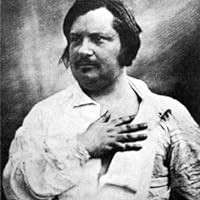
Honoré de Balzac was a nineteenth-century French novelist and playwright. His magnum opus was a sequence of almost 100 novels and plays collectively entitled La Comédie humaine, which presents a panorama of French life in the years after the fall of Napoléon Bonaparte in 1815. Due to his keen observation of fine detail and unfiltered representation of society, Balzac is regarded as one of the founders of realism in European literature. He is renowned for his multi-faceted characters; even his lesser characters are complex, morally ambiguous and fully human. Inanimate objects are imbued with character as well; the city of Paris, a backdrop for much of his writing, takes on many human qualities. His writing influenced many famous authors, including the novelists Marcel Proust, Émile Zola, Charles Dickens, Gustave Flaubert, Henry James and Jack Kerouac, as well as important philosophers such as Friedrich Engels. Many of Balzac's works have been made into films, and they continue to inspire other writers. An enthusiastic reader and independent thinker as a child, Balzac had trouble adapting himself to the teaching style of his grammar school. His willful nature caused trouble throughout his life, and frustrated his ambitions to succeed in the world of business. When he finished school, Balzac was apprenticed as a legal clerk, but he turned his back on law after wearying of its inhumanity and banal routine. Before and during his career as a writer, he attempted to be a publisher, printer, businessman, critic, and politician. He failed in all of these efforts. La Comédie Humaine reflects his real-life difficulties, and includes scenes from his own experience. Balzac suffered from health problems throughout his life, possibly due to his intense writing schedule. His relationship with his family was often strained by financial and personal drama, and he lost more than one friend over critical reviews. In 1850, he married Ewelina Hańska, his longtime paramour; he passed away five months later.
Dorothy Kathleen Broster (1877 - 1950) produced 15 popular historical novels between 1911 and 1947. The Yellow Poppy (1920) about the adventures of an aristocratic couple during the French Revolution, was later adapted by Broster and W. Edward Stirling for the London stage in 1922. She produced her bestseller Scottish historical novel, The Flight of the Heron, in 1925. Broster stated she had consulted eighty reference books before beginning the novel. She followed it up with two successful sequels, The Gleam in the North and The Dark Mile. She wrote several other historical novels, successful and much reprinted in their day, although this Jacobite trilogy (inspired by a five-week visit to friends in Scotland), featuring the dashing hero Ewen Cameron, remains the best known. The Flight of the Heron was adapted for BBC Radio twice, in 1944, starring Gordon Jackson as Ewen Cameron, and again in 1959, starring Bryden Murdoch as Cameron. Murdoch also starred in radio adaptations of the book's sequels, The Gleam in the North and The Dark Mile.

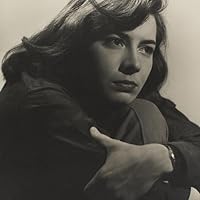
Patricia Highsmith was an American novelist who is known mainly for her psychological crime thrillers which have led to more than two dozen film adaptations over the years. She lived with her grandmother, mother and later step-father (her mother divorced her natural father six months before 'Patsy' was born and married Stanley Highsmith) in Fort Worth before moving with her parents to New York in 1927 but returned to live with her grandmother for a year in 1933. Returning to her parents in New York, she attended public schools in New York City and later graduated from Barnard College in 1942. Shortly after graduation her short story 'The Heroine' was published in the Harper's Bazaar magazine and it was selected as one of the 22 best stories that appeared in American magazines in 1945 and it won the O Henry award for short stories in 1946. She continued to write short stories, many of them comic book stories, and regularly earned herself a weekly $55 pay-check. During this period of her life she lived variously in New York and Mexico. Her first suspense novel 'Strangers on a Train' published in 1950 was an immediate success with public and critics alike. The novel has been adapted for the screen three times, most notably by Alfred Hitchcock in 1951. In 1955 her anti-hero Tom Ripley appeared in the splendid 'The Talented Mr Ripley', a book that was awarded the Grand Prix de Litterature Policiere as the best foreign mystery novel translated into French in 1957. This book, too, has been the subject of a number of film versions. Ripley appeared again in 'Ripley Under Ground' in 1970, in 'Ripley's Game' in 1974, 'The boy who Followed Ripley' in 1980 and in 'Ripley Under Water' in 1991. Along with her acclaimed series about Ripley, she wrote 22 novels and eight short story collections plus many other short stories, often macabre, satirical or tinged with black humour. She also wrote one novel, non-mystery, under the name Claire Morgan , plus a work of non-fiction 'Plotting and Writing Suspense Fiction' and a co-written book of children's verse, 'Miranda the Panda Is on the Veranda'. She latterly lived in England and France and was more popular in England than in her native United States. Her novel 'Deep Water', 1957, was called by the Sunday Times one of the "most brilliant analyses of psychosis in America" and Julian Symons once wrote of her "Miss Highsmith is the writer who fuses character and plot most successfully ... the most important crime novelist at present in practice." In addition, Michael Dirda observed "Europeans honoured her as a psychological novelist, part of an existentialist tradition represented by her own favorite writers, in particular Dostoevsky, Conrad, Kafka, Gide, and Camus." She died of leukemia in Locarno, Switzerland on 4 February 1995 and her last novel, 'Small g: a Summer Idyll', was published posthumously a month later. Gerry Wolstenholme July 2010

Ray Douglas Bradbury, American novelist, short story writer, essayist, playwright, screenwriter and poet, was born August 22, 1920 in Waukegan, Illinois. He graduated from a Los Angeles high school in 1938. Although his formal education ended there, he became a "student of life," selling newspapers on L.A. street corners from 1938 to 1942, spending his nights in the public library and his days at the typewriter. He became a full-time writer in 1943, and contributed numerous short stories to periodicals before publishing a collection of them, Dark Carnival, in 1947. His reputation as a writer of courage and vision was established with the publication of The Martian Chronicles in 1950, which describes the first attempts of Earth people to conquer and colonize Mars, and the unintended consequences. Next came The Illustrated Man and then, in 1953, Fahrenheit 451, which many consider to be Bradbury's masterpiece, a scathing indictment of censorship set in a future world where the written word is forbidden. In an attempt to salvage their history and culture, a group of rebels memorize entire works of literature and philosophy as their books are burned by the totalitarian state. Other works include The October Country, Dandelion Wine, A Medicine for Melancholy, Something Wicked This Way Comes, I Sing the Body Electric!, Quicker Than the Eye, and Driving Blind. In all, Bradbury has published more than thirty books, close to 600 short stories, and numerous poems, essays, and plays. His short stories have appeared in more than 1,000 school curriculum "recommended reading" anthologies. Ray Bradbury's work has been included in four Best American Short Story collections. He has been awarded the O. Henry Memorial Award, the Benjamin Franklin Award, the World Fantasy Award for Lifetime Achievement, the Grand Master Award from the Science Fiction Writers of America, the PEN Center USA West Lifetime Achievement Award, among others. In November 2000, the National Book Foundation Medal for Distinguished Contribution to American Letters was conferred upon Mr. Bradbury at the 2000 National Book Awards Ceremony in New York City. Ray Bradbury has never confined his vision to the purely literary. He has been nominated for an Academy Award (for his animated film Icarus Montgolfier Wright), and has won an Emmy Award (for his teleplay of The Halloween Tree). He adapted sixty-five of his stories for television's Ray Bradbury Theater. He was the creative consultant on the United States Pavilion at the 1964 New York World's Fair. In 1982 he created the interior metaphors for the Spaceship Earth display at Epcot Center, Disney World, and later contributed to the conception of the Orbitron space ride at Euro-Disney, France. Married since 1947, Mr. Bradbury and his wife Maggie lived in Los Angeles with their numerous cats. Together, they raised four daughters and had eight grandchildren. Sadly, Maggie passed away in November of 2003. On the occasion of his 80th birthday in August 2000, Bradbury said, "The great fun in my life has been getting up every morning and rushing to the typewriter because some new idea has hit me. The feeling I have every day is very much the same as it was when I was twelve. In any event, here I am, eighty years old, feeling no different, full of a great sense of joy, and glad for the long life that has been allowed me. I have good plans for the next ten or twenty years, and I hope you'll come along."

William Cuthbert Faulkner was a Nobel Prize-winning American novelist and short story writer. One of the most influential writers of the twentieth century, his reputation is based mostly on his novels, novellas, and short stories. He was also a published poet and an occasional screenwriter. The majority of his works are set in his native state of Mississippi. Though his work was published as early as 1919, and largely during the 1920s and 1930s, Faulkner was relatively unknown until receiving the 1949 Nobel Prize in Literature, "for his powerful and artistically unique contribution to the modern American novel." Faulkner has often been cited as one of the most important writers in the history of American literature. Faulkner was influenced by European modernism, and employed stream of consciousness in several of his novels.
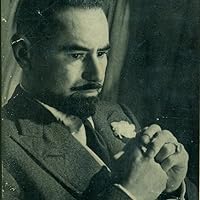
One of the most significant modernist writer in Marathi writer and English, Vilas Sarang has written remarkable short stories, poems, a novel and also brilliant pieces of criticism in his first language Marathi as well as in English. His Marathi short story collections are 'Soledad' (1975) and 'Atank' (1999) and translations of his stories in English are collected in 'A Fair Tree of the Void' (1990) and more recently The Women in the Cages' (2006). A selection of his short stories also appeared in French translation in 1988. His English novel 'The Dinosaur Ship'(2005) and his Marathi novel is Enkichya Rajyat'. His Marathi collection of poems is published under the title Kavita 1969-1984 and his collection of English poems is published as 'A Kind of Silence'(1978) and recently he has brought out Another Life'. He has also written significant criticism in Marathi 'Sisyphus ani Bolakka' and 'Aksharanchya Shrama Kela'(2000).He has also published The Stylistics of Literary Translation ( 1988 ) and edited the anthology Indian English Poetry Since 1950 ( 1989. He has also edited reputed literary journals like the Bombay Review and The Post Post Review.
He holds a Ph. D. in English from Bombay University and another in comparative literature from Indiana University. He taught at the University of Basra in Iraq during the 1970s, became Professor of English and Chair of the Department of English at Bombay University in the eighties, and he has also taught at Kuwait University. He lives in Mumbai
The quest for primitive source of human existence is an important feature of his writings. His short stories are often surreal and have often been compared to Kafka. For instance, in one of his stories collected in The Women in Cages, the narrator finds himself transformed into a gigantic phallus. In another more well known story, a person named Chako is marooned on an island where women have either upper half of their bodies or the lower half. Sarang is awovedly anti-representational modernist in his aesthetics and provides a refreshing alternative to over-hyped diaspora' and `exiled' non-resident Indian English writers like Salman Rushdie, VS Naipaul and Kiran Desai.

Robert von Ranke Graves (1895-1985), born in Wimbledon, received his early education at King's College School and Copthorne Prep School, Wimbledon & Charterhouse School and won a scholarship to St John's College, Oxford. While at Charterhouse in 1912, he fell in love with G.H. Johnstone, a boy of fourteen ("Dick" in Goodbye to All That) When challenged by the headmaster he defended himself by citing Plato, Greek poets, Michelangelo & Shakespeare, "who had felt as I did". At the outbreak of WWI, Graves enlisted almost immediately, taking a commission in the Royal Welch Fusiliers. He published his first volume of poems, Over the Brazier, in 1916. He developed an early reputation as a war poet and was one of the first to write realistic poems about his experience of front line conflict. In later years he omitted war poems from his collections, on the grounds that they were too obviously "part of the war poetry boom". At the Battle of the Somme he was so badly wounded by a shell-fragment through the lung that he was expected to die, and indeed was officially reported as 'died of wounds'. He gradually recovered. Apart from a brief spell back in France, he spent the rest of the war in England. One of Graves' closest friends at this time was the poet Siegfried Sassoon, who was also an officer in the RWF. In 1917 Sassoon tried to rebel against the war by making a public anti-war statement. Graves, who feared Sassoon could face a court martial, intervened with the military authorities and persuaded them that he was suffering from shell shock, and to treat him accordingly. Graves also suffered from shell shock, or neurasthenia as it is sometimes called, although he was never hospitalised for it. Biographers document the story well. It is fictionalised in Pat Barker's novel Regeneration. The intensity of their early relationship is nowhere demonstrated more clearly than in Graves' collection Fairies & Fusiliers (1917), which contains a plethora of poems celebrating their friendship. Through Sassoon, he also became friends with Wilfred Owen, whose talent he recognised. Owen attended Graves' wedding to Nancy Nicholson in 1918, presenting him with, as Graves recalled, "a set of 12 Apostle spoons". Following his marriage and the end of the war, Graves belatedly took up his place at St John's College, Oxford. He later attempted to make a living by running a small shop, but the business failed. In 1926 he took up a post at Cairo University, accompanied by his wife, their children and the poet Laura Riding. He returned to London briefly, where he split with his wife under highly emotional circumstances before leaving to live with Riding in Deià, Majorca. There they continued to publish letterpress books under the rubric of the Seizin Press, founded and edited the literary journal Epilogue, and wrote two successful academic books together: A Survey of Modernist Poetry (1927) and A Pamphlet Against Anthologies (1928). In 1927, he published Lawrence and the Arabs, a commercially successful biography of T.E. Lawrence. Good-bye to All That (1929, revised and republished in 1957) proved a success but cost him many of his friends, notably Sassoon. In 1934 he published his most commercially successful work, I, Claudius. Using classical sources he constructed a complexly compelling tale of the life of the Roman emperor Claudius, a tale extended in Claudius the God (1935). Another historical novel by Graves, Count Belisarius (1938), recounts the career of the Byzantine general Belisarius. During the early 1970s Graves began to suffer from increasingly severe memory loss, and by his eightieth birthday in 1975 he had come to the end of his working life. By 1975 he had published more than 140 works. He survived for ten more years in an increasingly dependent condition until he died from heart failure.

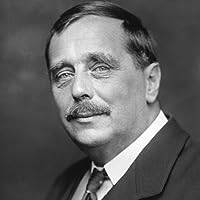
Herbert George Wells was born to a working class family in Kent, England. Young Wells received a spotty education, interrupted by several illnesses and family difficulties, and became a draper's apprentice as a teenager. The headmaster of Midhurst Grammar School, where he had spent a year, arranged for him to return as an "usher," or student teacher. Wells earned a government scholarship in 1884, to study biology under Thomas Henry Huxley at the Normal School of Science. Wells earned his bachelor of science and doctor of science degrees at the University of London. After marrying his cousin, Isabel, Wells began to supplement his teaching salary with short stories and freelance articles, then books, including The Time Machine (1895), The Island of Dr. Moreau (1896), The Invisible Man (1897), and The War of the Worlds (1898). Wells created a mild scandal when he divorced his cousin to marry one of his best students, Amy Catherine Robbins. Although his second marriage was lasting and produced two sons, Wells was an unabashed advocate of free (as opposed to "indiscriminate") love. He continued to openly have extra-marital liaisons, most famously with Margaret Sanger, and a ten-year relationship with the author Rebecca West, who had one of his two out-of-wedlock children. A one-time member of the Fabian Society, Wells sought active change. His 100 books included many novels, as well as nonfiction, such as A Modern Utopia (1905), The Outline of History (1920), A Short History of the World (1922), The Shape of Things to Come (1933), and The Work, Wealth and Happiness of Mankind (1932). One of his booklets was Crux Ansata, An Indictment of the Roman Catholic Church. Although Wells toyed briefly with the idea of a "divine will" in his book, God the Invisible King (1917), it was a temporary aberration. Wells used his international fame to promote his favorite causes, including the prevention of war, and was received by government officials around the world. He is best-remembered as an early writer of science fiction and futurism. He was also an outspoken socialist. Wells and Jules Verne are each sometimes referred to as "The Fathers of Science Fiction". D. 1946. More: http://philosopedia.org/index.php/H.\_... http://www.online-literature.com/well... http://www.hgwellsusa.50megs.com/ http://www.britannica.com/EBchecked/t... http://en.wikipedia.org/wiki/H.\_G.\_Wells

Henry James, OM (1843-1916), son of theologian Henry James Sr., brother of the philosopher and psychologist William James and diarist Alice James, was an American-born author, one of the founders and leaders of a school of realism in fiction. He spent much of his life in England and became a British subject shortly before his death. He is primarily known for a series of major novels in which he portrayed the encounter of America with Europe. His plots centered on personal relationships, the proper exercise of power in such relationships, and other moral questions. His method of writing from the point of view of a character within a tale allowed him to explore the phenomena of consciousness and perception, and his style in later works has been compared to impressionist painting. James insisted that writers in Great Britain and America should be allowed the greatest freedom possible in presenting their view of the world, as French authors were. His imaginative use of point of view, interior monologue and unreliable narrators in his own novels and tales brought a new depth and interest to realistic fiction, and foreshadowed the modernist work of the twentieth century. An extraordinarily productive writer, in addition to his voluminous works of fiction he published articles and books of travel writing, biography, autobiography, and criticism,and wrote plays, some of which were performed during his lifetime with moderate success. His theatrical work is thought to have profoundly influenced his later novels and tales.

Dame Muriel Spark, DBE was a prolific Scottish novelist, short story writer and poet whose darkly comedic voice made her one of the most distinctive writers of the twentieth century. In 2008 The Times newspaper named Spark in its list of "the 50 greatest British writers since 1945". Spark received the James Tait Black Memorial Prize in 1965 for The Mandelbaum Gate, the Ingersoll Foundation TS Eliot Award in 1992 and the David Cohen Prize in 1997. She became Dame Commander of the Order of the British Empire in 1993, in recognition of her services to literature. She has been twice shortlisted for the Booker Prize, in 1969 for The Public Image and in 1981 for Loitering with Intent. In 1998, she was awarded the Golden PEN Award by English PEN for "a Lifetime's Distinguished Service to Literature". In 2010, Spark was shortlisted for the Lost Man Booker Prize of 1970 for The Driver's Seat. Spark received eight honorary doctorates in her lifetime. These included a Doctor of the University degree (Honoris causa) from her alma mater, Heriot-Watt University in 1995; a Doctor of Humane Letters (Honoris causa) from the American University of Paris in 2005; and Honorary Doctor of Letters degrees from the Universities of Aberdeen, Edinburgh, London, Oxford, St Andrews and Strathclyde. Spark grew up in Edinburgh and worked as a department store secretary, writer for trade magazines, and literary editor before publishing her first novel, The Comforters, in 1957. The Prime of Miss Jean Brodie, published in 1961, and considered her masterpiece, was made into a stage play, a TV series, and a film.

William Fryer Harvey was an English writer of short stories, most notably in the macabre and horror genres. Among his best-known stories are "August Heat" and "The Beast with Five Fingers", described by horror historian Les Daniels as "minor masterpieces". Born into a wealthy Quaker family in Yorkshire, he attended the Quaker schools at Bootham in Yorkshire and at Leighton Park in Reading before going on to Balliol College, Oxford. He took a degree in medicine at Leeds. Ill health dogged him, however, and he devoted himself to personal projects such as his first book of short stories, Midnight House (1910). In World War I he initially joined the Friends' Ambulance Unit, but later served as a surgeon-lieutenant in the Royal Navy, and received the Albert Medal for Lifesaving.[4] Lung damage received during the rescue leading to the award troubled him for the rest of his life, but he continued to write both short stories and his cheerful and good-natured memoir We Were Seven. Harvey was a practicising Quaker. Before the war he had shown interest in adult education, on the staff of the Working Men's College, Fircroft, Selly Oak, Birmingham. He returned to Fircroft in 1920, becoming Warden, but by 1925 ill-health forced his retirement. In 1928 he published a second collection of short stories, The Beast with Five Fingers, and in 1933 he published a third, Moods and Tenses. He lived in Switzerland with his wife for much of this time, but nostalgia for his home country caused his return to England. He moved to Letchworth in 1935 and died there in 1937 at the age of 52. After a funeral service at the local Friends Meeting House Harvey was buried in the churchyard of St Mary the Virgin in Old Letchworth. The release of the film The Beast with Five Fingers (1946), directed by Robert Florey and starring Peter Lorre, inspired by what was perhaps his most famous and praised short story, caused a resurgence of interest in Harvey's work. In 1951 a posthumous fourth collection of his stories, The Arm of Mrs Egan and Other Stories, appeared, including a set of twelve stories left in manuscript at the time of his death, headed "Twelve Strange Cases". In 2009 Wordsworth Editions printed an omnibus volume of Harvey's stories, titled The Beast with Five Fingers, in its Tales of Mystery and the Supernatural series (ISBN 978-1-84022-179-4). The volume contains 45 stories and an introduction by David Stuart Davies. [https://en.m.wikipedia.org/wiki/W.\_F....]


Ambrose Gwinnett Bierce (1842-1914) was an American editorialist, journalist, short story writer, fabulist and satirist. Today, he is best known for his short story, An Occurrence at Owl Creek Bridge and his satirical lexicon, The Devil's Dictionary. The sardonic view of human nature that informed his work – along with his vehemence as a critic, with his motto "nothing matters" – earned him the nickname "Bitter Bierce." Despite his reputation as a searing critic, however, Bierce was known to encourage younger writers, including poet George Sterling and fiction writer W. C. Morrow. Bierce employed a distinctive style of writing, especially in his stories. This style often embraces an abrupt beginning, dark imagery, vague references to time, limited descriptions, the theme of war, and impossible events. Bierce disappeared in December 1913 at the age of 71. He is believed to have traveled to Mexico to gain a firsthand perspective on that country's ongoing revolution. Despite an abundance of theories, Bierce's ultimate fate remains a mystery. He wrote in one of his final letters: "Good-bye. If you hear of my being stood up against a Mexican stone wall and shot to rags, please know that I think it is a pretty good way to depart this life. It beats old age, disease, or falling down the cellar stairs. To be a Gringo in Mexico—ah, that is euthanasia!"

Gerald Kersh was born in Teddington-on-Thames, near London, and, like so many writers, quit school to take on a series of jobs—salesman, baker, fish-and-chips cook, nightclub bouncer, freelance newspaper reporter and at the same time was writing his first two novels. In 1937, his third published novel, Night and the City, hurled him into the front ranks of young British writers. Twenty novels later Kersh created his personal masterpiece, Fowler's End, regarded by many as one of the outstanding novels of the century. He also, throughout his long career, wrote more than 400 short stories and over 1,000 articles. Once a professional wrestler, Kersh also fought with the Coldstream Guards in World War II. His account of infantry training They Die With Their Boots Clean (1941), became an instant best-seller during that war. After traveling over much of the world, he became an American citizen, living quietly in Cragsmoor, in a remote section of the Shawangunk Mountains in New York State. He died in Kingston, NY, in 1968. (Biography compiled from "Nightmares & Damnations" and Fantastic Fiction.)