Margins




548 Market St PMB 65688, San Francisco California 94104-5401 USA
© 2026 Paratext Inc. All rights reserved
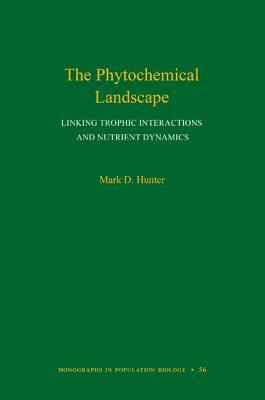
The dazzling variation in plant chemistry is a primary mediator of trophic interactions, including herbivory, predation, parasitism, and disease. At the same time, such interactions feed back to influence spatial and temporal variation in the chemistry of plants. In this book, Mark Hunter provides a novel approach to linking the trophic interactions of organisms with the cycling of nutrients in ecosystems. Hunter introduces the concept of the "phytochemical landscape"―the shifting spatial and temporal mosaic of plant chemistry that serves as the nexus between trophic interactions and nutrient dynamics. He shows how plant chemistry is both a cause and consequence of trophic interactions, and how it also mediates ecosystem processes such as nutrient cycling. Nutrients and organic molecules in plant tissues affect decomposition rates and the fluxes of elements such as carbon, nitrogen, and phosphorus. The availability of these same nutrients influences the chemistry of cells and tissues that plants produce. In combination, these feedback routes generate pathways by which trophic interactions influence nutrient dynamics and vice versa, mediated through plant chemistry. Hunter provides evidence from terrestrial and aquatic systems for each of these pathways, and describes how a focus on the phytochemical landscape enables us to better understand and manage the ecosystems in which we live. Essential reading for students and researchers alike, this book offers an integrated approach to population-, community-, and ecosystem-level ecological processes.