Margins
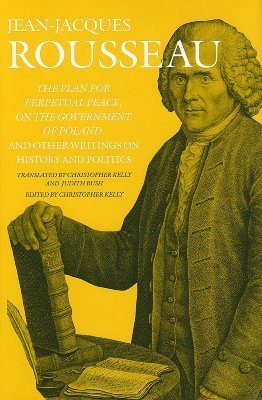
The Plan for Perpetual Peace, on the Government of Poland, And Other Writings on History And Politics book cover
The Plan for Perpetual Peace, on the Government of Poland, And Other Writings on History And Politics
2005
First Published
4.11
Average Rating
276
Number of Pages
These abridgements of The Plan for Perpetual Peace (published 1761), On the Government of Poland (1771-1772), and Jean-Jacques Rousseau's other writings on history and politics represent his considerations of the practical applications of key principles developed in his best-known theoretical writings. In this latest volume in the classic series, Rousseau reflects on projects for a European union; the possibilities for governmental reform for France, including the polysynody experiment; international relations; and the establishment of governments for Poland and Corsica, both recently liberated from foreign oppression. Taken together, these works offer definitive insights into Rousseau's decidedly nonutopian thoughts on cosmopolitanism and nationalism, and on the theory and practice of politics.

Avg Rating
4.11
Number of Ratings
9
5 STARS
56%
4 STARS
0%
3 STARS
44%
2 STARS
0%
1 STARS
0%
goodreads

Author

Jean-Jacques Rousseau
Author · 67 books

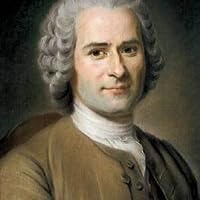
Swiss philosopher and writer Jean Jacques Rousseau held that society usually corrupts the essentially good individual; his works include The Social Contract and Émile (both 1762). This important figure in the history contributed to political and moral psychology and influenced later thinkers. Own firmly negative view saw the post-hoc rationalizers of self-interest, apologists for various forms of tyranny, as playing a role in the modern alienation from natural impulse of humanity to compassion. The concern to find a way of preserving human freedom in a world of increasingly dependence for the satisfaction of their needs dominates work. This concerns a material dimension and a more important psychological dimensions. Rousseau a fact that in the modern world, humans come to derive their very sense of self from the opinions as corrosive of freedom and destructive of authenticity. In maturity, he principally explores the first political route, aimed at constructing institutions that allow for the co-existence of equal sovereign citizens in a community; the second route to achieving and protecting freedom, a project for child development and education, fosters autonomy and avoids the development of the most destructive forms of self-interest. Rousseau thinks or the possible co-existence of humans in relations of equality and freedom despite his consistent and overwhelming pessimism that humanity will escape from a dystopia of alienation, oppression, and unfreedom. In addition to contributions, Rousseau acted as a composer, a music theorist, the pioneer of modern autobiography, a novelist, and a botanist. Appreciation of the wonders of nature and his stress on the importance of emotion made Rousseau an influence on and anticipator of the romantic movement. To a very large extent, the interests and concerns that mark his work also inform these other activities, and contributions of Rousseau in ostensibly other fields often serve to illuminate his commitments and arguments.

548 Market St PMB 65688, San Francisco California 94104-5401 USA
© 2026 Paratext Inc. All rights reserved