Margins
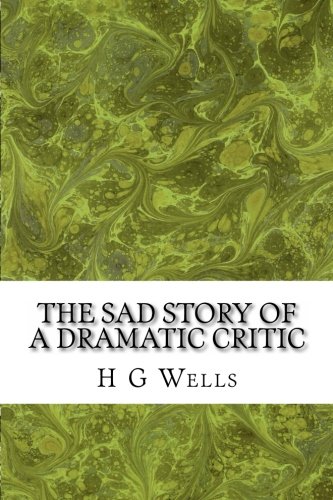
The Sad Story of a Dramatic Critic book cover
The Sad Story of a Dramatic Critic
2014
First Published
2.67
Average Rating
30
Number of Pages
I was-you shall hear immediately why I am not now-Egbert Craddock Cummins. The name remains. I am still (Heaven help me!) Dramatic Critic to the Fiery Cross. What I shall be in a little while I do not know. I write in great trouble and confusion of mind. I will do what I can to make myself clear in the face of terrible difficulties. You must bear with me a little. When a man is rapidly losing his own identity, he naturally finds a difficulty in expressing himself. I will make it perfectly plain in a minute, when once I get my grip upon the story. Let me see-where am I? I wish I knew. Ah, I have it! Dead self! Egbert Craddock Cummins!

Avg Rating
2.67
Number of Ratings
9
5 STARS
0%
4 STARS
11%
3 STARS
44%
2 STARS
44%
1 STARS
0%
goodreads

Author

H.G. Wells
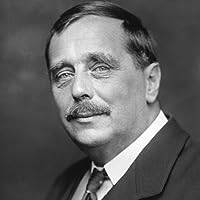
H.G. Wells
Author · 307 books

Herbert George Wells was born to a working class family in Kent, England. Young Wells received a spotty education, interrupted by several illnesses and family difficulties, and became a draper's apprentice as a teenager. The headmaster of Midhurst Grammar School, where he had spent a year, arranged for him to return as an "usher," or student teacher. Wells earned a government scholarship in 1884, to study biology under Thomas Henry Huxley at the Normal School of Science. Wells earned his bachelor of science and doctor of science degrees at the University of London. After marrying his cousin, Isabel, Wells began to supplement his teaching salary with short stories and freelance articles, then books, including The Time Machine (1895), The Island of Dr. Moreau (1896), The Invisible Man (1897), and The War of the Worlds (1898). Wells created a mild scandal when he divorced his cousin to marry one of his best students, Amy Catherine Robbins. Although his second marriage was lasting and produced two sons, Wells was an unabashed advocate of free (as opposed to "indiscriminate") love. He continued to openly have extra-marital liaisons, most famously with Margaret Sanger, and a ten-year relationship with the author Rebecca West, who had one of his two out-of-wedlock children. A one-time member of the Fabian Society, Wells sought active change. His 100 books included many novels, as well as nonfiction, such as A Modern Utopia (1905), The Outline of History (1920), A Short History of the World (1922), The Shape of Things to Come (1933), and The Work, Wealth and Happiness of Mankind (1932). One of his booklets was Crux Ansata, An Indictment of the Roman Catholic Church. Although Wells toyed briefly with the idea of a "divine will" in his book, God the Invisible King (1917), it was a temporary aberration. Wells used his international fame to promote his favorite causes, including the prevention of war, and was received by government officials around the world. He is best-remembered as an early writer of science fiction and futurism. He was also an outspoken socialist. Wells and Jules Verne are each sometimes referred to as "The Fathers of Science Fiction". D. 1946. More: http://philosopedia.org/index.php/H.\_... http://www.online-literature.com/well... http://www.hgwellsusa.50megs.com/ http://www.britannica.com/EBchecked/t... http://en.wikipedia.org/wiki/H.\_G.\_Wells

548 Market St PMB 65688, San Francisco California 94104-5401 USA
© 2026 Paratext Inc. All rights reserved