Margins
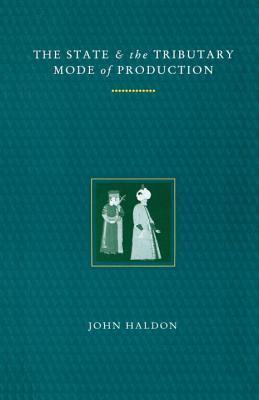
The State and the Tributary Mode of Production book cover
The State and the Tributary Mode of Production
1993
First Published
4.17
Average Rating
350
Number of Pages

In this groundbreaking critique of both traditional and Marxist notions of feudalism and of the pre-capitalist state, John Haldon considers the configuration of state and social relations in medieval Europe and Mughal India as well as in Byzantium and the Ottoman Empire. He argues that a Marxist reading of the pre-capitalist state can take account of the autonomy of power relations and avoid economic reductionism while still focusing on the forms of tribute which sustained the ruling power. Haldon explores the conflicts to which these gave rise and shows the Ottoman state elite, often held to be a clear example of independence from underlying social relations, to be deeply enmeshed in economic relationships and the extraction of tribute. Haldon argues that feudalism was the specifically European form of a much more widely diffused tributary mode, whose characteristic social relations and structural constraints can be seen at work in the Byzantine, Ottoman and Mughal empires as well. While acknowledging the range of ideological and cultural variation within and between these examples of the tributary mode, Haldon denies the thesis that such “superstructural” variations themselves yielded fundamentally contrasting social relations.

Avg Rating
4.17
Number of Ratings
6
5 STARS
50%
4 STARS
17%
3 STARS
33%
2 STARS
0%
1 STARS
0%
goodreads

Author

John Haldon
John Haldon
Author · 9 books

John Haldon is Shelby Cullom Davis '30 Professor of European History, and Professor of Byzantine History and Hellenic Studies. He has been Director of Graduate Studies for the History Department since July 2009. His research centers on the socio-economic, institutional, political and cultural history of the early and middle Byzantine empire from the seventh to the eleventh centuries. He also works on political systems and structures across the European and Islamic worlds from late ancient to early modern times and has explored how resources were produced, distributed and consumed, especially in warfare, during the late ancient and medieval periods. Professor Haldon is the author and co-author of more than two dozen books. His most recent books are The social history of Byzantium (Blackwell, Oxford 2008) and Byzantium in the iconoclast era: a history, with L. Brubaker (Cambridge University Press, Cambridge 2011). Professor Haldon is the director of the Euchaita/Avkat Project - an archaeological and historical survey in north central Turkey. As well as traditional methods of field survey and historical research, this long-term project employs cutting edge survey, mapping and digital modeling techniques to enrich our understanding of the society, economy, land use, demography, paleo-environmental history and resources of the late Roman, Byzantine and Seljuk/Ottoman periods. Further information on the Euchaita/Avkat Project is available through the following links. He is also co-director of the international Medieval Logistics Project - an international project deploying Geographical Information Systems and sophisticated modelling software to analyze the logistics of East Roman, early medieval Western European and Early Islamic warfare and structures of resource allocation. A native of Northumbria, England, Professor Haldon has worked at the Universities of Athens and Munich, at the Max-Planck-Institut for European Legal History in Frankfurt, and at the University of Birmingham, where from 1995 he was Director of the Centre for Byzantine, Ottoman and Modern Greek Studies and from 2000-2004 Head of the School of Historical Studies. He came to Princeton University in 2005. From 2007-2013 he is a Senior Fellow at the Dumbarton Oaks Center for Byzantine Studies in Washington D.C. He is a Corresponding Member of the Austrian Academy of Sciences in Vienna and a member of the editorial boards of several scholarly journals in Europe and the USA.

548 Market St PMB 65688, San Francisco California 94104-5401 USA
© 2026 Paratext Inc. All rights reserved