Margins
The Sunken Bell book cover
The Sunken Bell
A Fairy Play In Five Acts
1901
First Published
3.50
Average Rating
180
Number of Pages
This scarce antiquarian book is a facsimile reprint of the original. Due to its age, it may contain imperfections such as marks, notations, marginalia and flawed pages. Because we believe this work is culturally important, we have made it available as part of our commitment for protecting, preserving, and promoting the world's literature in affordable, high quality, modern editions that are true to the original work.

Avg Rating
3.50
Number of Ratings
44
5 STARS
23%
4 STARS
32%
3 STARS
23%
2 STARS
18%
1 STARS
5%
goodreads

Author

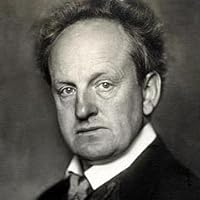
Gerhart Hauptmann
Gerhart Hauptmann
Author · 16 books

Gerhart Johann Robert Hauptmann was a German dramatist and novelist. He is counted among the most important promoters of literary naturalism, though he integrated other styles into his work as well. He received the Nobel Prize in Literature in 1912. Life Hauptmann's first drama, Before Dawn (1889) inaugurated the naturalistic movement in modern German literature. It was followed by The Reconciliation (1890), Lonely People (1891) and The Weavers (1892), a powerful drama depicting the rising of the Silesian weavers in 1844 for which he is best known outside of Germany. Hauptmann's subsequent work includes the comedies Colleague Crampton (1892), The Beaver Coat (1893), and The Conflagration (1901), the symbolist dream play The Assumption of Hannele (1893), and an historical drama Florian Geyer (1895). He also wrote two tragedies of Silesian peasant life, Drayman Henschel (1898) and Rose Bernd (1903), and the dramatic fairy-tales The Sunken Bell (1896) and And Pippa Dances (1906). Hauptmann's marital life was difficult and in 1904 he divorced his wife. That same year he married the actress Margarete Marschalk, who had borne him a son four years earlier. The following year he had an affair with the 17-year-old Austrian actress Ida Orloff, whom he met in Berlin when she performed in his play The Assumption of Hannele. Orloff inspired characters in several of Hauptmann's works and he later referred to her as his muse. In 1911 he wrote The Rats. In 1912, Hauptmann was awarded the Nobel Prize in Literature, "primarily in recognition of his fruitful, varied and outstanding production in the realm of dramatic art." During the First World War Hauptmann was a pacifist. In this period of his career he wrote several gloomy historical-allegorical plays, such as The Bow of Odysseus (1914), The White Saviour (1912–17), and Winter Ballade (1917). After the war, his dramatic abilities appeared to diminish. He wrote two full-length plays that are similar to the early successes: Dorothea Angermann (1926) and Before Sunset (1932). He remained in Germany after Hitler's Machtergreifung and survived the bombing of Dresden. His last work was the Atriden-Tetralogie (1942–46). His works in German were published by S. Fischer Verlag. Hauptmann died at the age of 83 at his home in Agnetendorf (now Jagniątków, Poland) in 1946. Since the Polish communist administration did not allow Hauptmann's relatives to bury him in Agnetendorf (although even the Soviet military government had recommended this), his body was transported in an old cattle wagon to occupied Germany more than a month after his death. He was buried near his cottage on Hiddensee. Under Wilhelm II Hauptmann enjoyed the reputation of a radical writer, on the side of the poor and outcasts. During the Weimar Republic (1918–33) he enjoyed the status of the literary figurehead of the new order, and was even considered for the post of state president. Under Hitler he kept his distance from the regime, but never publicly criticized it. This, and the fact that (unlike so many writers and academics) he stayed in Germany, was strongly held against him after the war. A superb collected edition of his works appeared in the 1960s, and stimulated some impressive studies of his work (e.g. those by Peter Sprengel), but the tide of critical and public opinion remained negative. A few of his plays are still revived from time to time, but otherwise he is neglected. He was certainly an uneven writer, but at his best (as in 'The Weavers', his novel 'The Fool in Christ Emmanuel Quint', and the Novellen 'The Heretic of Soana' and 'Das Meerwunder') he can arguably rank with the best of his German contemporaries. Source : http://en.wikipedia.org/wiki/Gerhart\_...

548 Market St PMB 65688, San Francisco California 94104-5401 USA
© 2026 Paratext Inc. All rights reserved