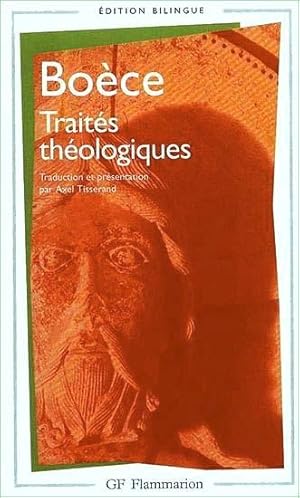
The Theological Tractates
By Boethius
521
First Published
4.04
Average Rating
438
Number of Pages
This work has been selected by scholars as being culturally important, and is part of the knowledge base of civilization as we know it. This work was reproduced from the original artifact, and remains as true to the original work as possible. Therefore, you will see the original copyright references, library stamps (as most of these works have been housed in our most important libraries around the world), and other notations in the work.This work is in the public domain in the United States of America, and possibly other nations. Within the United States, you may freely copy and distribute this work, as no entity (individual or corporate) has a copyright on the body of the work.As a reproduction of a historical artifact, this work may contain missing or blurred pages, poor pictures, errant marks, etc. Scholars believe, and we concur, that this work is important enough to be preserved, reproduced, and made generally available to the public. We appreciate your support of the preservation process, and thank you for being an important part of keeping this knowledge alive and relevant.

Avg Rating
4.04
Number of Ratings
28
5 STARS
39%
4 STARS
32%
3 STARS
21%
2 STARS
7%
1 STARS
0%
goodreads
Author

Boethius
Author · 8 books
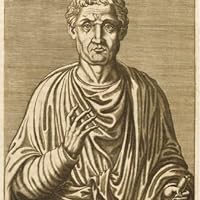
Anicius Manlius Severinus Boëthius, commonly called Boethius (bow-EE-thee-us; ca. 480–524 or 525 AD) was a philosopher of the early 6th century. He was born in Rome to an ancient and prominent family which included emperors Petronius Maximus and Olybrius and many consuls. His father, Flavius Manlius Boethius, was consul in 487 after Odoacer deposed the last Western Roman Emperor. Boethius, of the noble Anicia family, entered public life at a young age and was already a senator by the age of 25. Boethius himself was consul in 510 in the kingdom of the Ostrogoths. In 522 he saw his two sons become consuls. Boethius was imprisoned and eventually executed by King Theodoric the Great, who suspected him of conspiring with the Eastern Empire. While jailed, Boethius composed his Consolation of Philosophy, a philosophical treatise on fortune, death, and other issues. The Consolation became one of the most popular and influential works of the Middle Ages. A link between Boethius and a mathematical boardgame Rithmomachia has been made.