Margins




548 Market St PMB 65688, San Francisco California 94104-5401 USA
© 2026 Paratext Inc. All rights reserved
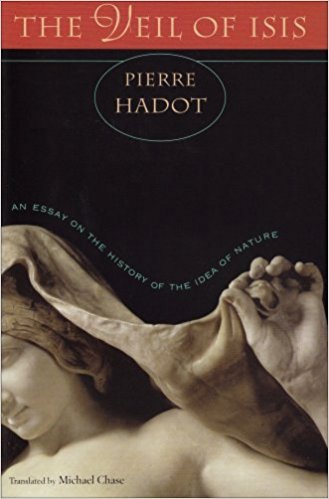
Nearly twenty-five hundred years ago the Greek thinker Heraclitus supposedly uttered the cryptic words "Phusis kruptesthai philei." How the aphorism, usually translated as "Nature loves to hide," has haunted Western culture ever since is the subject of this engaging study by Pierre Hadot. Taking the allegorical figure of the veiled goddess Isis as a guide, and drawing on the work of both the ancients and later thinkers such as Goethe, Rilke, Wittgenstein, and Heidegger, Hadot traces successive interpretations of Heraclitus' words. Over time, Hadot finds, "Nature loves to hide" has meant that all that lives tends to die; that Nature wraps herself in myths; and (for Heidegger) that Being unveils as it veils itself. Meanwhile the pronouncement has been used to explain everything from the opacity of the natural world to our modern angst. From these kaleidoscopic exegeses and usages emerge two contradictory approaches to nature: the Promethean, or experimental-questing, approach, which embraces technology as a means of tearing the veil from Nature and revealing her secrets; and the Orphic, or contemplative-poetic, approach, according to which such a denuding of Nature is a grave trespass. In place of these two attitudes Hadot proposes one suggested by the Romantic vision of Rousseau, Goethe, and Schelling, who saw in the veiled Isis an allegorical expression of the sublime. "Nature is art and art is nature," Hadot writes, inviting us to embrace Isis and all she represents: art makes us intensely aware of how completely we ourselves are not merely surrounded by nature but also part of nature.