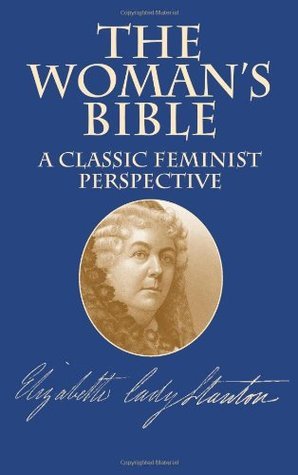



The publication of The Woman's Bible in 1895 and 1898 represented the last crusade of pioneer feminist Elizabeth Cady Stanton to strike at the roots of the ideology behind her gender's subordinate role in society. In the tradition of radical individualism that guided her philosophy, Stanton's attack on religious orthodoxy is more a forceful political treatise than a scholarly work. This clarion call to action, assembled by Stanton and a committee of prominent feminists, consists of a book-by-book examination of the Bible, placing events in their historical context, interpreting passages as both allegory and fact, and comparing them with the myths of other cultures. Over a century later, it endures as an extraordinary document because of the questions it addresses, the topics it covers, and the still-resonant sincerity of its righteous indignation. Readers with an interest in theology, women's studies, or American history will find this milestone of religious and feminist literature an ever-relevant source of information and inspiration.
Author

Elizabeth Cady Stanton was an American social activist and leading figure of the early woman's movement. Her Declaration of Sentiments, presented at the first women's rights convention held in 1848 in Seneca Falls, New York, is often credited with initiating the first organized woman's rights and woman's suffrage movements in the United States. Before Stanton narrowed her political focus almost exclusively to women's rights, she was an active abolitionist together with her husband, Henry Brewster Stanton and cousin, Gerrit Smith. Unlike many of those involved in the women's rights movement, Stanton addressed a number of issues pertaining to women beyond voting rights. Her concerns included women's parental and custody rights, property rights, employment and income rights, divorce laws, the economic health of the family, and birth control. She was also an outspoken supporter of the 19th-century temperance movement. After the American Civil War, Stanton's commitment to female suffrage caused a schism in the women's rights movement when she, along with Susan B. Anthony, declined to support passage of the Fourteenth and Fifteenth Amendments to the United States Constitution. She opposed giving added legal protection and voting rights to African American men while continuing to deny women, black and white, the same rights. Her position on this issue, together with her thoughts on organized Christianity and women's issues beyond voting rights, led to the formation of two separate women's rights organizations that were finally rejoined, with Stanton as president of the joint organization, approximately twenty years later.