Margins
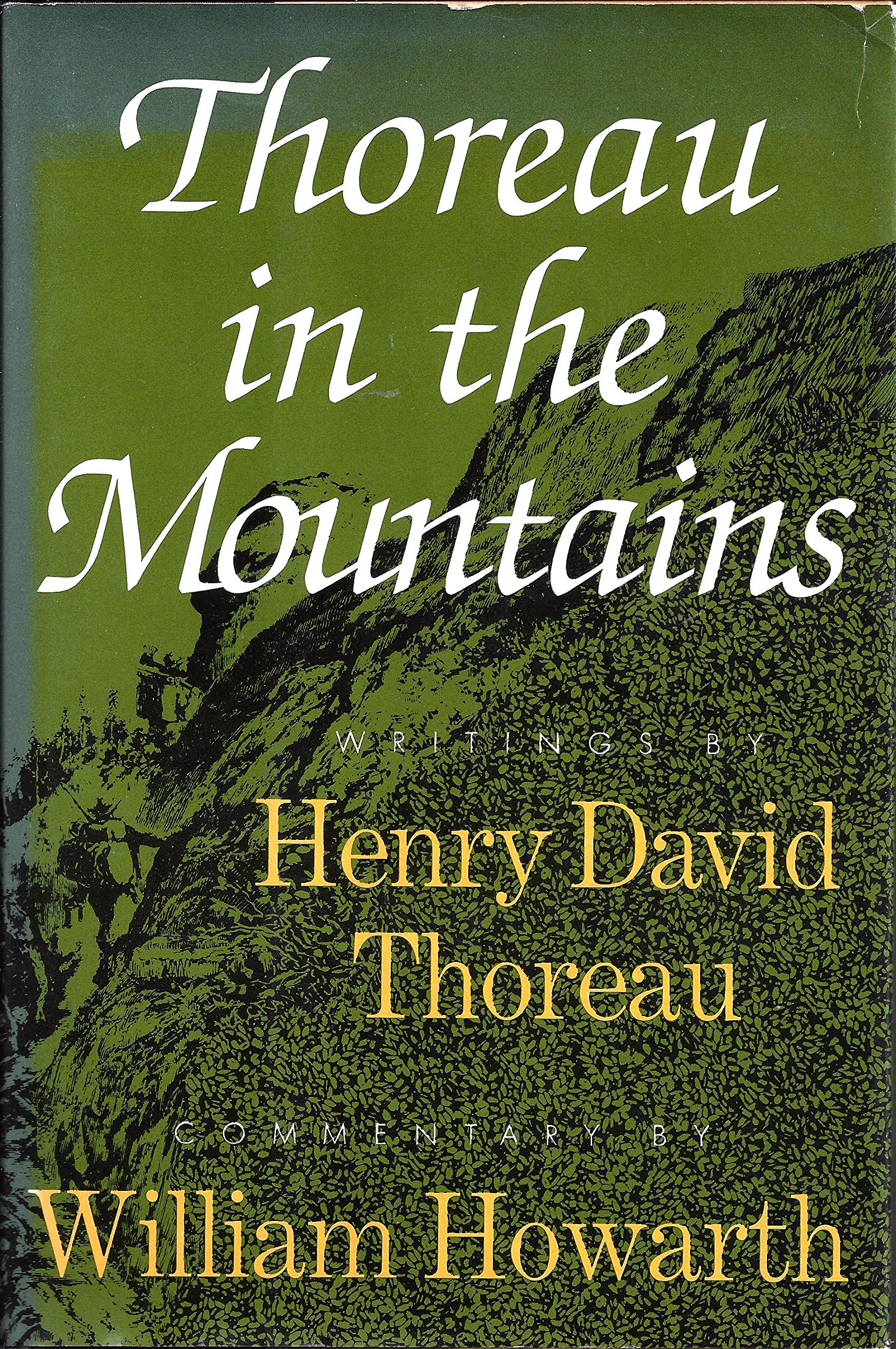
Thoreau in the mountains book cover
Thoreau in the mountains
1982
First Published
3.89
Average Rating
394
Number of Pages
Thoreau in the mountains [hardcover] Henry David Thoreau,William Howarth [Jan 01, 1982]
Avg Rating
3.89
Number of Ratings
9
5 STARS
22%
4 STARS
44%
3 STARS
33%
2 STARS
0%
1 STARS
0%
goodreads

Authors

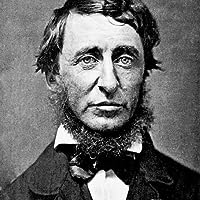
Henry David Thoreau
Henry David Thoreau
Author · 118 books

Henry David Thoreau (born David Henry Thoreau) was an American author, naturalist, transcendentalist, tax resister, development critic, philosopher, and abolitionist who is best known for Walden, a reflection upon simple living in natural surroundings, and his essay, Civil Disobedience, an argument for individual resistance to civil government in moral opposition to an unjust state. Thoreau's books, articles, essays, journals, and poetry total over 20 volumes. Among his lasting contributions were his writings on natural history and philosophy, where he anticipated the methods and findings of ecology and environmental history, two sources of modern day environmentalism. In 1817, Henry David Thoreau was born in Massachusetts. He graduated from Harvard University in 1837, taught briefly, then turned to writing and lecturing. Becoming a Transcendentalist and good friend of Emerson, Thoreau lived the life of simplicity he advocated in his writings. His two-year experience in a hut in Walden, on land owned by Emerson, resulted in the classic, Walden: Life in the Woods (1854). During his sojourn there, Thoreau refused to pay a poll tax in protest of slavery and the Mexican war, for which he was jailed overnight. His activist convictions were expressed in the groundbreaking On the Duty of Civil Disobedience (1849). In a diary he noted his disapproval of attempts to convert the Algonquins "from their own superstitions to new ones." In a journal he noted dryly that it is appropriate for a church to be the ugliest building in a village, "because it is the one in which human nature stoops to the lowest and is the most disgraced." (Cited by James A. Haught in 2000 Years of Disbelief.) When Parker Pillsbury sought to talk about religion with Thoreau as he was dying from tuberculosis, Thoreau replied: "One world at a time." Thoreau's philosophy of nonviolent resistance influenced the political thoughts and actions of such later figures as Leo Tolstoy, Mohandas K. Gandhi, and Martin Luther King, Jr. D. 1862. More: http://plato.stanford.edu/entries/tho... http://thoreau.eserver.org/ http://en.wikipedia.org/wiki/Henry\_Da... http://transcendentalism-legacy.tamu.... http://www.biography.com/people/henry...

William Howarth
Author · 1 book

Also William L. Howarth. William Howarth (1940) is an American writer and professor emeritus of environmental literature and history at Princeton University. He has published thirteen books and also written for such national periodicals as National Geographic, Smithsonian, and The American Scholar. He has served on the editorial board of Environmental History, as chairman of the board for The Center for American Places, and as editor in chief of The Writings of Henry D. Thoreau. Howarth has taught at Princeton since 1966. His courses included the Literature of Place and Travel, American Renaissance Literature, and Darwin in our Time. He has won several awards for research and teaching, and he has advised 100 Ph.D. dissertations and 256 senior theses. He is a faculty associate of the Princeton Environmental Institute and a member of its executive committee. Howarth received a B.A. from the University of Illinois, and an M.A. and Ph.D. from the University of Virginia.

548 Market St PMB 65688, San Francisco California 94104-5401 USA
© 2026 Paratext Inc. All rights reserved