Margins
Three Kingdoms (Four Volume Edition) book cover 1
Three Kingdoms (Four Volume Edition) book cover 2
Three Kingdoms (Four Volume Edition) book cover 3
Three Kingdoms (Four Volume Edition)
Series · 3 books · 1360

Books in series

Three Kingdoms, Volume 1 book cover
#1

Three Kingdoms, Volume 1

1360

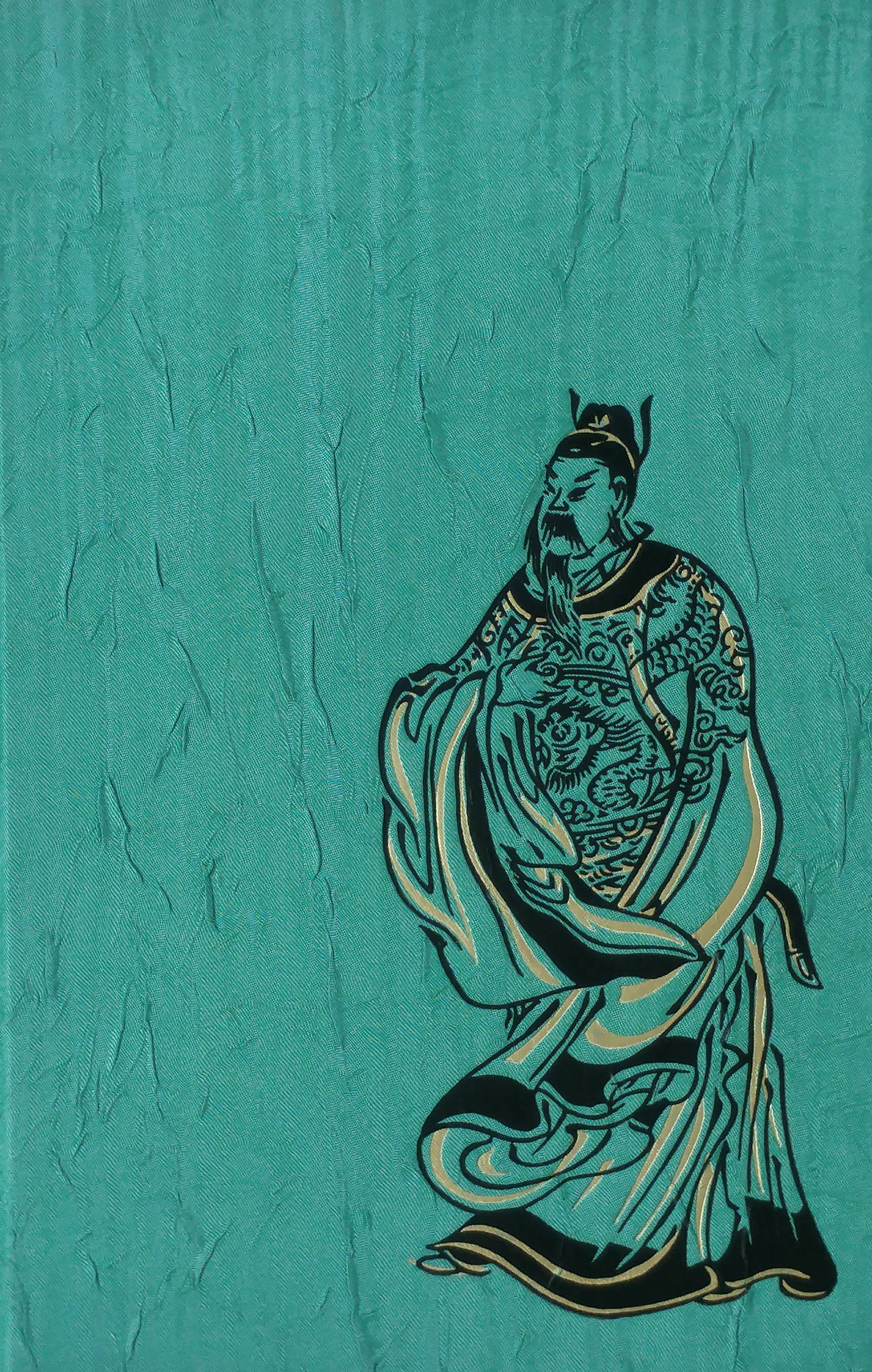
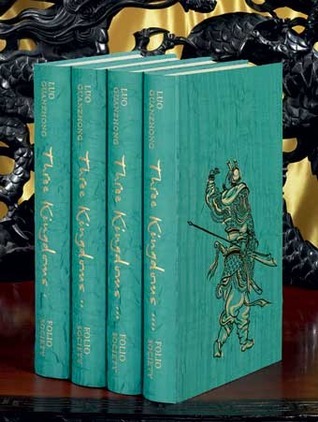
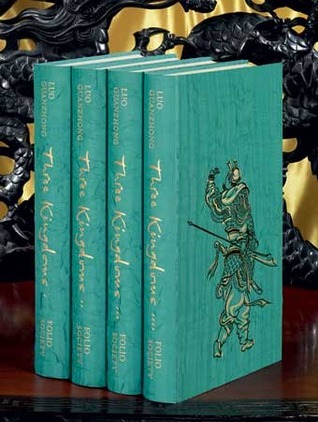
In Chinese culture, the era of the Three Kingdoms (AD 168–280) has achieved the status of legend. Retold in novels, celebrated in operas and echoed in modern media, from television to video games, it permeates Chinese consciousness like no other. It was an era of chaos, of conflicts so bloody that the country’s population fell by almost 50 million. But it was also a time of ideological change, with the rise of Buddhist ideals and Taoist principles that rejected the tumult and violence of the warring dynasties. And it produced the country’s first professional painters, such as Cao Buxing, often called ‘the father of Buddhist painting’. It is from this rich strand of history that Luo Guanzhong’s Three Kingdoms emerged. Written in the 14th century, this remarkable novel is one of the great classics of Chinese literature. It is among the most beloved works of literature in East Asia, with an influence in China comparable to that of Shakespeare in the British Isles. While attributed to Guanzhong, it is as much the product of 11 centuries of oral tradition as the fruit of one author’s labour, encompassing and cementing the quasi-mythical status of the era. Introducing this edition, Chinese author-in-exile Ma Jian describes Three Kingdoms as 70 per cent history and 30 per cent fiction. With an intricate plot and almost 1,000 dramatic characters, it is a vast work, consisting of 734,321 Chinese characters. The story is one of ferocious battles, revolts and raids – of vengeance, murder and power struggles wrought as three powers fight for the rule of a divided land. On and on the Great River rolls, racing east. Of proud and gallant heroes its white-tops leave no trace, As right and wrong, pride and fall turn all at once unreal. Yet ever the green hills stays To blaze in the west-waning day. But this is not only the history of an embattled era; it is also an exploration of human behaviour, morality and the cyclical nature of Chinese civilisation. It reflects Confucian ethics, which confer on all relationships a set of roles and obligations. Respect for parents, loyalty to government and mindfulness of one’s place in society are paramount. Encircling these values are the ideas of humaneness, kindness and love. As Ma Jian writes, while the novel has been used by some as a manual of war, its overriding message is ‘surely that leaders and oppressors who violate the moral codes of loyalty and benevolence sow the seeds of their own destruction’. Characters who use guile over force – such as Zhuge Liang, who bluffs his enemy into retreat by posing as a simple lute player perched on the battlements of his besieged city – are to be admired above those who rely on violence. Arguably the most widely read historical novel in late imperial and modern China, this extraordinary work is essential reading for anyone who seeks to understand Chinese civilisation. The only English language illustrated edition in print This edition features 280 integrated woodcuts from a 19th-century edition, sourced with the kind assistance of Frances Wood, Curator of Chinese Collections at the British Library. They were probably created in the workshops that thrived throughout the Qing dynasty (1644 to 1911), when the visual arts were prized as a means of reaffirming social values. There are 240 dramatic scenes and 40 character portraits. The books are bound in shimmering cloth, blocked with four key figures redrawn by Neil Gower: Liu Bei (Xuande), Lady Mi, Zuo Ci and Deng Ai. Lady Sun, the daughter of a warlord and third wife of Liu Bei, appears on the slipcase. [Source: http://www.foliosociety.com/book/THK]

Three Kingdoms III book cover
#3

Three Kingdoms III

1360

In Chinese culture, the era of the Three Kingdoms (AD 168–280) has achieved the status of legend. Retold in novels, celebrated in operas and echoed in modern media, from television to video games, it permeates Chinese consciousness like no other. It was an era of chaos, of conflicts so bloody that the country’s population fell by almost 50 million. But it was also a time of ideological change, with the rise of Buddhist ideals and Taoist principles that rejected the tumult and violence of the warring dynasties. And it produced the country’s first professional painters, such as Cao Buxing, often called ‘the father of Buddhist painting’. It is from this rich strand of history that Luo Guanzhong’s Three Kingdoms emerged. Written in the 14th century, this remarkable novel is one of the great classics of Chinese literature. It is among the most beloved works of literature in East Asia, with an influence in China comparable to that of Shakespeare in the British Isles. While attributed to Guanzhong, it is as much the product of 11 centuries of oral tradition as the fruit of one author’s labour, encompassing and cementing the quasi-mythical status of the era. Introducing this edition, Chinese author-in-exile Ma Jian describes Three Kingdoms as 70 per cent history and 30 per cent fiction. With an intricate plot and almost 1,000 dramatic characters, it is a vast work, consisting of 734,321 Chinese characters. The story is one of ferocious battles, revolts and raids – of vengeance, murder and power struggles wrought as three powers fight for the rule of a divided land. On and on the Great River rolls, racing east. Of proud and gallant heroes its white-tops leave no trace, As right and wrong, pride and fall turn all at once unreal. Yet ever the green hills stays To blaze in the west-waning day. But this is not only the history of an embattled era; it is also an exploration of human behaviour, morality and the cyclical nature of Chinese civilisation. It reflects Confucian ethics, which confer on all relationships a set of roles and obligations. Respect for parents, loyalty to government and mindfulness of one’s place in society are paramount. Encircling these values are the ideas of humaneness, kindness and love. As Ma Jian writes, while the novel has been used by some as a manual of war, its overriding message is ‘surely that leaders and oppressors who violate the moral codes of loyalty and benevolence sow the seeds of their own destruction’. Characters who use guile over force – such as Zhuge Liang, who bluffs his enemy into retreat by posing as a simple lute player perched on the battlements of his besieged city – are to be admired above those who rely on violence. Arguably the most widely read historical novel in late imperial and modern China, this extraordinary work is essential reading for anyone who seeks to understand Chinese civilisation.
Three Kingdoms IV book cover
#4

Three Kingdoms IV

1360

In Chinese culture, the era of the Three Kingdoms (AD 168–280) has achieved the status of legend. Retold in novels, celebrated in operas and echoed in modern media, from television to video games, it permeates Chinese consciousness like no other. It was an era of chaos, of conflicts so bloody that the country’s population fell by almost 50 million. But it was also a time of ideological change, with the rise of Buddhist ideals and Taoist principles that rejected the tumult and violence of the warring dynasties. And it produced the country’s first professional painters, such as Cao Buxing, often called ‘the father of Buddhist painting’. It is from this rich strand of history that Luo Guanzhong’s Three Kingdoms emerged. Written in the 14th century, this remarkable novel is one of the great classics of Chinese literature. It is among the most beloved works of literature in East Asia, with an influence in China comparable to that of Shakespeare in the British Isles. While attributed to Guanzhong, it is as much the product of 11 centuries of oral tradition as the fruit of one author’s labour, encompassing and cementing the quasi-mythical status of the era. Introducing this edition, Chinese author-in-exile Ma Jian describes Three Kingdoms as 70 per cent history and 30 per cent fiction. With an intricate plot and almost 1,000 dramatic characters, it is a vast work, consisting of 734,321 Chinese characters. The story is one of ferocious battles, revolts and raids – of vengeance, murder and power struggles wrought as three powers fight for the rule of a divided land. On and on the Great River rolls, racing east. Of proud and gallant heroes its white-tops leave no trace, As right and wrong, pride and fall turn all at once unreal. Yet ever the green hills stays To blaze in the west-waning day. But this is not only the history of an embattled era; it is also an exploration of human behaviour, morality and the cyclical nature of Chinese civilisation. It reflects Confucian ethics, which confer on all relationships a set of roles and obligations. Respect for parents, loyalty to government and mindfulness of one’s place in society are paramount. Encircling these values are the ideas of humaneness, kindness and love. As Ma Jian writes, while the novel has been used by some as a manual of war, its overriding message is ‘surely that leaders and oppressors who violate the moral codes of loyalty and benevolence sow the seeds of their own destruction’. Characters who use guile over force – such as Zhuge Liang, who bluffs his enemy into retreat by posing as a simple lute player perched on the battlements of his besieged city – are to be admired above those who rely on violence. Arguably the most widely read historical novel in late imperial and modern China, this extraordinary work is essential reading for anyone who seeks to understand Chinese civilisation.

Author

Luo Guanzhong
Luo Guanzhong
Author · 22 books
Luo Ben (c. 1330–1400), better known by his style name Luo Guanzhong (罗贯中) (Mandarin pronunciation: [lwɔ kwantʂʊŋ]), was a Chinese writer who lived during the Yuan Dynasty. He was also known by his pseudonym Huhai Sanren (Chinese: 湖海散人; pinyin: Húhǎi Sǎnrén; literally "Leisure Man of Lakes and Seas"). Luo was attributed with writing Romance of the Three Kingdoms and editing Water Margin, two of the Four Great Classical Novels of Chinese literature.
548 Market St PMB 65688, San Francisco California 94104-5401 USA
© 2026 Paratext Inc. All rights reserved
Three Kingdoms (Four Volume Edition)