Part of Series
Authors

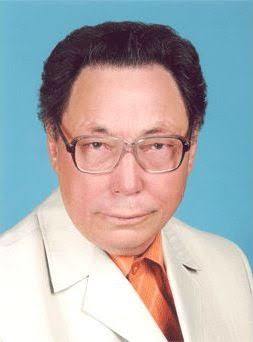
Николай Шундик Nikolai Eliseevich Shundik. Soviet writer, editor-in-chief of the Volga magazine, director of the Sovremennik publishing house. His first story "The Death of the Stone Devil" was published in 1949 in the "Smena" magazine. In 1952, after graduating from the Khabarovsk Pedagogical Institute, he remained to teach at one of the Khabarovsk schools. At the same time he released his first major work - the story "In the Far North", for which he received the first prize at the competition of the Ministry of Education of the RSFSR for the best children's book. A year later, Shundik published the novel The Swift Deer, which gained popularity among readers and was subsequently republished in 27 countries. The subject of the work is devoted to life in the Far North - the traditional life of reindeer herders and hunters and the formation of Soviet power in Chukotka. He graduated from the Higher Literary Courses in 1957 and settled in Ryazan, where he lived until 1965, heading the local organization of the Writers' Union. In 1959 he published the novel "A Spring at a Birch", written in Ryazan material. In the same period, a "Ryazan experiment" was taking place in the region to triple the production of livestock products, which turned out to be a gamble and ended with the deprivation of the title of Hero of Socialist Labor and suicide of the first secretary of the regional committee of the CPSU A. N. Larionov. Later, this dramatic story formed the basis of the novel In the land of the blue-eyed. In 1965 Shundik became the head of the Volga magazine in Saratov, becoming its first editor-in-chief. In 1976, after becoming the working secretary of the Writers' Union of Russia, he moved to Moscow. In 1979-1981 he headed the Sovremennik publishing house. In 1979, the novel "White Shaman" was published, in which the author again turned to the Chukchi theme and the period of the 1930s-40s. The book was a noticeable success with readers and was filmed in 1982 by director A.D. Nitochkin. In 1982 Nikolai Shundik published his fifth novel, The Ancient Sign. The last novel of the writer was the book A Candle in the Wind, published in 1994 in the Sever magazine.

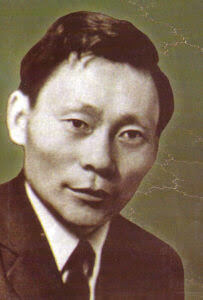
In Cyrillic: Юрий Рытхэу Yuri Sergeyevich Rytkheu. He was a Chukchi writer, who wrote in both his native Chukchi and in Russian. He is considered to be the father of Chukchi literature. Yuri Rytkheu was born on March 8, 1930 in the village of Uelen in the Far Eastern Territory (now the Chukotka Autonomous Okrug) in the family of a hunter-St. John's wort. His grandfather was a shaman. At birth, the boy was given the name Rytkheu, which means "unknown" in Chukchi. Since the Soviet institutions did not recognize the Chukchi names, in the future, in order to obtain a passport, the future writer took a Russian name and patronymic, and the name "Rytkheu" became his last name. Rytkheu graduated from a seven-year school in Uelen and wanted to continue his studies at the Institute of the Peoples of the North, but due to his age he was not among those who were seconded to this university. Therefore, he decided to independently go to Leningrad for training. This path stretched over several years. In order to earn money for travel and life, the future writer was hired for various jobs: he was a sailor, worked on a geological expedition, participated in the hunting game, was a loader at a hydro base. Rytkheu studied at the literary faculty of Leningrad State University from 1949 to 1954. The writer was a little over 20 years old when his stories appeared in the almanac "Young Leningrad", and a little later in the magazines "Ogonyok", "Young World", "Far East", the youth newspaper "Smena" and other periodicals. In 1953, the publishing house "Young Guard" published his first collection of short stories in Russian "People of Our Coast" (translated from Chukotka by A. Smolyan). During his student days, Yuri Rytkheu was actively involved in translation activities, translated into Chukchi the tales of Alexander Pushkin, the stories of Leo Tolstoy, the works of Maxim Gorky and Tikhon Syomushkin. In 1954 Rytkheu was admitted to the Writers' Union of the USSR. Two years later, in Magadan, his collection of stories "The Chukotka Saga" was published, which brought the writer recognition not only of Soviet, but also foreign readers.

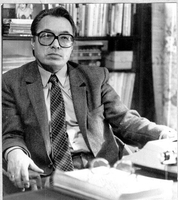
Yuvan Nikolayevich Shestalov Russian: Юван Николаевич Шесталов;(1937-2011) was a Mansi writer from Russia. Shestalov is arguably the best known author in the Mansi language although he mostly wrote in Russian. His work in Mansi and Russian has been widely translated and he worked actively to preserve his native language and culture. He also became a laureate of several Soviet and Russian literary prizes. The first poetic book by Yu. Shestalov in the Mansi language "Makem At" ("Breath of the Earth") was published in 1958 in Tyumen. The first really successful work was "The Pagan Poem" (1971), in which the author tried to translate into the language of poetry the ritual culture of his people with its actions and multi-layered spiritual content. After the breakup of the Soviet Union in 1991, he converted to shamanism.

Yuri Pavlovich Kazakov was a Russian author of short stories. He started out as a jazz musician, but turned to publishing his stories in 1952. He attended the Maxim Gorky Literature Institute, graduating in 1958. Kazakov was born to a worker's family in Moscow and grew up in the old Arbat area, which has today been turned into a tourist attraction but in the mid-1900s was the focal point of Russian culture. He emerged as a writer only thanks to the short period in recent Russian history known as "the Thaw", but in the mid-1960s, this period gave way to stagnation in culture and public life. Kazakov produced some of his best stories in the 1970s, which dealt with the merging of two souls, the soul of the newborn and the soul of the poet at the end of his life. Kazakov died on November 29, 1982 and was buried in Vagankovo Cemetery in Moscow.

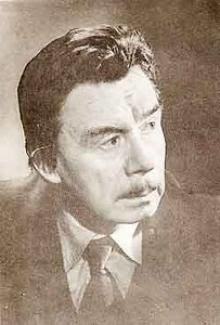
Semyon Nikolaevich Kurilov (Russian: Семён Николаевич Курилов) was a Yukagir writer. Born into a family of reindeer herders. He graduated from the 7th grade of high school. He worked on a collective farm, a village council and in cultural and educational institutions of the ulus. In addition to his native Yukaghir, he spoke Russian, Yakut, Even and Chukchi. Published since 1961. His first story "See you in the tundra" was published in the collection "From Moscow to the taiga, one nomad" (Publishing house "Young Guard"). In 1969 his main novel "Hanido and Khalerha" was published by the publishing house "Soviet Russia". This is a large, highly artistic work about the life, way of life and customs of the northern peoples.