Margins
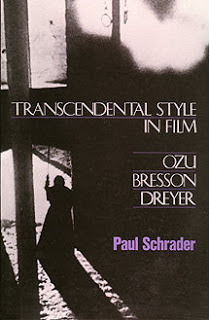
Transcendental Style in Film book cover
Transcendental Style in Film
Ozu, Bresson, Dreyer
1972
First Published
4.08
Average Rating
204
Number of Pages
The acclaimed director of Mishima, American Gigolo, Hard Core, Blue Collar, and Cat People, and also the screenwriter for Taxi Driver, Paul Schrader here analyzes the film style of three great directors—Yasajiro Ozu, Robert Bresson, Carl Dreyer—and posits a common dramatic language by these artists from divergent cultures. Unlike the style of psychological realism, which dominates film, the transcendental style expresses a spiritual state with austere camerawork, acting devoid of self-consciousness, and editing that avoids editorial comment. This important book is an original contribution to film analysis and a key work by one of our most searching directors and writers.

Avg Rating
4.08
Number of Ratings
1,068
5 STARS
35%
4 STARS
45%
3 STARS
15%
2 STARS
4%
1 STARS
1%
goodreads

Author

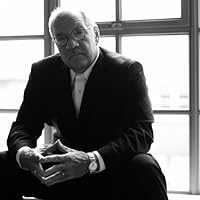
Paul Schrader
Paul Schrader
Author · 7 books

Although his name is often linked to that of the 'movie brat' generation (Spielberg, Scorsese, Coppola, Lucas, De Palma, etc.) Paul Schrader's background couldn't have been more different. Schrader's strict Calvinist parents refused to allow him to see a film until he was eighteen. Although he more than made up for lost time when studying at Calvin College, Columbia University and UCLA's graduate film program, his influences were far removed from those of his contemporaries - Bresson, Ozu and Dreyer (about whom he wrote a book, Transcendental Style in Film: Ozu Bresson Dreyer Da Capo Paperback) rather than Saturday morning serials. After a period as a film critic (and protégé of Pauline Kael), he began writing screenplays, hitting the jackpot when he and his brother, Leonard Schrader (a Japanese expert), were paid the then-record sum of $325,000, for The Yakuza, thus establishing his reputation as one of Hollywood's top screenwriters - which was consolidated when Martin Scorsese filmed Schrader's script [Book:Taxi Driver] (1976), written in the early 1970s during a bout of drinking and depression. The success of the film allowed Schrader to start directing his own films, which have been notable for their willingness to take stylistic and thematic risks while still working squarely within the Hollywood system. The most original of his films (which he and many others regard as his best) was the Japanese co-production Mishima: A Life in Four Chapters (1985). Biography Source: http://www.imdb.com/name/nm0001707/bio

548 Market St PMB 65688, San Francisco California 94104-5401 USA
© 2026 Paratext Inc. All rights reserved