Margins
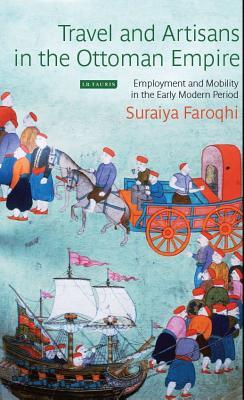
Travel and Artisans in the Ottoman Empire book cover
Travel and Artisans in the Ottoman Empire
Employment and Mobility in the Early Modern Era
2013
First Published
3.25
Average Rating
320
Number of Pages
It has often been assumed that the subjects of the Ottoman sultans were unable to travel beyond their localities - since peasants needed the permission of their local administrators before they could legitimately leave their villages. However Suraiya Faroqhi’s extensive archival research shows that this was not the case. Pious men from all walks of life went on pilgrimage to Mecca, slaves fled from their masters and craftspeople travelled in search of work. Faroqhi shows that even those craftsmen who did not travel extensively had some level of mobility. Challenging existing historiography and providing an important new perspective, this book will be essential reading for students and scholars of Ottoman history.

Avg Rating
3.25
Number of Ratings
4
5 STARS
0%
4 STARS
50%
3 STARS
25%
2 STARS
25%
1 STARS
0%
goodreads

Author

Suraiya Faroqhi
Suraiya Faroqhi
Author · 14 books

Suraiya Faroqhi was born in Berlin to a German mother and Indian father in 1941. She studied at Hamburg University and she came to Istanbul through a university exchange program when she was 21. At Istanbul University, she became a student of Ömer Lütfi Barkan. She completed her master's degree in Hamburg and between 1968-1970 she studied English Language Teaching at Indiana University-Bloomington. After her post-doctorate, she worked as English Lecturer at METU. She retired from METU in 1987 and from München Ludwig Maximillan Universität in 2005. A turning point in her life came in 1962-63, when she took the opportunity to go to Istanbul University on a fellowship as an exchange student. Subsequently she became a student of Ömer Lüfti Barkan, one of the founding fathers of Ottoman history and an editor of Annales. When she first read Fernand Braudel at Barkan’s insistence, she “had the feeling that’s the sort of thing I wanted to do.” She wrote her doctoral thesis at Hamburg on a set of documents that a late 16th-century vizier submitted to his sultan discussing Ottoman politics at the time.[1] She is regarded as one of the most important economic and social historians of the Ottoman Empire working today. Professor Faroqhi has written substantially on Ottoman urban history, arts and crafts, and on the hitherto underrepresented world of the ordinary people in the empire. She is well known for her distinctive approach to Ottoman everyday life and public culture. She has published numerous books and articles in the field of pre- modern Ottoman history.

548 Market St PMB 65688, San Francisco California 94104-5401 USA
© 2026 Paratext Inc. All rights reserved