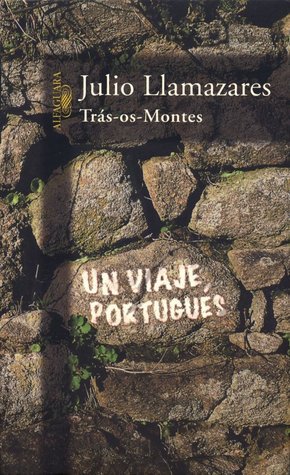



Literatura de viajes de Julio Llamazares, donde su talento narrativo y su profunda capacidad de observación del paisaje brillan con toda su fuerza. « -¿Habrá en el mundo una tierra más pobre que esta? - Sí. Tras-os-Montes, en Portugal. » «Es posible que esta vieja región histórica sea la más atrasada de la Europa civilizada, junto con las zonas más remotas e islas de Grecia y el interior de Cerdeña, Sicilia, Yugoslavia...» Extracto de una guía de viajes de Portugal Y, no obstante, el viajero que protagoniza este viaje portugués va creando, a su lento paso, una narración tan bella, tan hondamente humana, tan transida de comprensión (de los demás, de sí mismo, de la tierra) que el lector transita, en su lectura, por el paisaje más es decir, el del hombre. Llamazares ha escrito un libro de enormes perspectivas, indiferente a los géneros y las clasificaciones. Es novela, si novela es espejo que se pasea al borde del camino. Es libro de viajes, porque las comarcas pasan por sus páginas. Es relato iniciático, porque el viajero va transformándose con su viaje. Y es, sobre todo, gran literatura. Reseñ «Lo mejor del libro es ese personaje sorprendido por lo que va ese viajero y su contar calmo y sobrio en el que no es posible medir el tiempo.» El País «El ritmo de su escritura en prosa es deudor de esa ambición de asociar las palabras (y la memoria, que es su fuente) con el ritmo; la música es consustancial con su narrativa, y eso le viene de la poesía.» Juan Cruz, El País «Julio Llamazares es, sin duda, uno de esos escritores que nos reconcilian con el ejercicio de la literatura.» Aurelio Loureiro, Leer «Julio Llamazares sigue siendo un escritor especial, alguien capaz de mirar el mundo de otra manera.» El Correo Gallego «Un escritor de su categoría podría redactar los anuncios por palabras de un periódico y seguiría siendo interesante.» Qué Leer «Llamazares siempre escribe igual cuando viaja, habría que añadir también que siempre escribe bien, sin arrogancia, desprejuiciadamente, con sentido del humor y con cariñosa indulgencia cuando retrata.» Andrés Barba, El Cultural

Author

Julio Llamazares was born in Vegamián, a small village in the region of León. At the age of twelve he left the mountain area, attended a boarding school in Madrid and then studied law. Today Llamazares works as a writer, journalist and scriptwriter. After two poetry volumes which were published under the titles of 'La lentitud de los bueyes' (1979) and 'Memoria de la nieve' (1982), his successful debut as a novel writer came out in 1985 'Luna de lobos'. Llamazares had his literary breakthrough with the novel 'La lluvia amarilla' in 1988. The novel is about Andrés, an old man who is the last inhabitant of a forsaken village in the Pyrenees. Andrés reminds the former vitality of this place and contemplates about forgetting, death, and loneliness. With the story of the dying village, Llamazares has depicted a concise development of Spanish society in a bribingly direct speech. Hundreds of villages have disappeared in the last decades because the inhabitants have moved to the cities. In the first three years after its publication, 'La lluvia amarilla' was already re-published 15 times. In the autobiographical novel 'Escenas de cine mudo' (1994), the narrator returns to Olleros, the place of his childhood. After the death of his mother he finds a photo album with old black and white photos. With the help of the yellowed photos he goes back to his past and describes, in loosely connected scenes, his experiences from the view of a child, thus bestowing an insight into the social history of the region. Llamazares holds a special place in Spanish contemporary literature. He belongs to the few authors who concern themselves with rural Spain, the remote areas and the decline of damned mountain villages. With his unassuming and convincingly told stories of everyday life, he plays a large part in the existence of this world not being forgotten in the general frenzy of modernization. Llamazares has published collections of stories, such as 'En mitad de ninguna parte' (1981) and chronicles ('El Entierro de Genarin', 1998). Furthermore, he edited an Anthology about the city of Madrid, which came out as 'Los viajeros de Madrid' in 1998. Articles he wrote as a journalist are collected in 'En Babia' (1991) and 'Nadie escucha' (1995). Llamazares’ travel reports about forgotten regions and districts were published as 'El río del ovido' (1990) and 'Trás-os-Montes' (1998). He also wrote filmscripts and extended reportages – among these, one about Berlin. Recently, his novel "El cielo de Madrid" (2005) was published. The author lives in Madrid and León.