


Margins
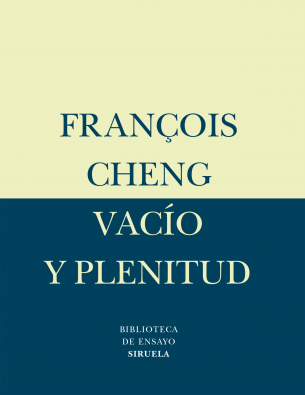
Vacío y plenitud book cover
Vacío y plenitud
1979
First Published
4.10
Average Rating
198
Number of Pages

Chinese painting might be called "philosophy in action," for it is one of the highest expressions of Chinese spirituality. Both a medium for contemplation leading to self-transcendence and a microcosm embodying universal principles and primal forces, it is a means for making manifest the Chinese worldview. At the heart of this worldview is the notion of emptiness, the dynamic principle of transformation. Only through emptiness can things attain their full measure and human beings approach the universe at the level of totality. Focusing on the principle of emptiness, Francois Cheng uses semiotic analysis and textual explication to reveal the key themes and structures of Chinese aesthetics in the practice of pictorial art. Among the many Chinese writers, poets, and artists whose writings are quoted, he gives special emphasis to a great Ch'ing dynasty theoretician and painter, Shih-t'ao. Twenty-seven reproductions of the words of Shih-t'ao and other masters illustrate the interpretive commentary.
Avg Rating
4.10
Number of Ratings
132
5 STARS
39%
4 STARS
36%
3 STARS
19%
2 STARS
5%
1 STARS
0%
goodreads

Author

François Cheng
François Cheng
Author · 13 books

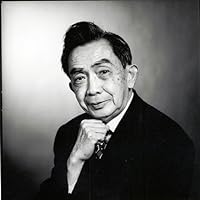
François Cheng is a French academician, writer, poet and calligrapher. He is the author of essays, novels, collections of poetry and books on art written in the French language, and the translator of some of the great French poets into Chinese. Born in China and taking French citizenship in 1973, he was elected to the Académie française in 2002, and was the first person of Asian origin to be a member of the Academy. He was the winner of the 1998 Prix Femina for Le Dit de Tianyi ("The saying of Tianyi") When Cheng arrived in France in 1948, on a study grant, he did not speak a word of the language. He subsequently adapted quickly and profoundly. In his speech to the Académie française, he explained, "I became a Frenchman in law, mind and heart more than thirty years ago [...] especially from that moment when I resolutely went over to the French language, making it the weapon, or the soul, of my creative work. This language, how can I say everything that I owe to it? It is so intimately bound up with the way I live and my inner life that it has proved to be the emblem of my destiny." It took many years before he became a novelist. His first works were on Chinese poetry and painting. Later he began to write works of poetry himself, before finally turning to the writing of novels.

548 Market St PMB 65688, San Francisco California 94104-5401 USA
© 2026 Paratext Inc. All rights reserved