


Para enaltecer as mulheres ilustres que prestaram uma contribuição formidável à literatura—e reparar a injustiça histórica que por séculos reverenciou apenas os homens —, a DarkSide® Books e a Macabra Filmes orgulhosamente apresentam a antologia Vitorianas Macabras. Organizada em parceria com Marcia Heloisa—doutora em Literatura Comparada na Universidade Federal Fluminense (uff), também responsável pela tradução e já conhecida pelos darksiders por seu exímio trabalho com Bram Stoker e Edgar Allan Poe, na linha Medo Clássico —, a coletânea apresenta treze histórias escritas por autoras que, assim como nós, foram cativadas pelo medo e por tudo aquilo que é sobrenatural. Verdadeiramente assustadoras, as histórias desta antologia foram ecoadas em contos e romances publicados nos séculos seguintes, uma proeza e influência que apenas as tramas mais poderosas poderiam conseguir. Aqui, o medo se manifesta de diversas maneiras, todas elas terríveis, impressionantes… e difíceis de esquecer. Não vamos contar todos os segredos, mas aqui vai um gostinho do que está por vir: “A Prece”, de Violet Hunt, é uma espécie de avô de Cemitério Maldito; o perturbador “Onde o Fogo Não se Apaga”, de May Sinclair, reproduz a tensão dos slashers com a profundidade do terror psicológico; “O Conto da Velha Ama”, de Elizabeth Gaskell, e “O Mistério do Elevador”, de Louisa Baldwin, apresentam fantasmas memoráveis; já em “A Janela da Biblioteca”, Margaret Oliphant traz um ensaio melancólico sobre o fantasma da solidão. “A voz dessas autoras é única, suas vidas são o verdadeiro assombro diante da grandeza de suas obras até então esquecidas”, afirma Christiano Menezes, diretor editorial da DarkSide®. “Há muito tempo eu não era tocada por textos tão poderosos”, completa Marcia Heloisa. Vitorianas Macabras reúne ainda histórias de Charlotte Brontë, H.D. Everett, Vernon Lee, Rhoda Broughton, Charlotte Riddell, Edith Nesbit, Amelia B. Edwards e Mary Braddon. Essas mulheres, além de serem figuras ilustres do protagonismo feminino, tinham em comum, é claro, o amor pela literatura: passaram a vida escrevendo, transformaram as palavras em seu ofício e tocaram inúmeros leitores com seus escritos. Agora, chegou a sua vez.
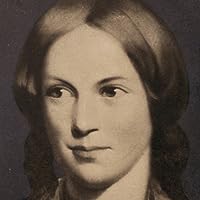
Authors

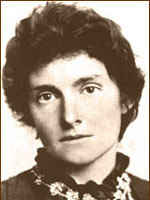
Edith Nesbit (married name Edith Bland; 15 August 1858 – 4 May 1924) was an English author and poet; she published her books for children under the name of E. Nesbit. She wrote or collaborated on over 60 books of fiction for children, several of which have been adapted for film and television. She was also a political activist and co-founded the Fabian Society, a socialist organisation later connected to the Labour Party. Edith Nesbit was born in Kennington, Surrey, the daughter of agricultural chemist and schoolmaster John Collis Nesbit. The death of her father when she was four and the continuing ill health of her sister meant that Nesbit had a transitory childhood, her family moving across Europe in search of healthy climates only to return to England for financial reasons. Nesbit therefore spent her childhood attaining an education from whatever sources were available—local grammars, the occasional boarding school but mainly through reading. At 17 her family finally settled in London and aged 19, Nesbit met Hubert Bland, a political activist and writer. They became lovers and when Nesbit found she was pregnant they became engaged, marrying in April 1880. After this scandalous (for Victorian society) beginning, the marriage would be an unconventional one. Initially, the couple lived separately—Nesbit with her family and Bland with his mother and her live-in companion Maggie Doran. Initially, Edith Nesbit books were novels meant for adults, including The Prophet's Mantle (1885) and The Marden Mystery (1896) about the early days of the socialist movement. Written under the pen name of her third child 'Fabian Bland', these books were not successful. Nesbit generated an income for the family by lecturing around the country on socialism and through her journalism (she was editor of the Fabian Society's journal, Today). In 1899 she had published The Adventures of the Treasure Seekers to great acclaim.

Charlotte Brontë was an English novelist, the eldest out of the three famous Brontë sisters whose novels have become standards of English literature. See also Emily Brontë and Anne Brontë. Charlotte Brontë was born in Thornton, Yorkshire, England, the third of six children, to Patrick Brontë (formerly "Patrick Brunty"), an Irish Anglican clergyman, and his wife, Maria Branwell. In April 1820 the family moved a few miles to Haworth, a remote town on the Yorkshire moors, where Patrick had been appointed Perpetual Curate. This is where the Brontë children would spend most of their lives. Maria Branwell Brontë died from what was thought to be cancer on 15 September 1821, leaving five daughters and a son to the care of her spinster sister Elizabeth Branwell, who moved to Yorkshire to help the family. In August 1824 Charlotte, along with her sisters Emily, Maria, and Elizabeth, was sent to the Clergy Daughters' School at Cowan Bridge in Lancashire, a new school for the daughters of poor clergyman (which she would describe as Lowood School in Jane Eyre). The school was a horrific experience for the girls and conditions were appalling. They were regularly deprived of food, beaten by teachers and humiliated for the slightest error. The school was unheated and the pupils slept two to a bed for warmth. Seven pupils died in a typhus epidemic that swept the school and all four of the Brontë girls became very ill - Maria and Elizabeth dying of tuberculosis in 1825. Her experiences at the school deeply affected Brontë - her health never recovered and she immortalised the cruel and brutal treatment in her novel, Jane Eyre. Following the tragedy, their father withdrew his daughters from the school. At home in Haworth Parsonage, Charlotte and the other surviving children—Branwell, Emily, and Anne—continued their ad-hoc education. In 1826 her father returned home with a box of toy soldiers for Branwell. They would prove the catalyst for the sisters' extraordinary creative development as they immediately set to creating lives and characters for the soldiers, inventing a world for them which the siblings called 'Angria'. The siblings became addicted to writing, creating stories, poetry and plays. Brontë later said that the reason for this burst of creativity was that: 'We were wholly dependent on ourselves and each other, on books and study, for the enjoyments and occupations of life. The highest stimulus, as well as the liveliest pleasure we had known from childhood upwards, lay in attempts at literary composition.' After her father began to suffer from a lung disorder, Charlotte was again sent to school to complete her education at Roe Head school in Mirfield from 1831 to 1832, where she met her lifelong friends and correspondents, Ellen Nussey and Mary Taylor. During this period (1833), she wrote her novella The Green Dwarf under the name of Wellesley. The school was extremely small with only ten pupils meaning the top floor was completely unused and believed to be supposedly haunted by the ghost of a young lady dressed in silk. This story fascinated Brontë and inspired the figure of Mrs Rochester in Jane Eyre. Brontë left the school after a few years, however she swiftly returned in 1835 to take up a position as a teacher, and used her wages to pay for Emily and Anne to be taught at the school. Teaching did not appeal to Brontë and in 1838 she left Roe Head to become a governess to the Sidgewick family—partly from a sense of adventure and a desire to see the world, and partly from financial necessity. Charlotte became pregnant soon after her wedding, but her health declined rapidly and, according to biographer Elizabeth Gaskell, she was attacked by "sensations of perpetual nausea and ever-recurring faintness." She died, with her unborn child, on 31 March 1855.

Amelia Ann Blandford Edwards An English novelist, journalist, lady traveller and Egyptologist, born to an Irish mother and a father who had been a British Army officer before becoming a banker. Edwards was educated at home by her mother, showing considerable promise as a writer at a young age. She published her first poem at the age of 7, her first story at age 12. Edwards thereafter proceeded to publish a variety of poetry, stories and articles in a large number of magazines. Edwards' first full-length novel was My Brother's Wife (1855). Her early novels were well received, but it was Barbara's History (1864), a novel of bigamy, that solidly established her reputation as a novelist. She spent considerable time and effort on their settings and backgrounds, estimating that it took her about two years to complete the researching and writing of each. This painstaking work paid off, her last novel, Lord Brackenbury (1880), emerged as a run-away success which went to 15 editions. In the winter of 1873–1874, accompanied by several friends, Edwards toured Egypt, discovering a fascination with the land and its cultures, both ancient and modern. Journeying southwards from Cairo in a hired dahabiyeh (manned houseboat), the companions visited Philae and ultimately reached Abu Simbel where they remained for six weeks. During this last period, a member of Edwards' party, the English painter Andrew McCallum, discovered a previously-unknown sanctuary which bore her name for some time afterwards. Having once returned to the UK, Edwards proceeded to write a vivid description of her Nile voyage, publishing the resulting book in 1876 under the title of A Thousand Miles up the Nile. Enhanced with her own hand-drawn illustrations, the travelogue became an immediate bestseller. Edwards' travels in Egypt had made her aware of the increasing threat directed towards the ancient monuments by tourism and modern development. Determined to stem these threats by the force of public awareness and scientific endeavour, Edwards became a tireless public advocate for the research and preservation of the ancient monuments and, in 1882, co-founded the Egypt Exploration Fund (now the Egypt Exploration Society) with Reginald Stuart Poole, curator of the Department of Coins and Medals at the British Museum. Edwards was to serve as joint Honorary Secretary of the Fund until her death some 14 years later. With the aims of advancing the Fund's work, Edwards largely abandoned her other literary work to concentrate solely on Egyptology. In this field she contributed to the ninth edition of the Encyclopædia Britannica, to the American supplement of that work, and to the Standard Dictionary. As part of her efforts Edwards embarked on an ambitious lecture tour of the United States in the period 1889–1890. The content of these lectures was later published under the title Pharaohs, Fellahs, and Explorer (1891). Amelia Edwards died at Weston-super-Mare, Somerset, on the 15 April 1892, bequeathing her collection of Egyptian antiquities and her library to University College London, together with a sum of £2,500 to found an Edwards Chair of Egyptology. She was buried in St Mary's Church Henbury, Bristol, Wikipedia: Amelia B. Edwards

See J.H. Riddell Charlotte Riddell aka Mrs J.H. Riddell was a one of the most popular and influential writers of the Victorian period. The author of 56 books, novels and short stories, she was also part owner and editor of the St. James' Magazine, one of the most prestigious literary magazines of the 1860s. (from Wikipedia)