Margins




548 Market St PMB 65688, San Francisco California 94104-5401 USA
© 2026 Paratext Inc. All rights reserved
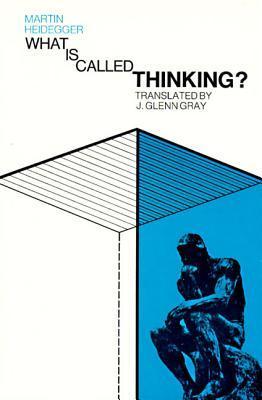
"For an acquaintance with the thought of Heidegger, What Is Called Thinking? is as important as Being and Time. It is the only systematic presentation of the thinker's late philosophy and ... it is perhaps the most exciting of his books. The translation is admirable. Without ever neglecting the severe terminological demands of the German text, Glenn Gray and Fred Wieck have transposed it into clear, untortured English prose." — Hannah Arendt "Heidegger has tried to reinterpret the purport of his first major work, Being and Time, as meaning an opening of the horizon of Being through man's horizon of thinking. What Is Called Thinking? no doubt provides his most far-reaching and persistent attempt to define the direction of such a reinterpretation." — Cyril Welch, Journal of the American Academy of Religions "As near a definitive statement of Heidegger's new period as can be found." — Jean M. Perreault