


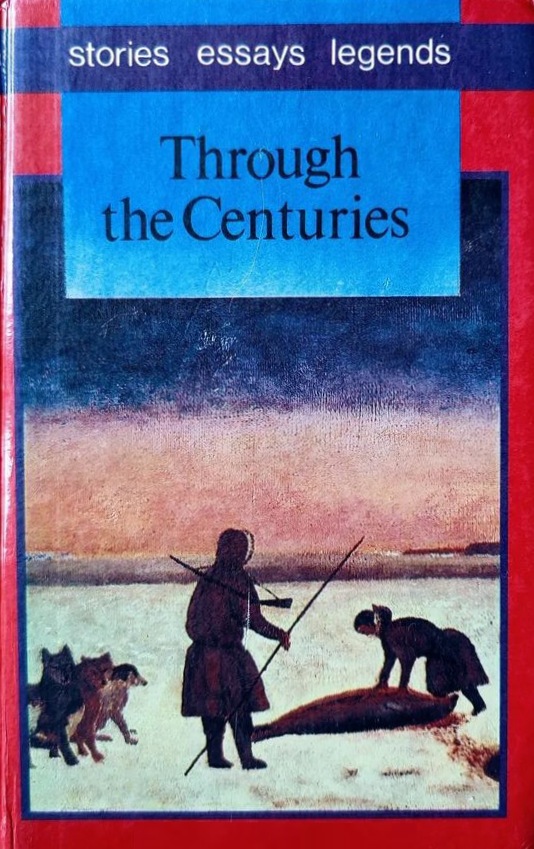
Part of Series
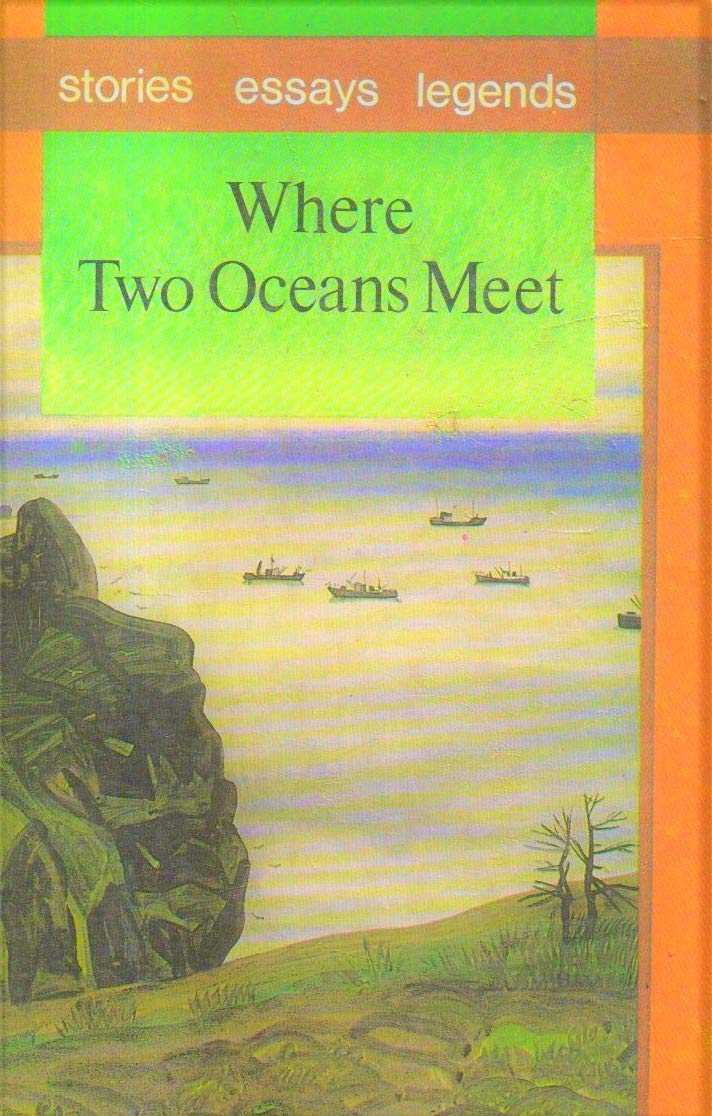
Content Shore of Two Oceans (Introduction) Author: Yuri Leonov Translation: Cynthia Rosenberger page 8 Dersu Uzala - Vladimir Arsenyev, novella Translation: Vic Shneyerson p. 17 Metelitsa - Alexander Fadeyev, story Translation: Graham Whittaker page 38 The Death of Captain Nezelasov - Vsevolod Ivanov, short story Translation: Keith Hammond p. 53 The Commandant of Bird Island - Sergei Dikovsky, story Translation: N. Kaye p. 66 At the Source - Vladimir Sangi, short story Translation: Cynthia Rosenberger p. 87 The Wedding - Victor Levashov Translation: Cynthia Rosenberger page 97 The Taiga - Pyotr Proskurin, story p. 120 Watercolors - Anatoly Kim, story Translation: Cynthia Rosenberger p. 180 The Kuriban - Valentin Fyodorov, story Translation: Cynthia Rosenberger p. 194 Fear - Sergei Kucherenko, story Translation: Cynthia Rosenberger p. 205 The Shore of Princess Lucinda - Oleg Kuvayev, story Translation: Cynthia Rosenberger p. 213 The Last Hunt - Grigory Khodzher, story Translation: Cynthia Rosenberger p. 226 In the Mine - Alexander Pletnyov Translation: Graham Whittaker p. 252 Out There, with the Sun and Life - Vyacheslav Sukachev, story Translation: Cynthia Rosenberger p. 292 The Death of the Leader - Anatoly Tkachenko, story Translation: Cynthia Rosenberger p. 302 Fact and Fantasy - Nikolai Ryzhikh, story Translation: Linda Noble p. 317 The Valley of Geysers - Anatoly Sevastyanov, story Translation: Cynthia Rosenberger p. 325 The Wave Is Coming - Anatoly Sevastyanov, story Translation: Cynthia Rosenberger p. 332 Chudo-Yudo, the Wonder Monster - Yuri Leonov, story p. 338
Authors

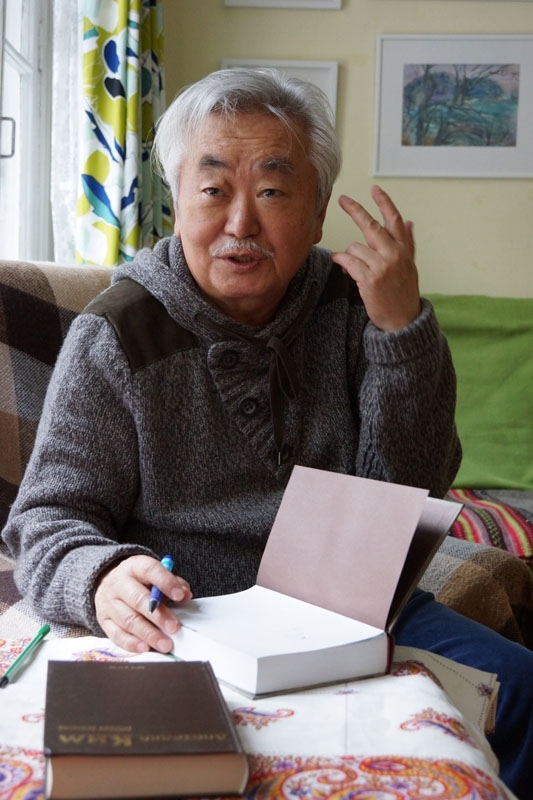
aka Анатолий Ким Anatoli Andreyevich Kim (Russian: Анато́лий Андре́евич Ким; born 15 June 1939) is a Russian-language writer. Kim's father was a Soviet Korean, the son of a man who immigrated to the Russian Far East in 1908; his mother was of Russian ethnicity. He claims to be a descendant of 15th-century Korean author Kim Si-seup. He was born in Sergievka, Tulkibas District, Chimkent Oblast, Kazakh Soviet Socialist Republic (today South Kazakhstan Province, Kazakhstan) and spent his early years there. In 1948, his family moved to the Russian Far East and Sakhalin, where he lived until 1957 before entering an art school in Moscow.

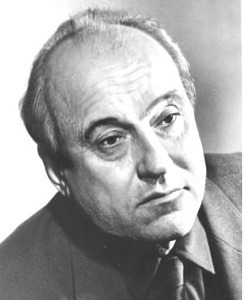
Vsevolod Vyacheslavovich Ivanov (Russian: Всеволод Вячеславович Иванов; February 24, 1895 in Lebyazhye, now in Pavlodar Oblast – August 15, 1963, Moscow) was a notable Soviet writer praised for the colourful adventure tales set in the Asiatic part of Russia during the Civil War. Ivanov was born in Northern Kazakhstan to a teacher's family. When he was a child Vsevolod ran away to become a clown in a travelling circus. His first story, published in 1915, caught the attention of Maxim Gorky, who advised Vsevolod throughout his career. Ivanov joined the Red Army during the Civil War and fought in Siberia. This inspired his short stories, Partisans (1921) and Armoured Train (1922). In 1922 Ivanov joined the literary group Serapion Brothers. Other members included Nikolay Tikhonov, Mikhail Zoshchenko, Victor Shklovsky, Veniamin Kaverin, and Konstantin Fedin. Ivanov's first novels, Colored Winds (1922) and Azure Sands (1923), were set in Asiatic part of Russia and gave rise to the genre of ostern in Soviet literature. His novella Baby was acclaimed by Edmund Wilson as the finest Soviet short story ever. Later, Ivanov came under fire from Bolshevik critics who claimed his works were too pessimistic and that it was not clear whether the Reds or Whites were the heroes. In 1927 Ivanov rewrote his short story, the Armoured Train 14-69 into a play. This time, the play highlighted the role of the Bolsheviks in the Civil War. After that, his writings saw a marked decline in quality, and he never managed to produce anything equal to his early efforts. Among his later works, which conformed to the requirements of Socialist Realism, are the Adventures of a Fakir (1935) and The Taking of Berlin (1945). During the Second World War, Ivanov worked as a war correspondent for Izvestia. Vsevolod's son Vyacheslav Vsevolodovich Ivanov became one of the leading philologists and Indo-Europeanists of the late 20th century. Vsevolod adopted Isaak Babel's illegitimate child Emmanuil when he married Babel's one time mistress Tamara Kashirina. Emmanuil's name was changed to "Mikhail Ivanov" and he later became a noted artist.


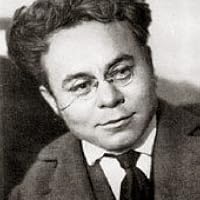
Vladimir Klavdiyevich Arsenyev (Russian: Влади́мир Кла́вдиевич Арсе́ньев) (10 September 1872 – 4 September 1930) was a Russian explorer of the Far East who recounted his travels in a series of books - "По Уссурийскому Краю" ("Along the Ussury land") (1921) and "Дерсу Узала" ("Dersu Uzala") (1923) - telling of his military journeys to the Ussuri basin with Dersu Uzala, a native hunter, from 1902 to 1907. He was the first to describe numerous species of Siberian flora and lifestyle of native ethnic people. http://en.wikipedia.org/wiki/Vladimir...

Alexander Alexandrovich Fadeyev (Russian: Александр Алексaндрович Фадеев) was a Soviet writer, one of the co-founders of the Union of Soviet Writers and its chairman from 1946 to 1954. From 1908 to 1912 he lived in Chuguyevka, Primorsky Krai. He took part in the guerrilla movement against the Japanese interventionists and the White Army during the Russian Civil War. In 1927, he published the novel The Rout (also known as The Nineteen), in which he described youthful guerrilla fighters. In 1945 he wrote the novel Young Guard (based upon real events of World War II) about the underground anti-fascist Komsomol organization named Young Guard, which fought against the Nazis in the occupied city Krasnodon (in the Ukrainian SSR). For this novel, Fadeyev was awarded the Stalin Prize (1946). In 1948, a Soviet film The Young Guard, based on the book, was released, and later revised in 1964 to correct inaccuracies in the book. Fadeyev was a champion of Joseph Stalin, proclaiming him "the greatest humanist the world has ever known". During the 1940s, he actively promoted Zhdanovshchina, a campaign of criticism and persecution against many of the Soviet Union's foremost composers. However, he was a friend of Mikhail Sholokhov. Fadeyev married a famous stage actress, Angelina Stepanova (1905–2000). In the last years of his life Fadeyev became an alcoholic. Some sources claim, that this was mostly due to the denunciation of Stalinism during the Khrushchev Thaw. He eventually committed suicide at his dacha in Peredelkino, leaving a dying letter, from which one can see Fadeyev's strictly negative attitude to new leaders of the Party. His death occasioned an epigram by Boris Pasternak, his neighbor. Alexander Fadeyev is buried in the Novodevichy Cemetery in Moscow.

See Олег Куваев Oleg Mikhailovich Kuvaev ( August 12, 1934 - April 8, 1975 ) - Russian Soviet writer, geologist, geophysicist . Member of the Writers' Union of the USSR . Author of the novel " Territory ". He spent his childhood and adolescence in the Svechinsky district of the Kirov region, graduated from school in Kotelnich. In the summer of 1952, Kuvaev entered the Geophysical Faculty of the Sergo Ordzhonikidze MGRI, from which he graduated in 1958 . During the years of study at the institute, he visited the expeditions to the Tien Shan, in Kyrgyzstan, in the upper reaches of the Amur . In 1956, during an expedition to the Tien Shan, the first story "For ibex" was written, published in the magazine "Hunting and hunting economy". In 1957, being a graduate student, Kuvaev came to Chukotka, the expedition worked in the areas of Provideniya Bay, Transfiguration Bay, Cross Bay.

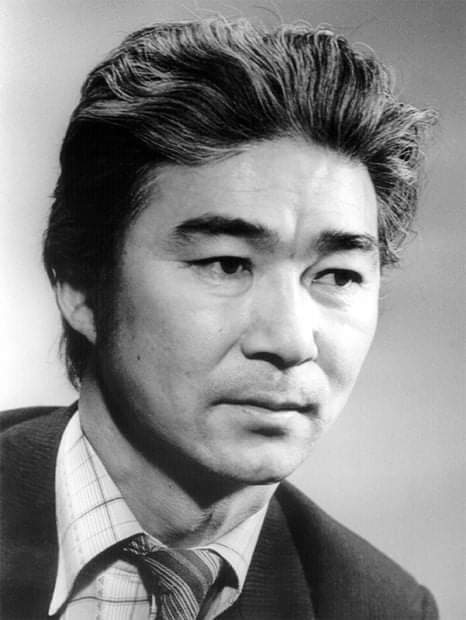
Vladimir Mikhailovich Sangi, is a Nivkh writer and publicist. He writes in Nivkh and Russian. Sangi was born 18 March 1935 in the nomadic settlement Nabil (now a village in Sakhalin Oblast). He graduated from Herzen University in 1959 and became a member of the Union of Soviet Writers in 1962. In 1965 he completed upper literature courses. In 1967 he joined the Communist Party of the Soviet Union. He settled in Moscow in the mid-1960s, and since 1975 has been a chairman of the Union of Russian Writers. After perestroika he moved back to Sakhalin, where in 1993 he was elected chief of the tribes of Ket Eastern Sakhalin and the basin of the Tym River.[1] He is also a member of the International League for Human Rights under the United Nations Economic and Social Council. A speaker of the East Sakhalin dialect of Nivkh, Sangi is the founder of Nivkh literature, one of the creators of the reformed Nivkh alphabet (introduced by an act of the Council of Ministers of the Soviet Union on 29 June 1979[2]), and the author of the rules of Nivkh orthography, a Nivkh language primer, a Nivkh language textbook, textbooks for Nivkh schools, and books for reading in Nivkh,[3][4] as well as a publisher of Nivkh translations of Russian classics.