



Margins
Wild Apples and Other Natural History Essays book cover
Wild Apples and Other Natural History Essays
1989
First Published
4.22
Average Rating
240
Number of Pages

This volume of seven essays and a late lecture by Henry David Thoreau makes available important material written both before and after Walden. First appearing in the 1840s through the 1860s, the essays were written during a time of great change in Thoreau's environs, as the Massachusetts of his childhood became increasingly urbanized and industrialized. William Rossi's introduction puts the essays in the context of Thoreau's other major works, both chronologically and intellectually. Rossi also shows how these writings relate to Thoreau's life and career as both writer and his readings of Ralph Waldo Emerson and Charles Darwin; his failed bid for commercial acceptance of his work; and his pivotal encounter with the utter wildness of the Maine woods. In the essays themselves, readers will see how Thoreau melded conventions of natural history writing with elements of two popular literary forms—travel writing and landscape writing—to explore concerns ranging from America's westward expansion to the figural dimensions of scientific facts and phenomena. Thoreau the thinker, observer, wanderer, and inquiring naturalist—all emerge in this distinctive composite picture of the economic, natural, and spiritual communities that left their marks on one of our most important early environmentalists.
Avg Rating
4.22
Number of Ratings
18
5 STARS
39%
4 STARS
44%
3 STARS
17%
2 STARS
0%
1 STARS
0%
goodreads

Author

Henry David Thoreau
Henry David Thoreau
Author · 117 books

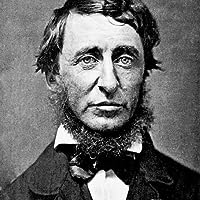
Henry David Thoreau (born David Henry Thoreau) was an American author, naturalist, transcendentalist, tax resister, development critic, philosopher, and abolitionist who is best known for Walden, a reflection upon simple living in natural surroundings, and his essay, Civil Disobedience, an argument for individual resistance to civil government in moral opposition to an unjust state. Thoreau's books, articles, essays, journals, and poetry total over 20 volumes. Among his lasting contributions were his writings on natural history and philosophy, where he anticipated the methods and findings of ecology and environmental history, two sources of modern day environmentalism. In 1817, Henry David Thoreau was born in Massachusetts. He graduated from Harvard University in 1837, taught briefly, then turned to writing and lecturing. Becoming a Transcendentalist and good friend of Emerson, Thoreau lived the life of simplicity he advocated in his writings. His two-year experience in a hut in Walden, on land owned by Emerson, resulted in the classic, Walden: Life in the Woods (1854). During his sojourn there, Thoreau refused to pay a poll tax in protest of slavery and the Mexican war, for which he was jailed overnight. His activist convictions were expressed in the groundbreaking On the Duty of Civil Disobedience (1849). In a diary he noted his disapproval of attempts to convert the Algonquins "from their own superstitions to new ones." In a journal he noted dryly that it is appropriate for a church to be the ugliest building in a village, "because it is the one in which human nature stoops to the lowest and is the most disgraced." (Cited by James A. Haught in 2000 Years of Disbelief.) When Parker Pillsbury sought to talk about religion with Thoreau as he was dying from tuberculosis, Thoreau replied: "One world at a time." Thoreau's philosophy of nonviolent resistance influenced the political thoughts and actions of such later figures as Leo Tolstoy, Mohandas K. Gandhi, and Martin Luther King, Jr. D. 1862. More: http://plato.stanford.edu/entries/tho... http://thoreau.eserver.org/ http://en.wikipedia.org/wiki/Henry\_Da... http://transcendentalism-legacy.tamu.... http://www.biography.com/people/henry...

548 Market St PMB 65688, San Francisco California 94104-5401 USA
© 2026 Paratext Inc. All rights reserved