


Margins
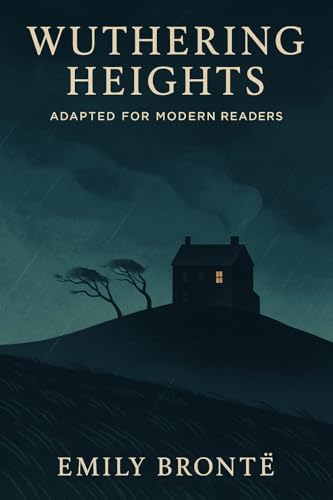
Wuthering Heights book cover
Wuthering Heights
Adapted for Modern Readers
2025
First Published
1
Number of Pages

Step into the moors with a fresh perspective in "Wuthering Adapted for Modern Readers." This edition invites you to experience Emily Brontë's timeless tale with contemporary typography and a streamlined format. Lightly clarified language makes the classic narrative accessible without losing its original tone and intensity. Discover Heathcliff and Catherine's turbulent world through a lens that resonates with today's readers, ensuring the haunting beauty of the story is both engaging and comprehensible. Set against the backdrop of the Yorkshire moors, "Wuthering Heights" explores themes of passion, revenge, and the supernatural. This adaptation retains the novel's emotional depth and gothic allure while making it more approachable. Immerse yourself in a tale that questions the boundaries of love and obsession, inviting a new generation to embrace its enduring legacy. Join the journey through this iconic landscape and uncover the dramatic stakes that have captivated readers for generations.
Author

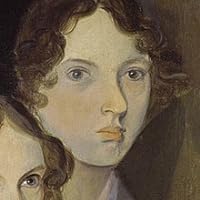
Emily Bronte
Emily Bronte
Author · 107 books

Emily Jane Brontë was an English novelist and poet, now best remembered for her only novel Wuthering Heights, a classic of English literature. Emily was the second eldest of the three surviving Brontë sisters, being younger than Charlotte Brontë and older than Anne Brontë. She published under the masculine pen name Ellis Bell. Emily was born in Thornton, near Bradford in Yorkshire to Patrick Brontë and Maria Branwell. She was the younger sister of Charlotte Brontë and the fifth of six children. In 1824, the family moved to Haworth, where Emily's father was perpetual curate, and it was in these surroundings that their literary oddities flourished. In childhood, after the death of their mother, the three sisters and their brother Patrick Branwell Brontë created imaginary lands (Angria, Gondal, Gaaldine, Oceania), which were featured in stories they wrote. Little of Emily's work from this period survived, except for poems spoken by characters (The Brontës' Web of Childhood, Fannie Ratchford, 1941). In 1842, Emily commenced work as a governess at Miss Patchett's Ladies Academy at Law Hill School, near Halifax, leaving after about six months due to homesickness. Later, with her sister Charlotte, she attended a private school in Brussels. They later tried to open up a school at their home, but had no pupils. It was the discovery of Emily's poetic talent by Charlotte that led her and her sisters, Charlotte and Anne, to publish a joint collection of their poetry in 1846, Poems by Currer, Ellis, and Acton Bell. To evade contemporary prejudice against female writers, the Brontë sisters adopted androgynous first names. All three retained the first letter of their first names: Charlotte became Currer Bell, Anne became Acton Bell, and Emily became Ellis Bell. In 1847, she published her only novel, Wuthering Heights, as two volumes of a three volume set (the last volume being Agnes Grey by her sister Anne). Its innovative structure somewhat puzzled critics. Although it received mixed reviews when it first came out, the book subsequently became an English literary classic. In 1850, Charlotte edited and published Wuthering Heights as a stand-alone novel and under Emily's real name. Like her sisters, Emily's health had been weakened by the harsh local climate at home and at school. She caught a chill during the funeral of her brother in September, and, having refused all medical help, died on December 19, 1848 of tuberculosis, possibly caught from nursing her brother. She was interred in the Church of St. Michael and All Angels family capsule, Haworth, West Yorkshire, England.

548 Market St PMB 65688, San Francisco California 94104-5401 USA
© 2026 Paratext Inc. All rights reserved