


Margins
XX a. Vakarų dramos book cover
XX a. Vakarų dramos
1986
First Published
4.33
Average Rating
590
Number of Pages

Jean Cocteau "Orfėjas" (1949) Bertolt Brecht "Geras žmogus iš Sezuano" (1939) Luigi Pirandello "Henrikas IV" (1922) John Millington Synge "Šaunuolis iš vakarų pakrantės" (1907) Jean- Paul Sartre "Nepalaidoti mirusieji" (1941) Eugene O'neill "Elektrai skirta gedėti" (1931) Tennessee Williams "Geismų tramvajus" (1948)
Avg Rating
4.33
Number of Ratings
6
5 STARS
50%
4 STARS
33%
3 STARS
17%
2 STARS
0%
1 STARS
0%
goodreads

Authors

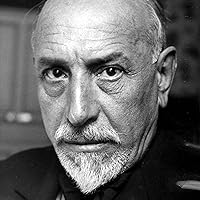
Luigi Pirandello
Luigi Pirandello
Author · 105 books

Luigi Pirandello; Agrigento (28 June 1867 – Rome 10 December 1936) was an Italian dramatist, novelist, poet, and short story writer whose greatest contributions were his plays. He was awarded the 1934 Nobel Prize in Literature for "his almost magical power to turn psychological analysis into good theatre. Pirandello's works include novels, hundreds of short stories, and about 40 plays, some of which are written in Sicilian. Pirandello's tragic farces are often seen as forerunners of the Theatre of the Absurd.

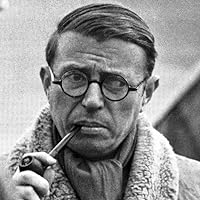
Jean-Paul Sartre
Jean-Paul Sartre
Author · 117 books

Jean-Paul Charles Aymard Sartre, normally known simply as Jean-Paul Sartre, was a French existentialist philosopher and pioneer, dramatist and screenwriter, novelist and critic. He was a leading figure in 20th century French philosophy. He declined the award of the 1964 Nobel Prize in Literature "for his work which, rich in ideas and filled with the spirit of freedom and the quest for truth, has exerted a far-reaching influence on our age." In the years around the time of his death, however, existentialism declined in French philosophy and was overtaken by structuralism, represented by Levi-Strauss and, one of Sartre's detractors, Michel Foucault.

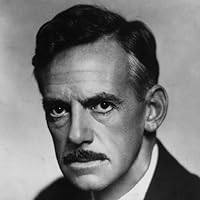
Eugene O'Neill
Eugene O'Neill
Author · 60 books

American playwright Eugene Gladstone O'Neill authored Mourning Becomes Electra in 1931 among his works; he won the Nobel Prize of 1936 for literature, and people awarded him his fourth Pulitzer Prize for Long Day's Journey into Night , produced in 1956. He won his Nobel Prize "for the power, honesty and deep-felt emotions of his dramatic works, which embody an original concept of tragedy." More than any other dramatist, O'Neill introduced the dramatic realism that Russian playwright Anton Chekhov, Norwegian playwright Henrik Ibsen, and Swedish playwright August Strindberg pioneered to Americans and first used true American vernacular in his speeches. His plays involve characters, who, engaging in depraved behavior, inhabit the fringes of society, where they struggle to maintain their hopes and aspirations but ultimately slide into disillusionment and despair. O'Neill wrote Ah, Wilderness! , his only comedy: all his other plays involve some degree of tragedy and personal pessimism.

Jean Cocteau
Jean Cocteau
Author · 42 books

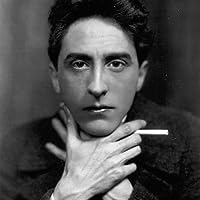
Jean Maurice Eugène Clément Cocteau (5 July 1889 – 11 October 1963) was a French poet, novelist, dramatist, designer, boxing manager, playwright and filmmaker. Along with other Surrealists of his generation (Jean Anouilh and René Char for example) Cocteau grappled with the "algebra" of verbal codes old and new, mise en scène language and technologies of modernism to create a paradox: a classical avant-garde. His circle of associates, friends and lovers included Jean Marais, Henri Bernstein, Colette, Édith Piaf, whom he cast in one of his one act plays entitled Le Bel Indifferent in 1940, and Raymond Radiguet. His work was played out in the theatrical world of the Grands Theatres, the Boulevards and beyond during the Parisian epoque he both lived through and helped define and create. His versatile, unconventional approach and enormous output brought him international acclaim.

Tennessee Williams
Tennessee Williams
Author · 106 books

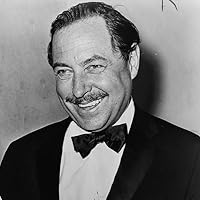
Thomas Lanier Williams III, better known by the nickname Tennessee Williams, was a major American playwright of the twentieth century who received many of the top theatrical awards for his work. He moved to New Orleans in 1939 and changed his name to "Tennessee," the state of his father's birth. Raised in St. Louis, Missouri, after years of obscurity, at age 33 he became famous with the success of The Glass Menagerie (1944) in New York City. This play closely reflected his own unhappy family background. It was the first of a string of successes, including A Streetcar Named Desire (1947), Cat on a Hot Tin Roof (1955), Sweet Bird of Youth (1959), and The Night of the Iguana (1961). With his later work, he attempted a new style that did not appeal to audiences. His drama A Streetcar Named Desire is often numbered on short lists of the finest American plays of the 20th century, alongside Eugene O'Neill's Long Day's Journey into Night and Arthur Miller's Death of a Salesman. Much of Williams' most acclaimed work has been adapted for the cinema. He also wrote short stories, poetry, essays and a volume of memoirs. In 1979, four years before his death, Williams was inducted into the American Theater Hall of Fame. From Wikipedia

Bertolt Brecht
Bertolt Brecht
Author · 101 books

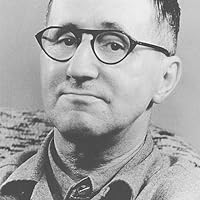
Bertolt Brecht (born Eugen Berthold Friedrich Brecht) was a German poet, playwright, and theatre director. A seminal theatre practitioner of the twentieth century, Brecht made equally significant contributions to dramaturgy and theatrical production, the latter particularly through the seismic impact of the tours undertaken by the Berliner Ensemble—the post-war theatre company operated by Brecht and his wife and long-time collaborator, the actress Helene Weigel—with its internationally acclaimed productions. From his late twenties Brecht remained a life-long committed Marxist who, in developing the combined theory and practice of his 'epic theatre', synthesized and extended the experiments of Piscator and Meyerhold to explore the theatre as a forum for political ideas and the creation of a critical aesthetics of dialectical materialism. Brecht's modernist concern with drama-as-a-medium led to his refinement of the 'epic form' of the drama (which constitutes that medium's rendering of 'autonomization' or the 'non-organic work of art'—related in kind to the strategy of divergent chapters in Joyce's novel Ulysses, to Eisenstein's evolution of a constructivist 'montage' in the cinema, and to Picasso's introduction of cubist 'collage' in the visual arts). In contrast to many other avant-garde approaches, however, Brecht had no desire to destroy art as an institution; rather, he hoped to 're-function' the apparatus of theatrical production to a new social use. In this regard he was a vital participant in the aesthetic debates of his era—particularly over the 'high art/popular culture' dichotomy—vying with the likes of Adorno, Lukács, Bloch, and developing a close friendship with Benjamin. Brechtian theatre articulated popular themes and forms with avant-garde formal experimentation to create a modernist realism that stood in sharp contrast both to its psychological and socialist varieties. "Brecht's work is the most important and original in European drama since Ibsen and Strindberg," Raymond Williams argues, while Peter Bürger insists that he is "the most important materialist writer of our time." As Jameson among others has stressed, "Brecht is also ‘Brecht’"—collective and collaborative working methods were inherent to his approach. This 'Brecht' was a collective subject that "certainly seemed to have a distinctive style (the one we now call 'Brechtian') but was no longer personal in the bourgeois or individualistic sense." During the course of his career, Brecht sustained many long-lasting creative relationships with other writers, composers, scenographers, directors, dramaturgs and actors; the list includes: Elisabeth Hauptmann, Margarete Steffin, Ruth Berlau, Slatan Dudow, Kurt Weill, Hanns Eisler, Paul Dessau, Caspar Neher, Teo Otto, Karl von Appen, Ernst Busch, Lotte Lenya, Peter Lorre, Therese Giehse, Angelika Hurwicz, and Helene Weigel herself. This is "theatre as collective experiment [...] as something radically different from theatre as expression or as experience." There are few areas of modern theatrical culture that have not felt the impact or influence of Brecht's ideas and practices; dramatists and directors in whom one may trace a clear Brechtian legacy include: Dario Fo, Augusto Boal, Joan Littlewood, Peter Brook, Peter Weiss, Heiner Müller, Pina Bausch, Tony Kushner and Caryl Churchill. In addition to the theatre, Brechtian theories and techniques have exerted considerable sway over certain strands of film theory and cinematic practice; Brecht's influence may be detected in the films of Joseph Losey, Jean-Luc Godard, Lindsay Anderson, Rainer Werner Fassbinder, Nagisa Oshima, Ritwik Ghatak, Lars von Trier, Jan Bucquoy and Hal Hartley. During the war years, Brecht became a prominent writer of the Exilliteratur. He expressed his opposition to the National Socialist and Fascist movements in his most famous plays.

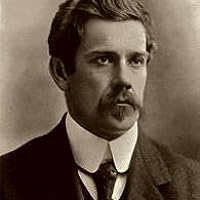
J.M. Synge
J.M. Synge
Author · 17 books

Edmund John Millington Synge (pronounced /sɪŋ/) was an Irish playwright, poet, prose writer, and collector of folklore. He was one of the cofounders of the Abbey Theatre. He is best known for the play The Playboy of the Western World, which caused riots during its opening run at the Abbey theatre. Synge wrote many well known plays, including "Riders to the Sea", which is often considered to be his strongest literary work. Although he came from an Anglo-Irish background, Synge's writings are mainly concerned with the world of the Roman Catholic peasants of rural Ireland and with what he saw as the essential paganism of their world view.

548 Market St PMB 65688, San Francisco California 94104-5401 USA
© 2026 Paratext Inc. All rights reserved