


Margins
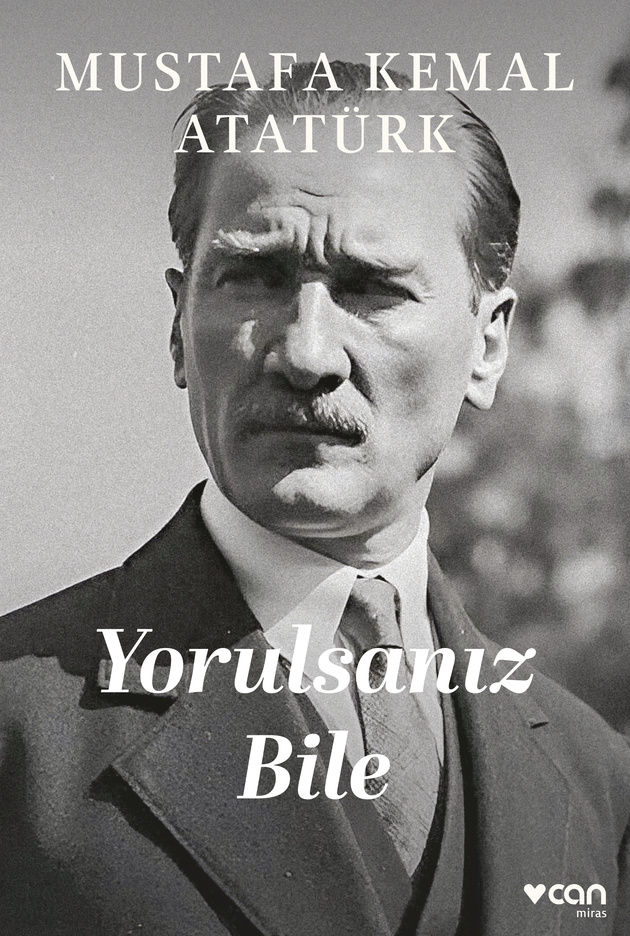
Yorulsanız Bile book cover
Yorulsanız Bile
2025
First Published
4.94
Average Rating
184
Number of Pages

Yorulmadan beni takip edeceğinizi söylüyorsunuz. Fakat arkadaşlar, yorulmadan ne demek? Yorulmamak olur mu? Elbette yorulacaksınız. Benim sizden istediğim şey yorulmamak değil, yorulduğunuz zaman durmadan yürümek, yorulduğunuz dakikada da dinlenmeden beni takip etmektir. Yorgunluk her insan, her canlı için doğal bir durumdur. Fakat insanda yorgunluğu yenebilecek manevi bir kuvvet vardır ki işte bu kuvvet yorulanları dinlendirmeden yürütür. Sizler, yani yeni Türkiye’nin genç evlatları, yorulsanız bile beni takip edeceksiniz. Ben bu akşam buraya yalnız bunu size anlatmak için gelmiş bulunuyorum. Dinlenmemek üzere yürümeye karar verenler asla ve asla yorulmazlar. Türk gençliği gayeye, bizim yüksek idealimize durmadan, yorulmadan yürüyecektir. Biz de bunu görmekle bahtiyar olacağız. Mustafa Kemal Atatürk’ün Yorulsanız Bile adlı bu ciltte bir araya getirilen konuşmaları 1905-1937 arasında yapılmışsa da kitap ağırlıklı olarak 1921-1925 yılları arasında, Ankara’daki meclis hükümetinin işlerlik kazanmasıyla cumhuriyet rejiminin rayına girmesi arasındaki dönemde yaptığı konuşmalara odaklanıyor. Bu gezilerdeki konuşmalar büyük mitingler şeklinde değil, küçük kalabalıklarla sohbetler şeklinde düzenlenmiş. Yorulsanız Bile, Mustafa Kemal Atatürk’ün Türk toplumuna dair son derece ayrıntılı, gelişkin, tarihsel ve kuramsal bilgiyle desteklenmiş vizyonunu adım adım nasıl şekillendirdiğini ve şehir şehir dolaşıp halka anlatıp benimsettirdiğini, bunu yaparken de yeni rejimin sahibi olarak gençlere ne kadar güvendiğini gösteriyor.

Avg Rating
4.94
Number of Ratings
17
5 STARS
94%
4 STARS
6%
3 STARS
0%
2 STARS
0%
1 STARS
0%
goodreads

Author

Mustafa Kemal Atatürk
Author · 19 books

Atatürk, the founder of modern Turkey, was born in 1881 (probably in the spring) in Salonica, then an Ottoman city, now in Greece. His father Ali Riza, a customs official turned lumber merchant, died when Mustafa was still a boy. His mother Zubeyde, a devout and strong-willed woman, raised him and his sister. First enrolled in a traditional religious school, he soon switched to a modern school. In 1893, he entered a military high school where his mathematics teacher gave him the second name Kemal (meaning perfection) in recognition of young Mustafa's superior achievement. He was thereafter known as Mustafa Kemal. In 1905, Mustafa Kemal graduated from the War Academy in Istanbul with the rank of Staff Captain. In 1915, when Dardanelles campaign was launched, Colonel Mustafa Kemal became a national hero by winning successive victories and finally repelling the invaders. Promoted to general in 1916, at age 35, he liberated two major provinces in eastern Turkey that year. In the next two years, he served as commander of several Ottoman armies in Palestine, Aleppo, and elsewhere, achieving another major victory by stopping the enemy advance at Aleppo. On May 19, 1919, Mustafa Kemal Pasha landed in the Black Sea port of Samsun to start the War of Turkish Independence. In defiancé of the Sultan's government, he rallied a liberation army in Anatolia and convened the Congress of Erzurum and Sivas which established the basis for the new national effort under his leadership. On April 23, 1920, the Grand National Assembly was inaugurated. Mustafa Kemal Pasha was elected to its Presidency. Fighting on many fronts, he led his forces to victory against rebels and invading armies. Following the Turkish triumph at the two major battles at Inonu in Western Turkey, the Grand National Assembly conferred on Mustafa Kemal Pasha the title of Commander-in-Chief with the rank of Marshal. At the end of August 1922, the Turkish armies won their ultimate victory. Within a few weeks, the Turkish mainland was completely liberated, the armistice signed, and the rule of the Ottoman dynasty abolished. In July 1923, the national government signed the Lausanne Treaty with Great Britain, France, Greece, Italy, and others. In mid-October, Ankara became the capital of the new Turkish State. On October 29, the Republic was proclaimed and Mustafa Kemal Pasha was unanimously elected President of the Republic. The account of Atatürk's fifteen year Presidency is a saga of dramatic modernization. With indefatigable determination, he created a new political and legal system, abolished the Caliphate and made both government and education secular, gave equal rights to women, changed the alphabet and the attire, and advanced the arts and the sciences, agriculture and industry. In 1934, when the surname law was adopted, the national parliament gave him the name "Atatürk" (Father of the Turks). On November 10, 1938, following an illness of a few months, the national liberator and the Father of modern Turkey died. But his legacy to his people and to the world endures.

548 Market St PMB 65688, San Francisco California 94104-5401 USA
© 2026 Paratext Inc. All rights reserved